How to Track Your Visibility in AI Search: The Complete 2026 Workflow
Here is the uncomfortable truth about AI search: your brand is already being evaluated in millions of conversations you cannot see. ChatGPT, Gemini, Perplexity and Claude are answering “what’s the best [your category]” right now, recommending someone — and no analytics tool you currently run will tell you whether that someone is you.
Tracking your visibility in AI search fixes that. Not with one heroic spot-check, but with a repeatable workflow: a prompt set that mirrors real buyer questions, a measured baseline, competitive share of voice, citation and sentiment tracking, and a feedback loop into your content. This guide walks through that workflow step by step — the same one we run for brands inside Sanbi.
The stakes are not hypothetical. OpenAI reports hundreds of millions of people using ChatGPT weekly, Google now shows AI Overviews to more than two billion users a month, and studies repeatedly find that the sources AI engines cite overlap with Google’s top ten results less than half the time. You can rank #1 in Google and be invisible in the answers. Meanwhile, the traffic that does arrive from AI engines converts at multiples of classic organic — these are users who arrive pre-persuaded by a recommendation. Being excluded from AI answers is not a vanity problem. It is a pipeline problem.
How to track your brand’s AI visibility, step by step
The workflow at a glance:
- Build a prompt set from real buyer questions
- Baseline your visibility rate, share of voice and prominence
- Segment by engine and topic
- Benchmark share of voice — and exclusion — against competitors
- Track which sources engines cite
- Watch for sudden citation shifts
- Monitor sentiment and recurring themes
- Verify AI crawlers can read your site
- Connect visibility to traffic and revenue
- Cover your markets, not just English
Each step feeds the next; skipping one usually shows up as a mystery two steps later.
1. Start with the prompts that matter, not keywords
Everything downstream depends on this step. In classic SEO you tracked keywords; in AI search you track prompts — full questions, phrased the way a real person asks them in conversation.
Build your first list from four places:
- Your buyers. Ask sales and support what questions prospects actually raise: “best [category] for [use case]”, “[competitor] alternatives”, “is [competitor] worth it”, “how do I solve [problem]”.
- Your funnel stages. Cover problem-aware prompts, comparison prompts, alternative-seeking prompts, and branded prompts. Most brands over-track branded prompts (where they always appear) and under-track category prompts (where deals are actually decided).
- Your search data. Your existing keyword research still helps — a keyword like “ai seo software” becomes prompts like “what’s the best AI SEO software for a startup?”
- Real AI query logs. Bing Webmaster Tools now shows the actual grounding queries that led AI engines to consider your site. Ours revealed buyers asking to “measure brand presence in AI answer engines” in phrasings — and languages — we had never thought to track. That report is a goldmine most teams have never opened.
A concrete starter set for a B2B SaaS brand looks like this:
| Funnel stage | Example prompts | Why it matters |
|---|---|---|
| Problem-aware | ”how do I track my brand in ChatGPT” | Buyers who don’t know solutions exist |
| Category | ”best AI visibility platform for startups” | Where the recommendation is won or lost |
| Comparison | ”Sanbi vs Profound vs Peec” | Late-stage, highest intent |
| Alternatives | ”[market leader] alternatives” | Intercepts competitor demand |
| Branded | ”is [your brand] worth it” | Reveals what engines say about you |
Start with 25–50 prompts weighted toward category and comparison intent. Below roughly 15, answer-to-answer variance drowns the signal; you can expand later (steps 14 and 15 cover how). If you want to run this stage by hand first, our free AI visibility checker guide has the full manual method.
2. Establish your AI visibility baseline
With prompts defined, measure where you stand today. Three metrics form the baseline:
| Metric | What it measures | What good looks like |
|---|---|---|
| Visibility rate | % of tracked prompts where your brand appears | Category leaders typically clear 60% on core prompts |
| Share of voice | Your mentions as a % of all brand mentions | Above your market-share equivalent |
| Average prominence | How early and how strongly you appear in answers | First-paragraph, recommended — not footnote |
Run every prompt against every engine you care about, on a schedule — daily or weekly, but fixed. One-off checks mislead because AI answers vary between runs, sessions and model versions; the trend is the truth, the snapshot is a coin flip. This is the core of what an AI search monitoring platform automates: repeated sampling, parsing, and scoring, so you read a chart instead of running 200 chats by hand.
Record your baseline numbers somewhere permanent. Every content and PR decision that follows gets judged against them. For a deeper treatment of the metrics themselves, see our guide to measuring AI visibility.
3. Break performance down by engine and topic
Your aggregate visibility score hides the story. The same brand routinely shows 70% visibility in Perplexity and 20% in ChatGPT — because each engine builds answers differently. ChatGPT leans on Bing’s index and its training data, Gemini on Google’s index and ranking signals, Perplexity on live retrieval with visible citations, and each has its own citation DNA — the source types it habitually trusts.
Know what you are sampling on each surface:
| Engine | Answers built from | Citations shown | Tracking note |
|---|---|---|---|
| ChatGPT | Bing index + training data | Sometimes (with search) | Bing SEO quietly matters here |
| Gemini / AI Overviews / AI Mode | Google index + ranking signals | Yes, as links | Three surfaces, one model family |
| Perplexity | Live retrieval | Always, numbered | Easiest to audit; sources fully visible |
| Claude | Training data + web search | Sometimes | Strong in developer and B2B research use |
Segment your tracking two ways:
- By engine. Find where you are strong and where you are absent. Prioritize the engines your buyers actually use — for most B2B categories that means ChatGPT first, Google’s AI surfaces second, Perplexity third.
- By topic. Group prompts into themes (use cases, comparisons, pricing, integrations). Topic-level visibility shows what you are known for, not just whether you are known.
The intersections are the insight: strong on comparison prompts in Perplexity, invisible on use-case prompts in ChatGPT is a diagnosis you can act on. An aggregate score of 45% is not. And the fixes are engine-specific too — if you are strong in ChatGPT but absent in Gemini and Perplexity, jump to step 13, because the biggest lever there is one that barely moves ChatGPT at all.
4. Benchmark your share of voice against competitors
AI visibility is zero-sum in a way classic SEO never was. A generated answer recommends two or three brands, not ten blue links — so the question is never “am I visible?” but “who is winning the recommendation, and by how much?”
For every tracked prompt, record every brand mentioned, then compute share of voice per topic and per engine. Two patterns to hunt for:
- Exclusion zones. Prompts where competitors appear and you do not. This is your brand-exclusion rate, and each excluded prompt is a specific, fixable gap — the answer’s citations tell you exactly which sources put your competitor there.
- Default-choice bias. Engines often mention several brands but frame one as the safe default (“the most popular option is…”). Track recommendations separately from mentions — a high mention rate with a low recommendation rate means engines know you exist but are telling buyers to choose someone else.
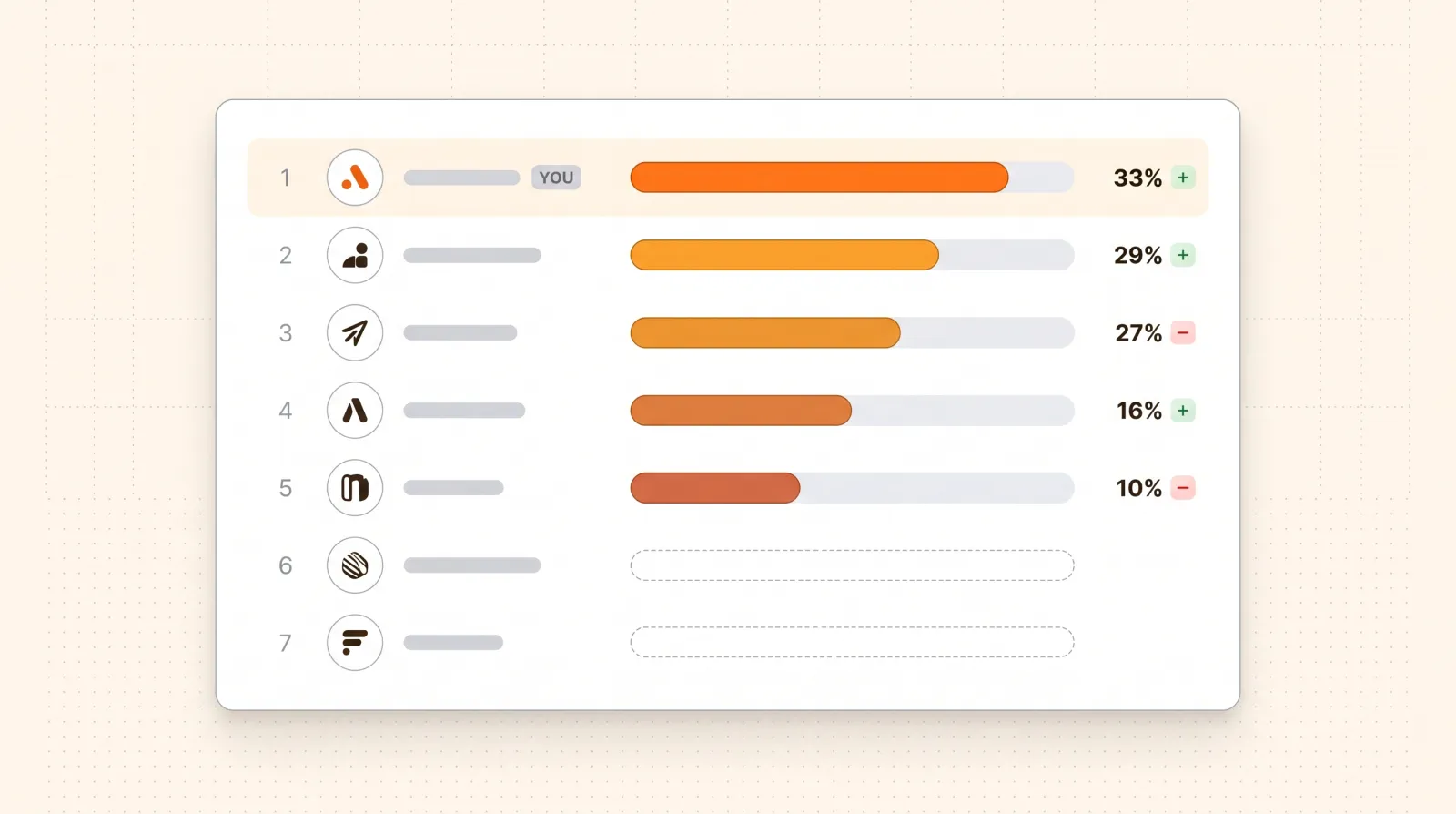
A worked example: you track 40 commercial prompts across four engines, 160 answer samples a week. Your brand appears in 48 (30% visibility rate). Across all samples, 400 total brand mentions occur, 60 of them yours — a 15% share of voice. Meanwhile a competitor holds 35%, and in 70 of the answers where they appear you are absent entirely. That last number — your exclusion count on commercial prompts — is the one to put on the leadership dashboard, because every one of those answers is a buying conversation where your competitor was recommended and you were not in the room.
Benchmark against the competitors who actually appear in answers, not just the ones on your battlecards — most teams discover at this step that engines are recommending players they stopped watching years ago.
5. Track citations to find the sources AI engines trust
Every AI answer is assembled from sources, and AI citation tracking tells you which ones. Record two lists from every tracked answer:
Your citations. Which of your pages get cited, and for which prompts. Cited pages are your strongest AI-visibility assets — study their format (usually structured, answer-first, specific) and replicate it. If engines mention you but never cite you, they are learning about you entirely from third parties, which means you control none of the narrative.
Everyone else’s citations. Which domains does each engine repeatedly pull from for your category? Review sites, comparison posts, Reddit threads, industry publications, documentation. This list is your PR and content-placement roadmap, ranked by how much the engines already trust each source. Getting mentioned on a page that ChatGPT cites for “best [your category]” moves your visibility faster than almost anything you publish on your own domain.
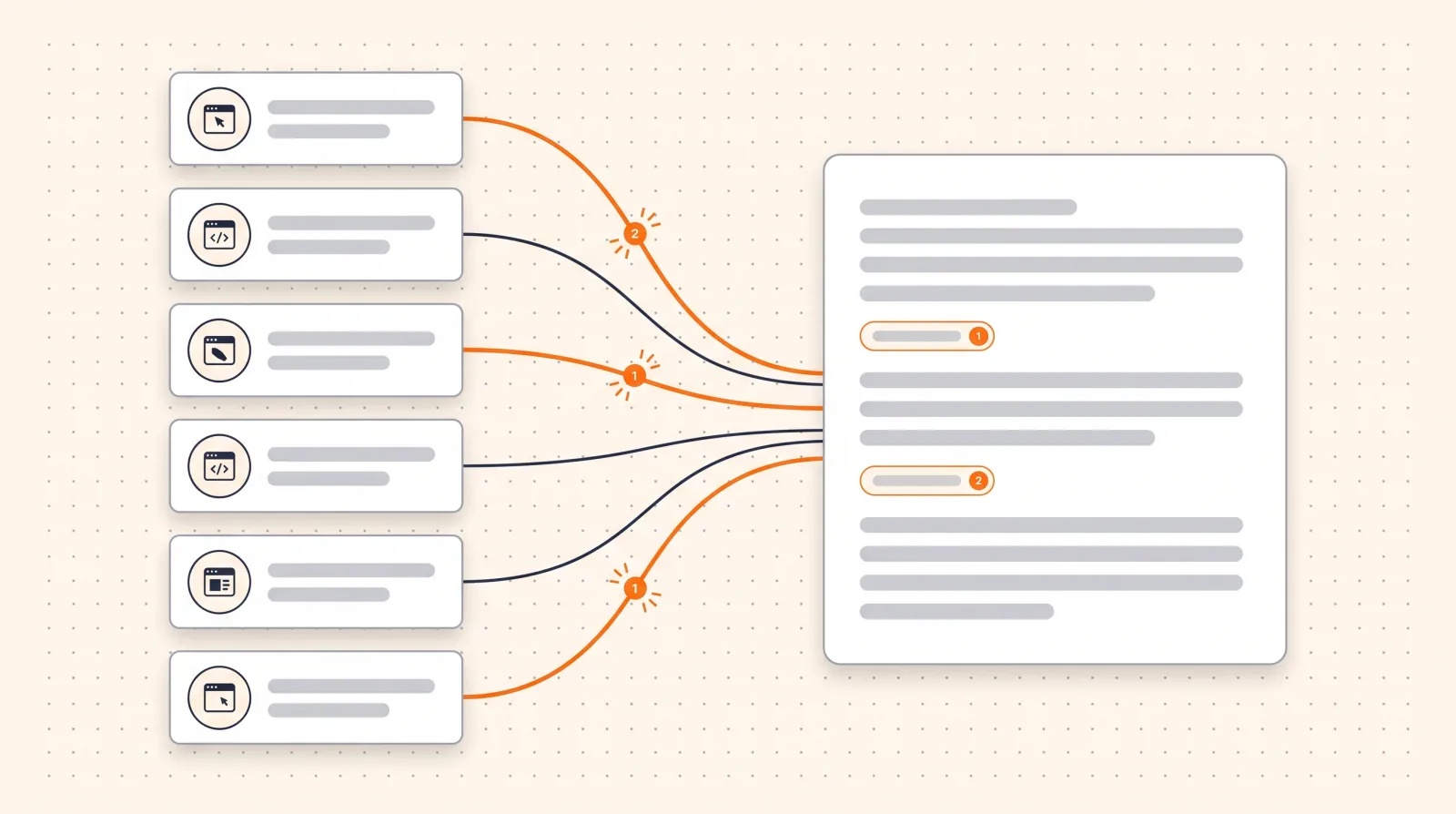
Watch the citation mix per engine — it differs sharply, and it drifts over time as models and retrieval systems update. A source that Perplexity loves may not exist in ChatGPT’s answer set at all.
6. Watch for sudden citation shifts — sources change overnight, not over quarters
The most important thing citation tracking teaches you is that the source landscape is not stable. It reshuffles without warning, and if you audit once a quarter you will miss the moves entirely.
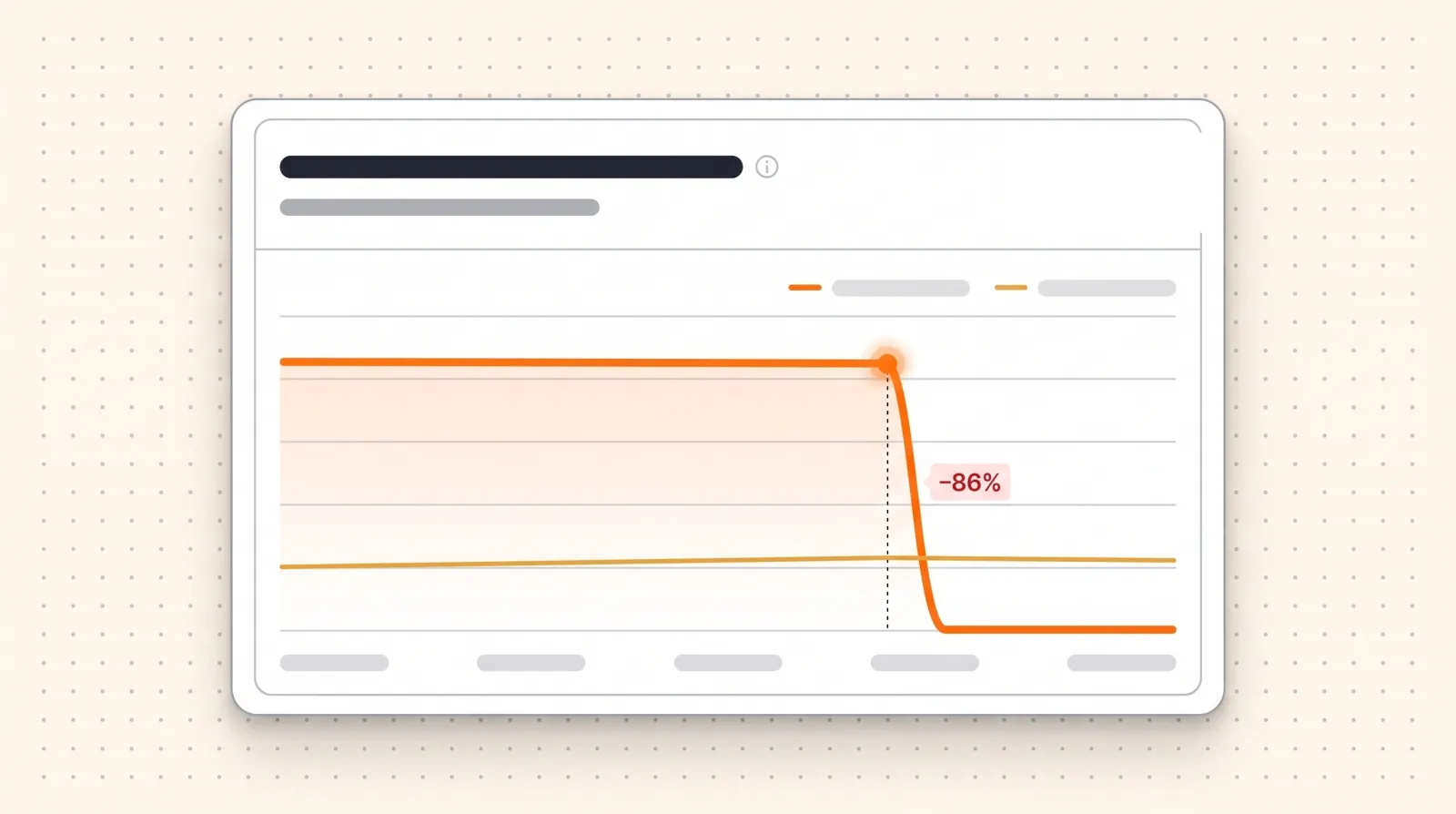
The clearest proof landed in August 2026. Reddit had been one of ChatGPT’s most-cited domains for two years — then, over a few days around August 14, Reddit’s share of ChatGPT Search citations collapsed from a steady ~3.8% to ~0.5%, an 86% drop, as Forbes reported. A source that thousands of brands had spent two years optimizing around lost almost all of its ChatGPT visibility overnight, from a single unannounced backend change — the collapse coincided with ChatGPT Search sharply increasing its use of site:-targeted retrieval queries. OpenAI never commented.
We watched it land in real accounts. Filtering one client’s tracking to ChatGPT, unbranded prompts, last seven days: Reddit citations went to zero, with ChatGPT leaning entirely on primary and manufacturer sources instead.
For the analytics half of this picture — which of these engines actually pass a referrer you can see in GA4 — see how to track AI traffic in GA4.
There is a subtlety here that matters for how you read any citation dashboard, including ours: ChatGPT did not stop reading Reddit — it stopped citing it. Independent analyses found ChatGPT still retrieving Reddit threads at roughly the same rate (about one in four pages it consulted) even as Reddit vanished from the visible citations. Reddit still shaped the answers; it just stopped being credited.
Two lessons fall out of this:
- Citation share measures what an engine surfaces, not everything that informed the answer. The two can decouple hard. It is why continuous tracking beats a one-time audit — and why a sudden citation drop should read as “this engine changed how it attributes,” not automatically “this source stopped mattering.”
- It was ChatGPT-specific. Over the same window, Reddit’s share of Google AI Overviews citations only drifted down gently — no cliff. The same “get cited on Reddit” strategy quietly lost most of its value on one engine while holding on another: exactly the per-engine divergence step 3 exists to catch. A brand watching a single aggregate score would have seen a mild dip and missed that an entire channel had gone dark on its most important engine.
This is also the moment most tracking tools reveal their limit: they tell you reddit.com fell and leave you staring at a domain name. Sanbi’s Growth view is the only one in the category built to close that gap — when the citation landscape shifts, it hands you and your team the exact webpage to act on: the page of yours to update, the page to create, or the specific third-party page now filling the vacated slot, as an assigned, trackable action instead of a chart you have to interpret yourself. That turns every reshuffle into what it actually is: a risk if you see it late, and an opening if you see it early — because when an engine drops a source, something else fills the gap, and that is a slot you can win.
7. Monitor sentiment: how engines describe you when they do mention you
Being mentioned is half the battle; how you are described is the other half. AI engines do not just list brands — they characterize them: “powerful but expensive”, “popular with enterprises”, “a newer option with limited integrations”. Those characterizations come from reviews, forum threads, and comparison content the model absorbed, and they are repeated to thousands of buyers verbatim.
Classify every mention’s sentiment (positive / neutral / negative) and, more usefully, extract the recurring themes: what do engines consistently say about your pricing, your support, your ease of use? Three things to act on:
- Negative themes with a traceable source. An outdated complaint from a 2023 Reddit thread can live in answers for years. Finding it is the first step to displacing it with fresher signals.
- Positioning drift. If engines describe you as a tool for an audience you moved away from two repositionings ago, your new messaging has not reached the sources engines read.
- Competitor sentiment. Their negative themes are your comparison-content angles.
PR and communications teams should sit in this review — sentiment in AI answers is brand reputation infrastructure now, and several teams we work with track executive visibility here too (whether and how leadership is described in answers about the company). Our sentiment analysis guide goes deeper on method.
8. Watch how AI crawlers read your site
Visibility tracking looks at the answers; the other camera angle is your own server. AI crawlers — GPTBot, ClaudeBot, PerplexityBot, Google-Extended — leave logs, and those logs tell you which pages the engines are actually reading, how often, and whether anything is blocking them.
Check three things:
- Access. Are AI crawlers hitting your key pages at all? A stray robots.txt rule or an over-aggressive bot-protection setting silently removes you from consideration. Verify your llms.txt and crawler configuration is deliberate rather than accidental.
- Attention. Which pages get crawled most? Pages AI crawlers revisit heavily are the ones shaping how models understand you — make sure they are current, accurate and answer-shaped.
- Renderability. AI crawlers are worse at JavaScript than Googlebot. If your key content only exists client-side, engines may be reading an empty page. Fetch your pages the way a crawler does and read what comes back.
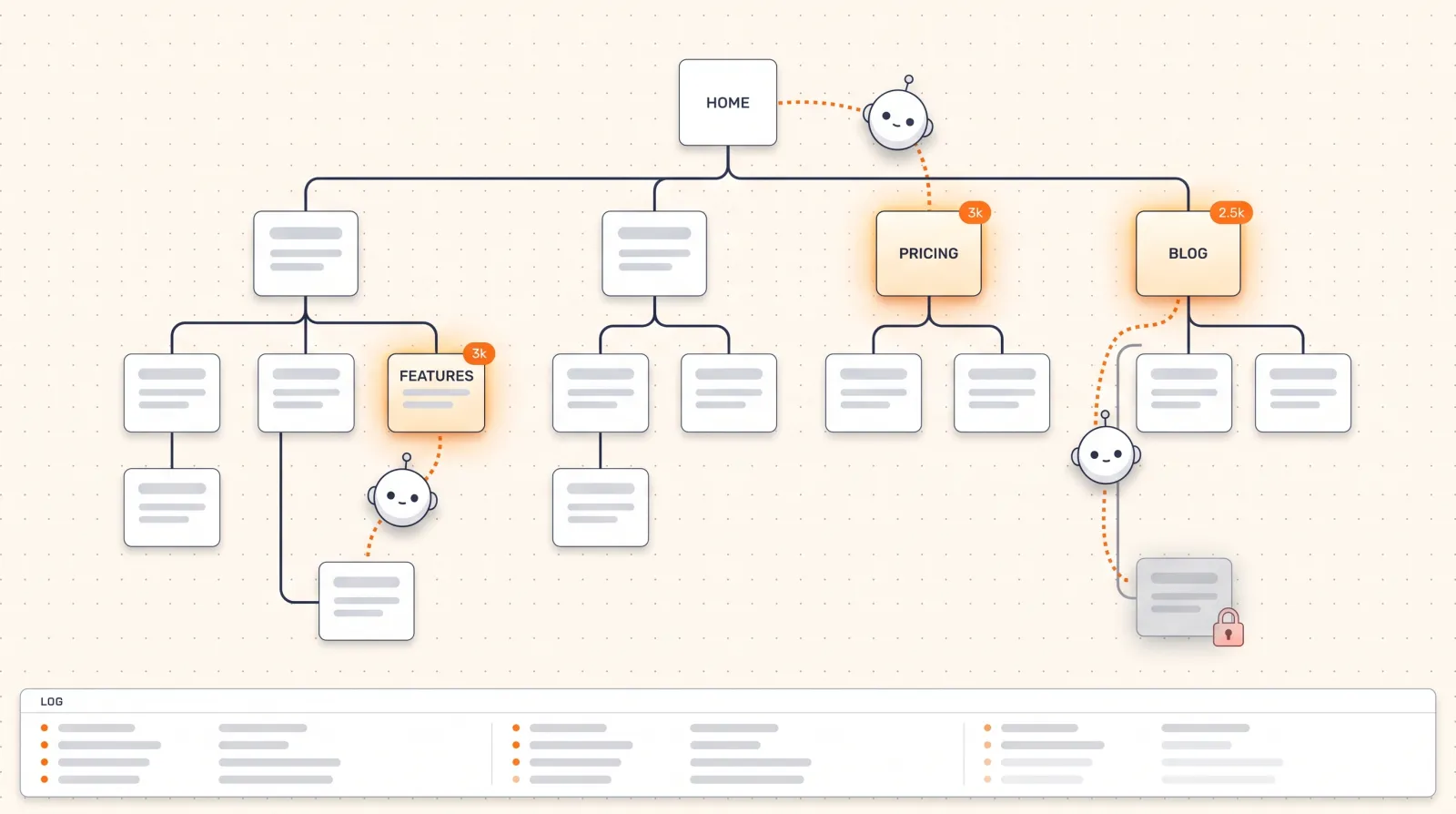
This step is where AI visibility tracking meets technical SEO, and it is the cheapest fix on the list — a crawlability problem caps everything else you do. On Google’s surfaces there are three more ways to disqualify yourself quietly — snippet directives, client-side rendering and the Search Console generative-AI opt-out — which we walk through in how to rank in Google AI Mode.
9. Connect AI visibility to traffic, leads and revenue
Tracking earns its budget when it ties to outcomes. Three connections to build:
- Referral traffic. Segment AI-source sessions in your analytics. In GA4, build a custom channel group or an exploration filtered on session source matching a regex like
chatgpt\.com|chat\.openai\.com|perplexity\.ai|gemini\.google\.com|copilot\.microsoft\.com|claude\.ai— plus the UTM-less patterns your analytics lumps into direct. The volumes look small next to organic — but watch the conversion rate. Multiple studies through 2025 found AI-referred visitors converting at around four times the rate of classic organic visitors, because they arrive pre-qualified by a recommendation. - Assisted influence. Most AI influence never shows as a referral: the user reads the recommendation, then Googles your brand or types your URL. Watch branded search volume and direct traffic against your visibility trend — when visibility on commercial prompts rises, branded demand follows with a lag.
- Self-reported attribution. Add “an AI assistant recommended us” to your “how did you hear about us?” field. It is crude, and it is also how most teams first prove to leadership that ChatGPT is a channel.
Correlate visibility movements with these downstream numbers and you can finally answer the executive question — what is AI visibility worth? — with your own data instead of industry anecdotes.
10. Don’t ignore language and location variance
The same prompt gets a different answer in Berlin than in Boston. Engines localize by market, language, and retrieval region — and most brands track only their home market in English, then wonder why international pipeline lags.
We learned this from our own data: Bing’s AI query report showed a steady stream of German-language queries — “Markenpräsenz messen in ChatGPT Gemini” — hitting the same intent we tracked only in English. Buyers ask in their language; engines answer from that language’s sources; your visibility can be strong in one market and zero in another without you noticing.
If you sell in multiple markets, split your prompt set by market and run it per locale. Visibility gaps by geography usually trace to missing local-language content and citations — a fixable problem once you can see it. Our guide to how AI answers change by location covers the mechanics.
How to improve your AI visibility once you can measure it
Tracking without action is a dashboard hobby. The second half of the workflow turns the data into moves, and it runs as a loop: pick the highest-value gaps, ship the fix, wait for recrawl, re-measure, repeat. Teams that treat this as a weekly operating rhythm — thirty minutes reviewing the dashboard, one or two fixes shipped — compound past teams that run a quarterly audit, because AI answers reshuffle continuously and every reshuffle is a chance to displace an incumbent.
11. Turn tracking data into a prioritized action list
Every gap your tracking surfaces maps to one of three actions:
- Create — a prompt where no strong answer exists yet, or where your absence traces to having no content that addresses it. Highest-leverage in young categories.
- Optimize — you have relevant content, but it is not being cited: restructure it answer-first, add schema, sharpen the specific claims engines can quote.
- Earn — the answer is built from third-party sources you are missing from. Target the exact domains your citation tracking surfaced: review sites, comparison posts, communities. Reddit deserves special attention — it is disproportionately cited by several engines, and a thoughtful presence there compounds.
Rank the list by commercial value of the prompt × size of the gap × ease of the fix. Ten prompts fixed deliberately beat a hundred addressed at random.
12. Create content that answers the prompts you’re losing
For every high-value prompt where you are absent, the play is the same: publish the best direct answer to that exact question. Answer in the first paragraph, then support with specifics — numbers, comparisons, steps — that a model can lift and attribute. Structure with descriptive headings, use tables for anything comparative, add FAQ and HowTo schema, and keep it current: engines demonstrably prefer fresh, dated, maintained content.
The difference between content that gets cited and content that gets skipped is usually structural, not topical. Compare:
Before: “In today’s rapidly evolving digital landscape, businesses are increasingly looking for ways to understand their presence across new search channels…”
After: “To track your brand’s visibility in ChatGPT, run a fixed set of 25–50 buyer prompts on a weekly schedule and record your mention rate, share of voice, and cited sources.”
Both pages “cover the topic.” Only the second gives a model a complete, liftable answer with specifics it can attribute. Audit your existing pages for buried answers — moving the answer into the first paragraph is often the entire fix.
This is answer engine optimization as a production system — your tracking tells you which answers to write, and your re-measurement tells you whether each one landed. Close the loop per prompt: publish, wait for recrawl, check whether the answer changed. That loop, run weekly, is the entire game.
13. Win Gemini and Perplexity with video
Once your tracking shows you strong on one engine and absent on another, the fix is engine-specific — and for Gemini and Perplexity, the biggest lever is the one most brands ignore entirely: video.
In Sanbi’s cross-engine citation data, YouTube is consistently among the most-cited domains for Gemini and Perplexity on category-level prompts (“best X”, “how do I Y”) — often the single largest, and far ahead of where the same videos surface in ChatGPT or Claude. The reasons are structural:
- Gemini is a Google product, and Google owns YouTube. That gives Gemini native access to YouTube’s index, transcripts and metadata, making video effectively a first-class source — and it is the same reason YouTube features so heavily in AI Overviews.
- Perplexity treats transcripts as high-signal, especially for how-to and comparison intent, where a good tutorial transcript is a clean, self-contained answer.
- ChatGPT and Claude lean on text, so a video strategy that wins Gemini and Perplexity may do little for them — which is exactly why step 3 has you segment by engine before you invest.
What that means in practice:
- Publish video for the prompts you’re losing on these engines, not just blog posts. Explainers, honest comparisons, and “how to do [specific task]” walkthroughs are what get pulled into answers.
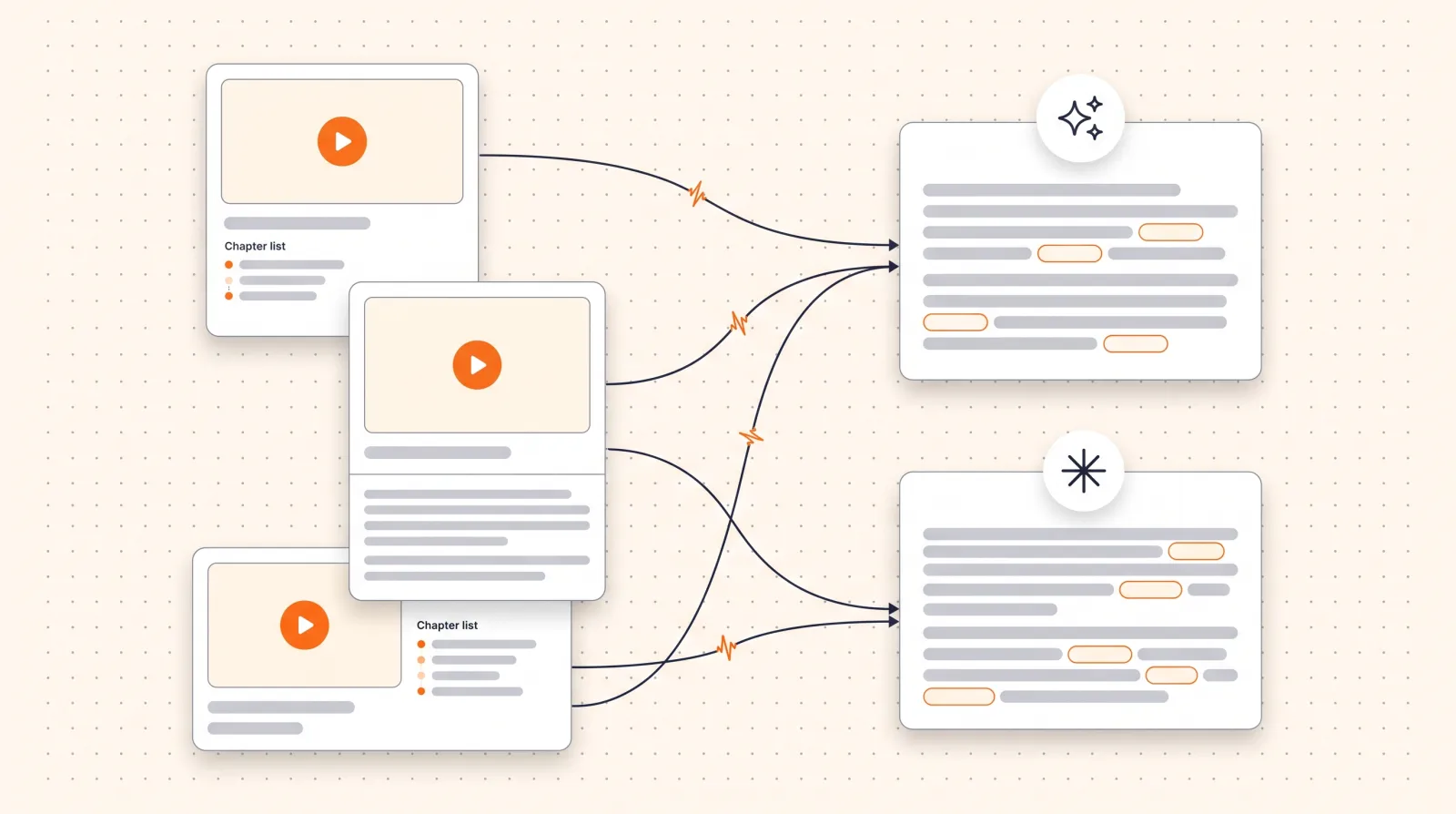
- Structure video the way engines retrieve it. A 45-minute webinar is a blurry asset that answers nothing specific. Cut long recordings into short single-topic clips — each answering one question, titled with that question — or chapter one long video with clean, question-titled timestamps. Engines tend to surface a tight three-to-five-minute segment that answers the query, so make each answerable moment individually legible.
- Clean your transcripts. The transcript is the text the engine actually reads, so auto-captions that mangle your product names and technical terms cost you citations. A cleaned transcript per clip is worth the ten minutes.
- Reuse what you already have. The clip that earns a Gemini or Perplexity citation is usually the same one that performs as a Short, Reel, or LinkedIn-native video — this is mostly a re-cutting job, not net-new production.
One honest caveat: the effect skews strongest in categories where buyers genuinely research by watching — technical products, how-to, tools. In niches with thin video coverage the YouTube lever is softer, which is exactly what your per-engine tracking will tell you before you spend a week editing.
14. Keep expanding the prompt set
Your first prompt list is a guess; your tracking data corrects it. Add prompts from four sources on a monthly cadence:
- Prompts where competitors already appear and you have never checked — your tracking tool’s competitor data reveals arenas you did not know existed.
- Real query logs — Bing Webmaster’s AI query report and your site-search data show the actual phrasings buyers use, which are always weirder and more specific than the ones you invented.
- New product surface — every launch, integration and use case spawns prompts.
- Adjacent intents — the “measure” prompts led us to “improve” prompts; winners in your category get asked about in ways losers never are.
Retire prompts too. A tracked prompt no one asks is noise with a cost attached.
15. Use query fan-out to find the questions behind the question
Modern engines do not answer your prompt directly — they explode it into sub-queries, retrieve for each, and synthesize. Ask “best AI SEO software” and the engine quietly also searches pricing, reviews, alternatives and comparisons, then builds one answer from the lot.
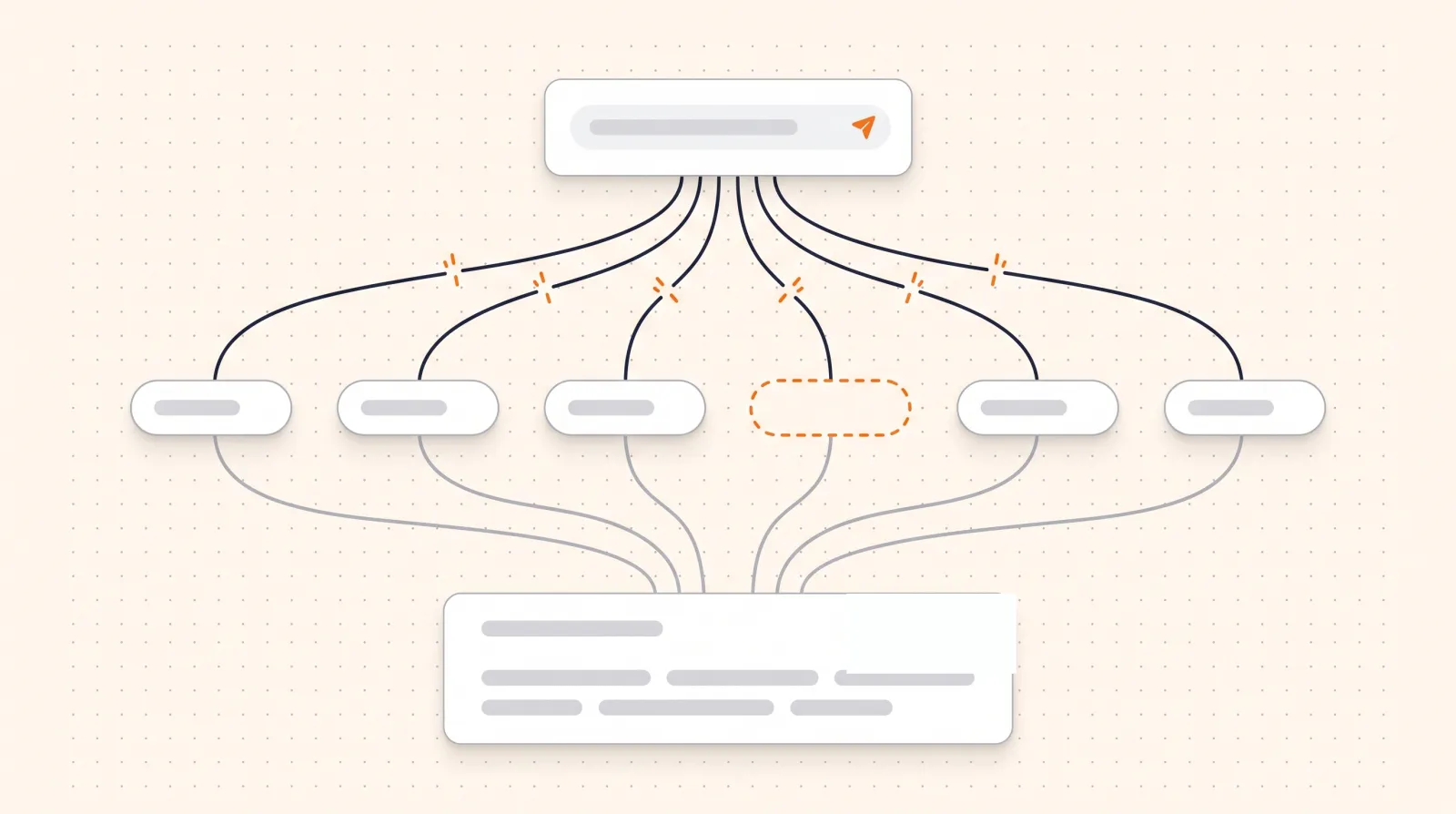
This means you can be invisible in an answer because you lost a sub-query you never tracked. Analyze the fan-out for your most valuable prompts — our full guide explains how — and cover the sub-questions with content, not just the head prompt. Brands that cover the whole cluster get assembled into answers; brands that cover only the head term get out-synthesized by those who did.
The bottom line
- AI engines are recommending brands in conversations no analytics tool shows you — tracking is the only way in.
- The workflow is a loop, not an audit: prompts → baseline → segment by engine and topic → benchmark share of voice → citations → sentiment → crawlers → revenue, then act and re-measure.
- The competitive metric that matters most is share of voice and exclusion rate on commercial prompts — mentions are nice, recommendations are revenue.
- The source landscape reshuffles overnight — Reddit’s 86% ChatGPT citation collapse in August 2026 proved it — and continuous tracking is the only thing that catches a channel going dark before a quarter’s strategy is built on it.
- Improvement is mechanical once you can see: create, optimize, or earn for each losing prompt, expand the set with real query data, and cover the fan-out.
You cannot win answers you cannot see. Run a free AI visibility audit — in about two minutes you’ll have your baseline across ChatGPT, Gemini and Claude, your share of voice against competitors, and the exact prompts where buyers are hearing someone else’s name.
Frequently Asked Questions
Build a set of 25–200 prompts your buyers actually ask, run them against each engine on a fixed schedule, and record four things per answer: whether your brand is mentioned, how prominently, which competitors appear alongside you, and which sources are cited. From that you derive a visibility rate (share of prompts where you appear), share of voice against competitors, and a citation profile. Manual checks work for a baseline; an AI search monitoring platform automates the sampling so you can read trends instead of snapshots.
An AI search monitoring platform runs your target prompts against engines like ChatGPT, Gemini, Perplexity and Claude on a schedule, parses each generated answer for brand and competitor mentions, extracts the cited sources, classifies sentiment, and stores everything with timestamps. The output is trend data: visibility rate, share of voice, average prominence, citation sources and sentiment over time, segmented by engine, topic and region — the AI-search equivalent of a rank tracker plus a media-monitoring tool.
Because a growing share of buying decisions now starts with a generated answer rather than a list of links, and you cannot see those answers in any traditional analytics tool. ChatGPT alone serves hundreds of millions of weekly users, and AI search visitors have been shown to convert at several times the rate of classic organic visitors. If AI engines recommend your competitors and not you, you lose deals you never knew existed — tracking is the only way to know it is happening and whether your fixes work.
Yes. AI answers are generated per query, so monitoring works by repeated sampling: run a fixed prompt set against each engine on a schedule and parse the answers for your brand. This yields a reliable mention rate and trend even though any single answer varies. Perplexity and Google AI Overviews also expose citations directly, so you can monitor being used as a source as well as being mentioned in the text.
Yes — the same sampling approach works for Gemini, with two Gemini-specific notes. First, Gemini's grounding leans heavily on Google's index and ranking signals, so your classic Google SEO strength influences Gemini mentions more than it does ChatGPT mentions. Second, Gemini powers AI Overviews and AI Mode inside Google Search, so tracking Gemini properly means tracking three surfaces: the Gemini app, AI Overviews, and AI Mode — each of which can answer the same question differently.
For each prompt in your tracking set, record every brand named in the answer, not just your own. Your share of voice is your brand's mentions as a percentage of all brand mentions across the prompt set, and it is the single best competitive metric in AI search because it shows who is winning the recommendation, not just whether you appeared. Segment it by engine and by topic — share of voice is usually lumpy, and the lumps tell you where to focus.
Classify each mention by role: recommended (the answer tells the user to choose or shortlist you), mentioned (you appear in a list or comparison without endorsement), or cited (your site is used as a source). A brand can have a high mention rate and a near-zero recommendation rate — common when engines know you exist but describe a competitor as the default choice. Tracking the recommendation rate separately is what connects visibility data to revenue.
AI citation tracking records which URLs and domains AI engines cite when answering the prompts you care about. It matters twice: citations of your own pages are the strongest form of AI visibility, and citations of third-party pages reveal which sources each engine trusts for your category — review sites, comparison posts, Reddit threads, documentation. That second list is effectively your PR and content target list, because getting into the sources engines already trust is the fastest route into the answers.
Video, before anything else. Gemini has native access to YouTube's index and transcripts because both are Google products, and Perplexity weights video transcripts heavily for how-to and comparison intent — in cross-engine citation data, YouTube is consistently among the most-cited domains for both. Publish short, single-topic clips titled with the exact question they answer, keep transcripts clean, and pair that with the standard levers: answer-first pages, schema markup, and earned mentions on the sources each engine already cites for your category.
Track the prompts where you should appear and do not. Define your relevant set — prompts where your category is being recommended — and measure the share where your brand is absent while competitors are present. That exclusion rate, broken down by engine and topic, is your most actionable number: each excluded prompt is a specific, addressable gap, and the citations shown in those answers tell you exactly which sources you need to appear in to close it.
Three ways. It shows which of your pages AI engines cite, so you know which content formats earn machine trust and can produce more of them. It reveals the third-party sources engines rely on for your category, which sharpens digital PR targeting. And it surfaces the prompts where you are absent, which is a content roadmap ranked by commercial value. Because AI engines lean on strong organic sources, most fixes that improve AI visibility — structured answer-first content, schema, authoritative citations — improve classic rankings too.
Find the prompts where you are absent or weakly mentioned, then close them one by one: publish answer-first content that directly addresses each prompt and its follow-up questions, add schema markup so engines can parse your claims, earn mentions on the third-party sources the engines already cite for your category, and keep your llms.txt and technical crawlability clean so AI crawlers can read your site. Re-measure on a fixed cadence — visibility scores move in weeks, not days, and only trend data tells you which fixes landed.
Use the same prompt set everywhere and compare. The engines overlap far less than people expect: a brand recommended by ChatGPT can be absent in Gemini and vice versa, because each retrieves from a different index and weights sources differently. Run 15 to 25 prompts across ChatGPT, Gemini, Perplexity, Copilot and Google AI Mode, record presence and citations per engine, and you will usually find one engine where you are strong and one where you are invisible. That gap is the priority.
Website visibility in AI search means two things: whether your pages are retrievable and whether they are cited. Check retrievability with a crawler test by fetching key pages as OAI-SearchBot and PerplexityBot and confirming the content is in the HTML. Check citations by running category prompts and logging which URLs each engine links. Search Console shows AI Overview and AI Mode clicks, and GA4 shows referrals from chatgpt.com and perplexity.ai. Together those four views tell you whether the site is seen, used and visited.