The Invisible Crisis: Ranking #1 on Google While AI Trashes Your Brand
We just ran an AI audit for a national brand that dominates its SEO. They rank #1 for almost every keyword in their niche. Their marketing team was popping champagne.
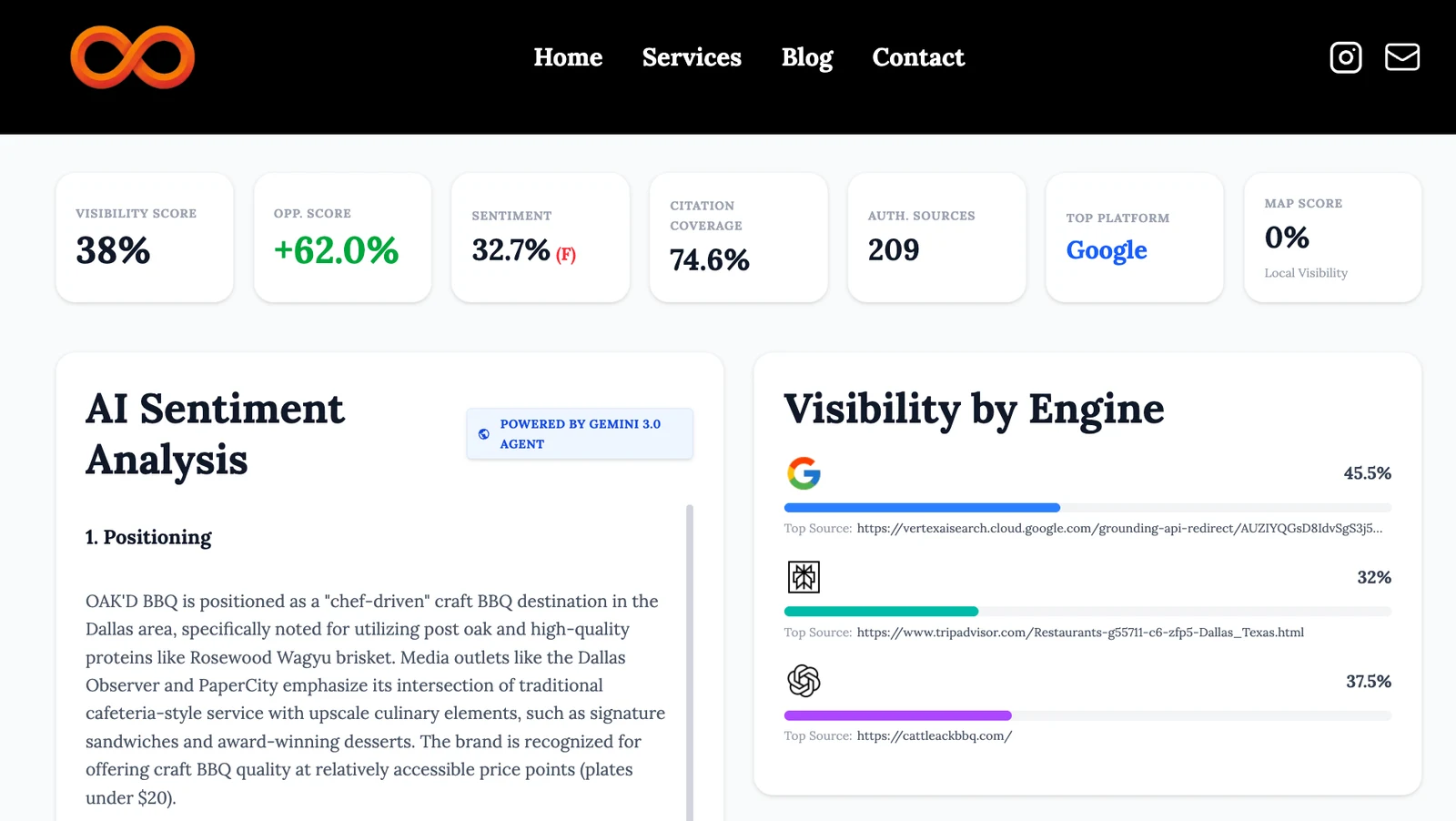
Then we looked at their AI Sentiment Score.
It was an F.
While Google was busy sending them traffic, ChatGPT was actively warning users not to buy from them. When asked for recommendations, the AI would mention the brand (High Visibility) but immediately follow up with, “However, users have reported inconsistent pricing and service delays”—citing a resolved issue from three years ago.
This is the “High-Visibility, Low-Sentiment” Paradox, and it is the single biggest threat to brand reputation in 2026.
The New Reputation Reality
For the last decade, we obsessed over “being found.” If you were on page one of Google, you won. But in the age of Answer Engines, being found is only half the battle.
- Visibility is just the AI acknowledging you exist.
- Sentiment is what the AI thinks of you.
Here is the scary part: AI “hallucinates” negativity.
In our recent audits, we found that Large Language Models (LLMs) often suffer from “Zombie Narratives.” Because these models are trained on massive historical datasets, they can latch onto an old controversy, a resolved lawsuit, or a flurry of bad reviews from 2022 and present them as current facts.
The Southwest Effect
A search for Southwest Airlines on ChatGPT might still confidently surface the 2022 holiday meltdown as a defining characteristic, effectively “locking in” a crisis that human PR teams worked years to fix.
Why This Hits Harder Than a Yelp Review
You might think, “So what? Consumers know AI isn’t perfect.”
The data disagrees. Research shows that 85% of customers are more likely to purchase from a brand with positive AI sentiment. More importantly, users who search via AI convert 4.4x higher than traditional search users.
These aren’t casual browsers; they are high-intent buyers looking for a specific answer. When the AI tells them, “Brand X is popular, but Brand Y has better reliability,” that buyer is gone. You paid for the SEO to get them interested, and the AI closed the sale for your competitor.
The Fix: Technical “Truth Injection”
You cannot “PR” your way out of an algorithmic problem. You have to solve it technically.
1. Audit Your “Zombie” Data
Use tools to see what the AI is actually saying about you. Is it citing a 2019 price hike? A 2021 service outage? You need to identify the specific “poison” source the AI is drinking from.
2. Feed the Machine (JSON-LD)
You need to speak the AI’s language. By publishing a “Brand Fact Dataset” using JSON-LD Schema, you explicitly tell crawlers: “Here is our current pricing. Here is our active leadership. Here is our verified support channel.” This forces the model to weigh your structured data against unstructured historical noise.
3. Correct the Record
If an AI is hallucinating facts about your business (like fake partnerships or wrong services), you need to publish authoritative, contradictory content on high-trust domains that the AI values (like LinkedIn, Crunchbase, or verified press releases) to overwrite the bad data in the vector space.
The Bottom Line: Visibility without positive sentiment isn’t marketing—it’s bad PR at scale. See also: How to Appear in ChatGPT Answers: The Bing Connection.
Check Your Sentiment Score Now
Frequently Asked Questions
This occurs when an AI engine (like ChatGPT) frequently mentions your brand (High Visibility) but qualifies that mention with negative context or warnings (Low Sentiment), effectively steering customers to competitors.
Large Language Models (LLMs) suffer from 'Zombie Narratives.' Because they are trained on massive historical datasets, they often treat resolved issues from years ago—like a 2022 service outage—as current facts.
You cannot 'PR' your way out of an algorithmic problem. You must use technical methods like JSON-LD Schema to inject current facts (pricing, leadership, support) directly into the AI's Knowledge Graph.
Zombie Narratives occur when AI models latch onto resolved issues from years ago—like a 2022 service outage or old negative reviews—and present them as current facts. Because LLMs train on historical datasets, outdated negative content can persist in recommendations long after the issue was fixed.
Yes, this is the High-Visibility, Low-Sentiment Paradox. A brand can rank #1 on Google while ChatGPT actively warns users against buying from them. Traditional SEO metrics don't capture how AI engines feel about your brand—only AI-specific sentiment audits can reveal this.
Research shows 85% of customers are more likely to purchase from brands with positive AI sentiment. Users who search via AI convert 4.4x higher than traditional search users. When an AI steers a high-intent buyer toward a competitor, you lose the sale despite paying for the SEO that generated initial interest.