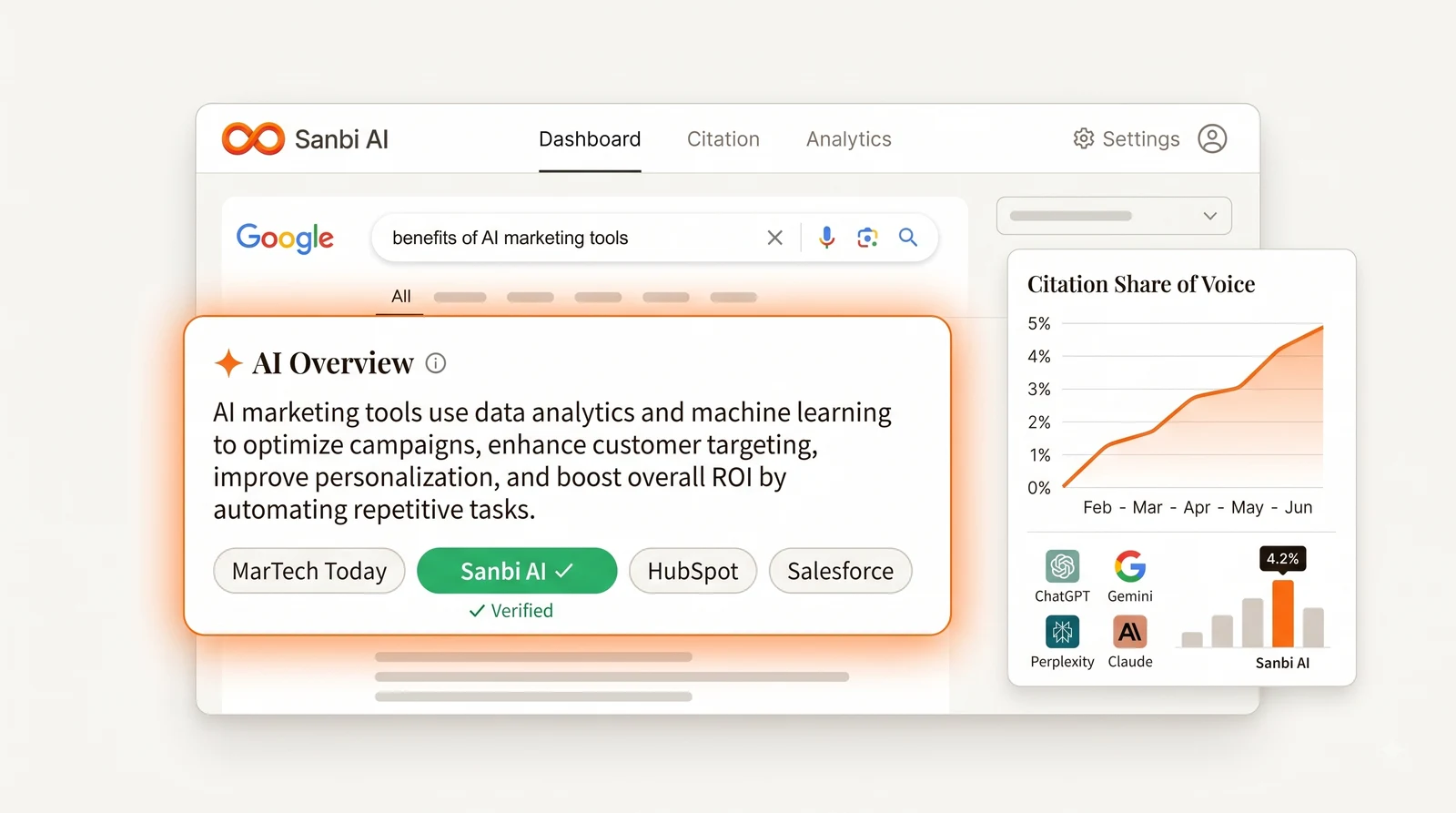
How to Make Your Website Rank in Google AI Mode (2026)
Most advice about ranking in Google AI Mode starts from a false premise: that there is a ranking. There is not. AI Mode assembles each answer at query time from a set of sources it picks per question, and the practical job splits into two parts — getting into the eligibility pool, which is technical and mostly binary, and getting selected from it, which is about whether your page answers the specific sub-question the model just generated. Almost every “we’re invisible in AI Mode” case we have looked at is a failure of the first kind wearing the costume of the second.
That distinction matters because the two halves have completely different fix times. Eligibility problems — a stray nosnippet, a JavaScript-only render, a bot rule returning 403s, the new Search Console opt-out toggle — are found in an afternoon and fixed in a day. Selection problems take a quarter. Most teams spend the quarter first.
The short version
| Lever | What it affects | Effort | How fast it shows |
|---|---|---|---|
Indexed + snippet-eligible, no nosnippet | Eligibility | Low | Days |
| Crawlers get clean 200s (verified in logs) | Eligibility | Low | Days |
| Content readable without JavaScript | Eligibility | Medium | Weeks |
| Search Console generative-AI opt-out left off | Eligibility | Trivial | Days |
| Answer-first pages for fan-out sub-questions | Selection | High | Weeks–months |
| Complete Google Business Profile / product data | Selection (local, retail) | Low | Weeks |
| Third-party presence on sources the engine trusts | Selection | High | Months |
| Video with clean transcripts | Selection (visual categories) | Medium | Months |
Work top to bottom. The cheap rows are not the glamorous ones, and they are where the wins usually are.
What you are actually optimizing for
AI Mode is Google Search’s conversational surface: a full-page generated answer with follow-ups, powered by a custom Gemini model but grounded in Google’s live index. Google said in its Q2 2026 earnings call that it has “surpassed 1 billion monthly active users” since expanding AI Mode globally, and that Google is now “sending billions of clicks to websites every week through AI features in Search.” Whatever you make of the click figure, the audience number settles the strategic question.
The mechanic that matters is query fan-out. One prompt becomes many silent sub-searches; the model composes an answer from the best passages it retrieves across all of them. Google describes this in its own documentation as “issuing multiple related searches across subtopics and data sources,” which is why AI Mode surfaces “a wider and more diverse set of helpful links” than a classic results page.
For a full explainer on what AI Mode is and how it differs from AI Overviews and the Gemini app, see Google AI Mode, explained; for measurement, see our guide to tracking Google AI Mode. This piece is about getting into the answer.
Rule 1 — Classic rankings are the entry ticket, not the guarantee
AI Mode is grounded in Google’s index, so ranking still matters more here than for any other AI engine. But the transfer is weaker than most SEO teams expect, and weaker than for AI Overviews.
Semrush’s comparison study of 5,000 keywords and more than 150,000 citations put numbers on it:
| Surface | Domain overlap with Google top 10 | URL overlap |
|---|---|---|
| AI Overviews | ~86% | ~67% |
| Perplexity | >91% | ~82% |
| Google AI Mode | ~54% | ~35% |
| ChatGPT | Weakest of the four | — |
In the same study, 92% of AI Mode responses showed a sidebar of roughly seven unique domains, and that sidebar overlapped Google’s top 10 by only 51% of domains and 32% of URLs. Ahrefs, analysing 1.9 million AI Overview citations, found 76.1% of cited pages ranked in the top 10 — with median organic positions of 2, 4 and 5 for the first, second and third citations. Both studies date from mid-2025, and the absolute numbers have moved since; treat the gap between the surfaces as the durable finding, not the decimal places.
Read those two studies together and the conclusion is uncomfortable but useful: AI Overviews largely re-rank the page you can already see; AI Mode goes shopping. Published overlap estimates disagree wildly across studies — from the low teens to over 90% — because they measure different things (domains vs URLs, AIO vs AI Mode, commercial vs informational prompts). The spread is the finding. Rank is neither necessary nor sufficient.
Practically: keep doing technical and content SEO, because it builds the pool you get selected from. Just stop treating position 1 as a finish line. You can own page one and be absent from every answer on it.
Rule 2 — You are not ranking for a query, you are ranking for a fan-out
This is the single biggest content shift, and it is the reason “we targeted that keyword and got nothing” happens.
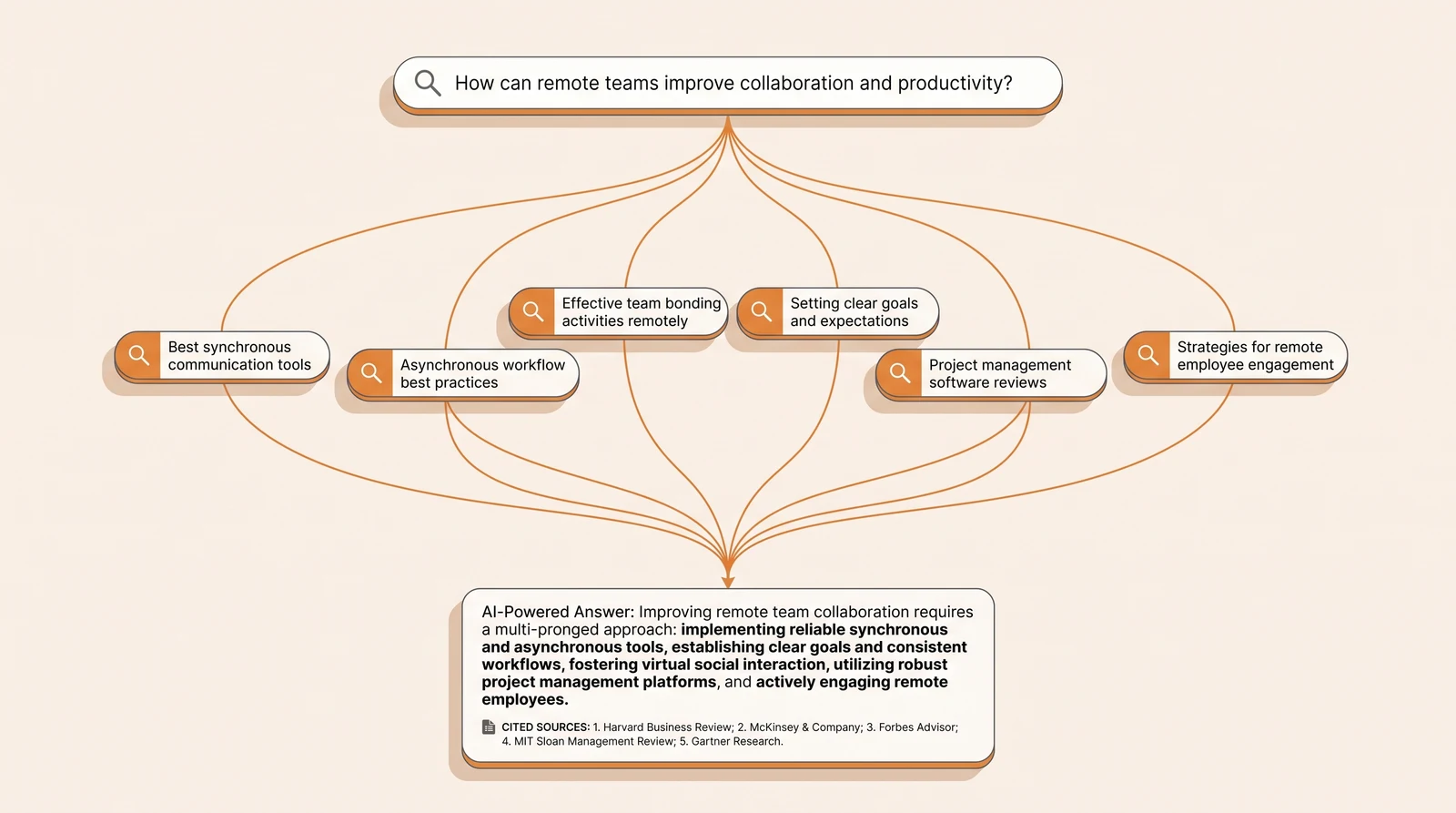
A prompt like “best project management software for a 12-person agency” does not run as one search. It runs as several: pricing tiers for small teams, agency-specific features, client-billing integrations, recent reviews, comparisons against two named competitors. Your page can be the best page on the internet for the head term and contribute nothing to five of those six sub-searches.
How to work it:
1. Reverse-engineer the fan-out. Run your target prompt in AI Mode and read what the answer actually covers — the sub-topics it addresses are the sub-queries it ran. Then read the suggested follow-up questions, which are the next fan-out in miniature. Do the same in the Gemini app and in a competitor-heavy prompt, and you will have 10–20 real sub-questions inside an hour.
2. Give each sub-question a home. Not a page each — a heading each, phrased as the question, with the answer in the first two sentences under it. A single strong page covering eight sub-questions cleanly beats eight thin pages.
3. Cover the comparison and constraint questions. Fan-out disproportionately generates “X vs Y”, “best X for [constraint]”, “how much does X cost”, “is X worth it”. These are exactly the questions marketing teams avoid writing about honestly, which is why the pages that do answer them get cited.
4. Be specific enough to be liftable. “Pricing varies by plan” contributes nothing to a synthesis. “Plans start at $29 per user per month, with the client-billing module on the $79 tier” is a passage a model can lift verbatim.
Rule 3 — In AI Mode, Google itself is your biggest competitor for citations
This is the least-known finding in the category and it changes where local and retail brands should spend.
Profound tracked AI Mode citation share from 15 April to 30 June 2026, analysing more than 32 million google.com/searchviewer instances, and found that google.com had become AI Mode’s second most-cited domain — an 8.4x increase in roughly two months. The increase came almost entirely from Google Business Profiles and product knowledge panels, recorded as google.com citations at the domain level even when the card is about your business. The effect was strongest in hospitality and travel, home services, restaurants and dining, real estate, and healthcare.
The strategic read: in those categories, a meaningful share of the citation slots are not available to anybody’s website. They are Google’s own panels, populated with your data. So:
- Ask readers to add you as a Google Preferred Source. It labels your content inside their AI Overviews and AI Mode answers, and takes about five minutes to set up.
- Claim and fully complete your Google Business Profile. Every field, correct categories, services, products, attributes, hours. For a local business this is now the highest-leverage AI visibility work available, ahead of anything on your own domain.
- Keep reviews recent. Engines weight freshness; a steady trickle beats a stale pile, and recency is visible in the panel AI Mode is citing.
- Feed clean product data. Merchant Center product feeds populate the product panels that show up in shopping-intent answers.
- Claim Apple Business Connect. Since the Apple–Google deal announced in January 2026, Siri runs on Gemini across a billion-plus devices, which makes Apple’s local data an input to an increasingly Gemini-shaped answer layer. Almost nobody has claimed theirs. Do Yelp while you are at it.
Rule 4 — Make sure a machine can read you, and that you have not opted yourself out
Google’s own documentation on AI features is blunter than most agency decks: “There are no additional requirements to appear in AI Overviews or AI Mode, nor other special optimizations necessary.” A page must be “indexed and eligible to be shown in Google Search with a snippet,” and you should be “making sure that important content is available in textual form.”
That single sentence contains four ways to disqualify yourself:
nosnippet, data-nosnippet and max-snippet. These remove the page from AI Overviews and AI Mode along with snippets. Publishers added them during the 2025 AI panic and never took them off. Grep your templates.
JavaScript-only content. Googlebot does render JavaScript, so this is less fatal for AI Mode than for the other engines — but rendering is queued and unreliable on heavy client-side apps, and the passages a model can lift are the ones present in the HTML response. Every other AI crawler is materially worse at it. Fetch your key pages with the crawler’s user agent and read what actually comes back; if your prices, spec tables or reviews are injected client-side, they may be invisible to the systems you want quoting them.
Bot rules you did not write. Security plugins, WAFs and Cloudflare defaults block crawlers silently. The only reliable check is your server or Cloudflare logs: find the user agent, confirm a 200 status code. Reading your robots.txt tells you what you intended; the logs tell you what happened.
| Crawler | Belongs to | What blocking it costs you |
|---|---|---|
| Googlebot | Google Search | AI Overviews, AI Mode, and classic Search |
| Google-Extended | Gemini training/grounding | Gemini app grounding — not AI Overviews or AI Mode |
| GPTBot / OAI-SearchBot | OpenAI | ChatGPT search visibility |
| ClaudeBot / Claude-User | Anthropic | Claude visibility |
| PerplexityBot | Perplexity | Perplexity visibility |
The Search Console opt-out. In June 2026 Google added a generative-AI control under Search Console → Settings, initially for UK properties in response to a CMA conduct requirement, and rolled it out worldwide by the end of August 2026. It excludes your site from AI Overviews, AI Mode and AI Overviews in Discover — both as a link and for grounding. Google says it is not used as a ranking signal for regular Search. Unless you have a deliberate publisher-economics reason, leave it off, and check that nobody on the team has flipped it.
On llms.txt: Google explicitly says “you don’t need to create new machine readable files, AI text files, or markup to appear in these features.” It costs nothing to publish and a few smaller engines experiment with it, so treat it as an optional extra rather than a lever — our llms.txt guide covers where it does and does not earn its keep.
Rule 5 — Write the paragraph the model can lift
Selection, once you are eligible, is mostly about answer shape.
- Answer in the first paragraph. The direct answer goes above the context, the history and the “in today’s fast-moving landscape.” If a reader has to scroll to the answer, so does the model.
- Headings phrased as questions. They map onto fan-out sub-queries almost one-to-one.
- Tables for anything comparative. Comparisons, pricing, specs and feature matrices get lifted intact more than prose does.
- Specifics over adjectives. Numbers, dates, named entities, prices, versions. “Industry-leading accuracy” is unciteable; “94.2% accuracy across 5,000 test prompts, measured in March 2026” is a fact a model can repeat.
- Structured data that matches the page. Schema is not a citation trigger, but it disambiguates entities and keeps the machine-readable version of your facts aligned with the visible one. Our structured data guide has the specifics.
- Dates that are real. Freshness signals get weighted; fake “updated” stamps get caught and undermine the trust you are trying to build.
Rule 6 — Off your own site, each engine reads a different internet
There is no single “AI visibility.” The engines build answers from source pools that barely overlap, and a strategy tuned for one can be worth nothing on another.
| Engine | Where it reads | What that means for you |
|---|---|---|
| Google AI Mode / AI Overviews | Google’s index, YouTube, Google’s own panels | Classic SEO transfers furthest; GBP and product data are citations |
| Gemini app | Google index + YouTube | Video and Google-ecosystem presence |
| Perplexity | Live retrieval, transcripts, community threads | Easiest to audit — it shows citations on every answer |
| ChatGPT | Bing’s index + training data | Bing indexing and third-party mentions, not Google rank |
| Claude | Training and reference-leaning | Cites live social far less; durable reference sources win |
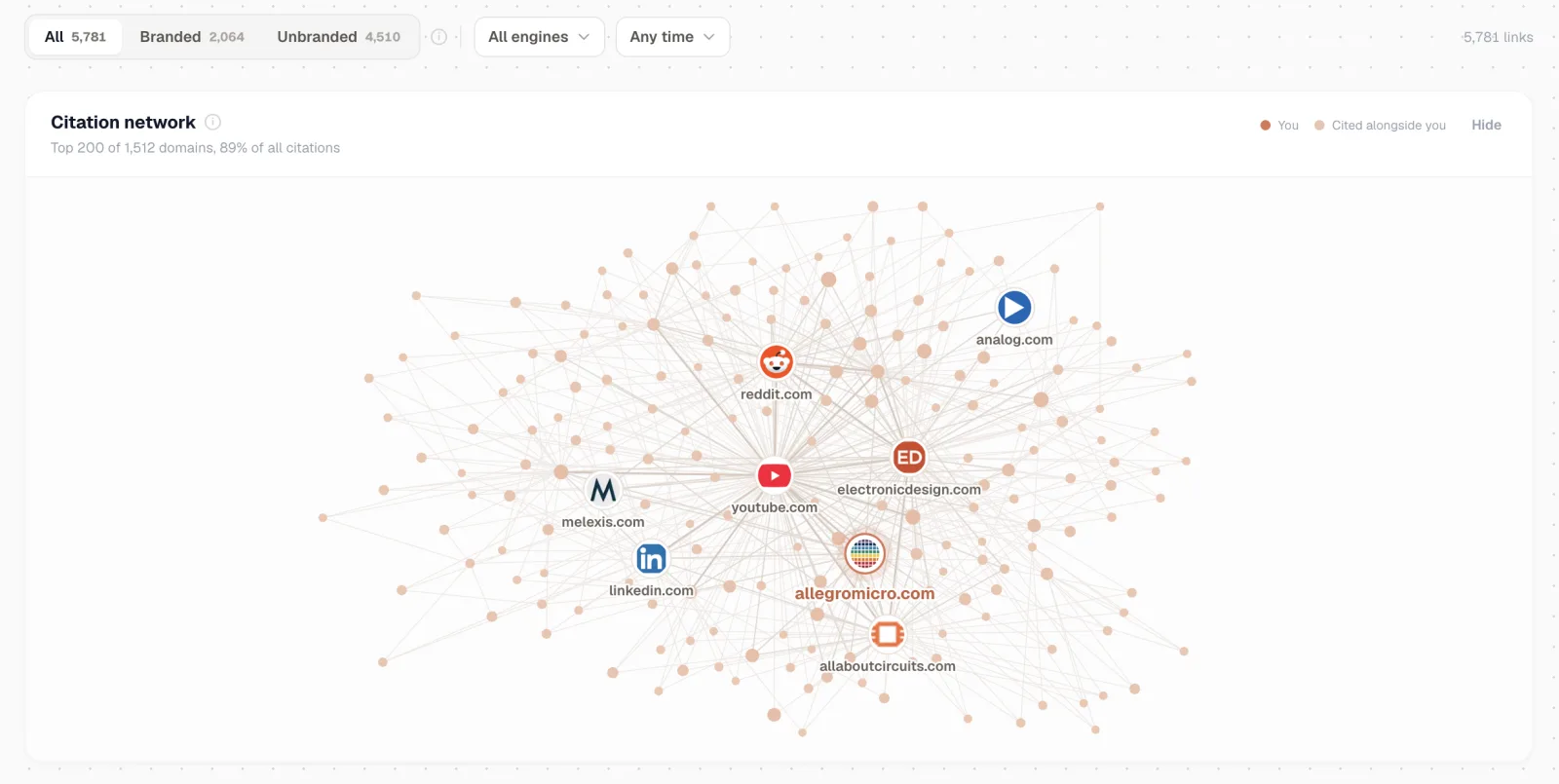
The screenshot above is one client’s citation network — 5,781 citation links across 1,512 domains — and the hubs are YouTube, Reddit, LinkedIn and two trade publications. Those hubs are the actual competitive surface. The single most useful exercise in this whole article: run the prompts you lose and write down what got cited instead. That list is your PR and content roadmap, pre-ranked by how much the engines already trust each source.
And do not build on one source. In August 2026, Reddit’s share of ChatGPT citations collapsed from about 3.8% to 0.5% — an 86% drop in days — from an unannounced backend change, while its share of Google AI Overviews citations barely moved. ChatGPT kept reading Reddit at roughly the same rate; it stopped citing it. We walked through what that means for anyone reading a citation dashboard in how to track your visibility in AI search. A two-year pattern reshuffled in a week — diversified presence across the sources each engine trusts is the only durable position.
Rule 7 — Video is the underpriced lever on Google surfaces
Google owns YouTube, and it shows: video is first-class in Gemini-family answers, and transcripts are the text that actually gets read. If you already produce long video or podcasts, the conversion is mechanical — cut single-topic clips titled as the question they answer, or chapter one long video cleanly, and publish accurate transcripts. Engines surface tight three-to-five-minute segments, not 90-minute recordings.
The caveat is honest: this is strongest in categories people research by watching. Check your own citation data before funding a video program on the strength of a general claim.
Rule 8 — Location and language change the answer entirely
Same brand, same prompt, different city, different answer — built from different local sources. Different language, different corpus again.
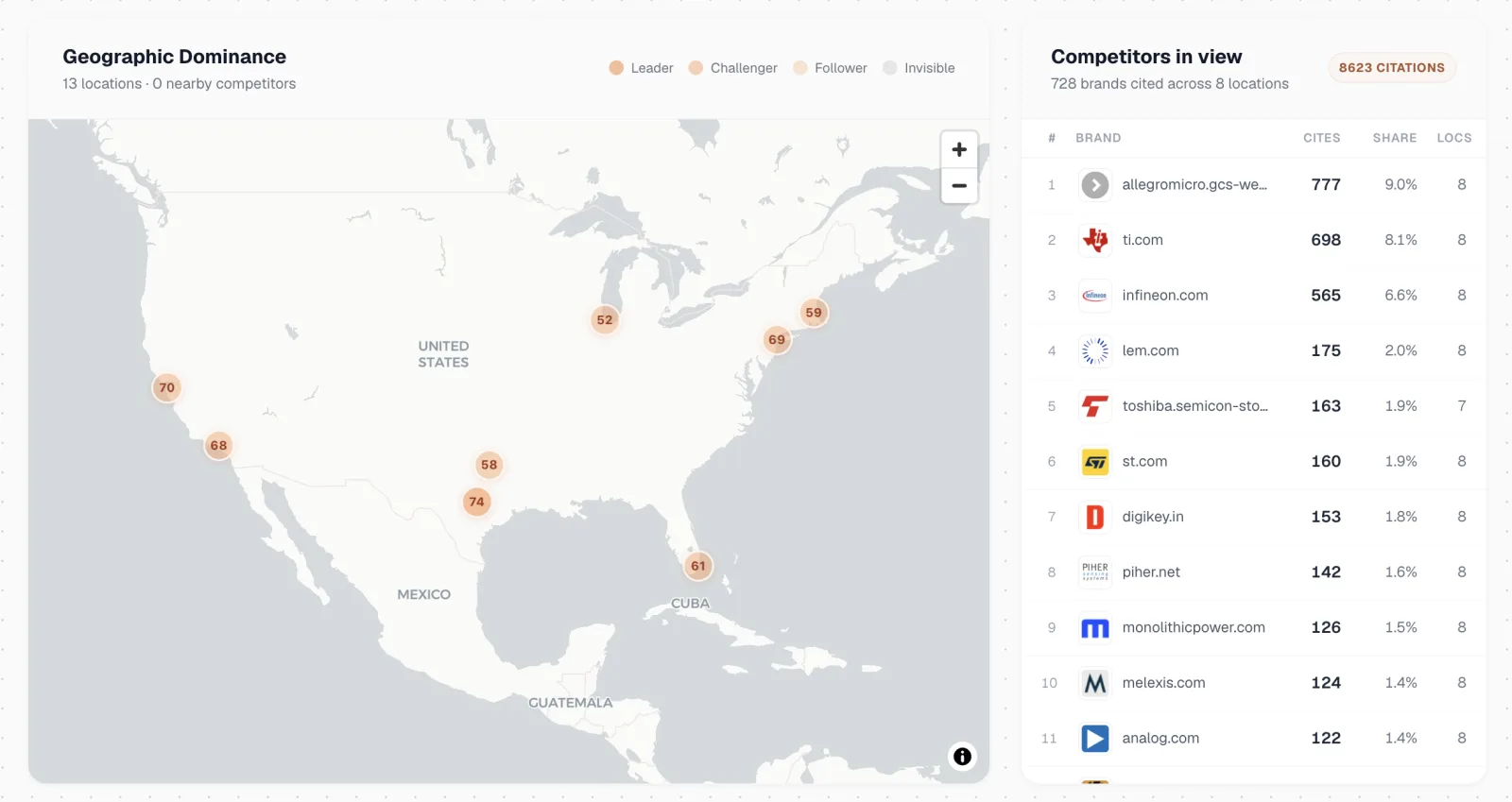
The view above shows one brand’s citation position across eight locations, with 8,623 citations and 728 competing brands in the field — the per-city scores range from 52 to 74, which is the difference between leading and being an also-ran depending on where the question is asked. An English-only, single-location audit will confidently tell you that you are fine.
If you serve multiple markets, check each market separately and in the local language, and make sure your location pages actually answer questions about that location in text rather than swapping a city name into a template. Our geographic AI answers breakdown goes deeper on why the divergence is this large.
How to tell whether any of it worked
Four instruments, none of which is sufficient alone:
Search Console’s generative-AI performance report. Launched 3 June 2026 and rolled out to all sites worldwide by 31 August 2026, it shows impressions for AI Overviews and AI Mode, broken down by page, country, device and date. Impressions only — no clicks, CTR or query data, and no API. It answers “are we appearing at all,” not “for what.”
Bing Webmaster Tools AI Performance. In public preview since 9 February 2026, it shows which of your pages Copilot cites and the grounding queries that triggered them — the actual reformulated queries the model generated. A June 2026 update added Intents, Topics, Citation Share and Compare. It covers Microsoft’s surfaces, not Google’s, but it is the closest thing to a free window into real fan-out behaviour.
GA4. AI Mode clicks arrive as ordinary google / organic sessions — indistinguishable from blue-link clicks. What GA4 can isolate is referral traffic from the standalone engines (chatgpt.com, perplexity.ai, gemini.google.com, copilot.microsoft.com). Build that channel group; it is the one solid, API-accessible number today.
Prompt-level tracking. Build 25–50 real buyer prompts — category and comparison intent, not branded — run them per engine on a fixed cadence, and record for each: mentioned, how prominently, which competitors, which sources cited. Trends are the truth; single runs are coin flips. Segment by engine and topic, because aggregates hide everything useful.
The number to report upward is exclusion: prompts where competitors appear and you do not. A raw visibility score means nothing to a CFO. “Here are twelve buyer questions where your three biggest competitors all appear and you are invisible” is understood instantly and converts directly into assignments. Our guide to tracking Google AI Mode covers the method in full, and Run a free AI visibility audit will baseline you across every surface in about two minutes.
Five things that do not work
- Waiting for an “AI impressions” switch. There is none. Appearing is the default; the only toggle Google added is the opt-out.
- llms.txt as a ranking file. Unproven with the major engines and explicitly unnecessary per Google. Publish it if you like; do not budget around it.
- Schema as a citation trigger. It disambiguates, it does not summon.
- One strategy for all engines. The source pools barely overlap. What wins in AI Mode is often irrelevant in ChatGPT.
- Chasing a rank number. Tools that report a “position” in AI Mode are mapping prominence onto a familiar-looking number. Useful as a UI convention, misleading as a target.
A 30-day plan
| Week | Do this |
|---|---|
| 1 | Log audit: confirm Googlebot and the AI crawlers get 200s. Grep for nosnippet / max-snippet. Check the Search Console generative-AI toggle is off. Render-test your top 20 pages without JavaScript. |
| 2 | Run 25 buyer prompts in AI Mode with location set. Record mention, prominence, competitors, cited URLs. Build the exclusion list. |
| 3 | Complete Google Business Profile and product data end to end. Claim Apple Business Connect and Yelp. Start a review cadence. |
| 4 | Rewrite your five highest-intent pages answer-first, with question headings and a comparison table each, covering the sub-questions from week 2’s fan-out analysis. |
Then re-run week 2’s prompt set monthly. The list of answers you lose, and what got cited instead, is a standing backlog that never needs inventing.
The bottom line
Ranking in Google AI Mode is not a ranking problem. It is an eligibility problem wearing a content problem’s clothes, plus a citation problem that is partly decided on Google’s own property rather than yours. Fix eligibility in a week, because it is cheap and binary. Then spend the quarter on fan-out coverage, on the profiles and feeds that populate the panels AI Mode cites, and on being present in the sources this specific engine trusts.
And measure it per engine, per location, on a schedule — because the one thing every study, every backend change and every citation collapse of the last two years agrees on is that the source landscape moves faster than your content calendar.
Frequently Asked Questions
There is no rank to climb in AI Mode — there is an eligibility pool and a selection step, and you work on both. Eligibility means the page is indexed, snippet-eligible, readable without JavaScript, and not excluded by nosnippet or the Search Console generative-AI opt-out. Selection means the page directly answers one of the sub-questions AI Mode generates through query fan-out, in extractable language, on a site Google already treats as a credible source for that topic. For local and product queries, a complete Google Business Profile and clean product data matter as much as anything on your own domain, because AI Mode cites Google's own panels heavily.
Not in the ten-blue-links sense. AI Mode returns a synthesized answer with a set of cited sources, usually around seven domains in the side panel, and that set is assembled per answer rather than drawn from a fixed ranked list. What you can influence is how often you are in that set, how prominently you are named, and how you are described. Teams that keep using the word 'rank' usually mean citation frequency and prominence across a set of buyer prompts, which is a measurable thing — it is just not a position number.
AI Mode breaks a prompt into several sub-queries through query fan-out, retrieves candidate pages for each from Google's index, and asks the Gemini model to compose an answer from the most useful passages. Pages that get cited tend to answer one of those sub-questions directly and specifically, already rank reasonably well for it, render cleanly without JavaScript, and carry clear entity and structured-data signals. Being the best page for the head term is not enough; you need coverage of the follow-on questions the fan-out generates.
Yes, more than for any other AI engine — but less than people assume. AI Mode is grounded in Google's index, so pages that rank for the fan-out sub-queries are the pool it draws from. Semrush's comparison of 5,000 keywords found AI Mode shares roughly 54% of domains and 35% of URLs with Google's top 10, against about 86% and 67% for AI Overviews. In other words, AI Mode retrieves far more independently than the AI Overview does. Strong classic rankings are the entry ticket, not the guarantee.
Usually one of four reasons. First, you rank for the head term but not for the sub-questions the fan-out actually ran. Second, your page buries the answer — the model cannot lift a clean passage out of it. Third, you are technically excluded: a nosnippet or max-snippet directive, a JavaScript-only render, a bot rule blocking Google's crawlers, or the Search Console generative-AI opt-out. Fourth, for local and product queries, AI Mode is citing Google's own Business Profile and product panels instead of anyone's website. Check those in that order.
Content that answers one specific question completely and early. AI Mode favours pages where the direct answer sits in the first paragraph under a heading phrased as the question, supported by specifics — numbers, dates, named entities, comparison tables — rather than throat-clearing introductions. Because fan-out spreads a single prompt across many sub-queries, breadth of coverage across a topic cluster matters as much as depth on any one page. Thin, templated or purely promotional pages lose to a specific page from a smaller site almost every time.
It helps indirectly, and Google is explicit that it is not a requirement: 'You don't need to create new machine readable files, AI text files, or markup to appear in these features.' What structured data does well is disambiguate entities — who you are, what a product costs, what an article's date is — and make sure the machine-readable version of a page matches the visible one. Treat schema as accuracy insurance on facts you want repeated correctly, not as a citation trigger.
There is no evidence that Google reads llms.txt, and Google's own documentation says no new AI text files are needed to appear in AI Overviews or AI Mode. It costs almost nothing to publish and some smaller engines experiment with it, so it is a reasonable optional extra — but it is nowhere near the crawl access, rendering and answer-shape work that actually moves AI Mode citations. If you are choosing between writing an llms.txt and checking that GPTBot and Googlebot get clean 200s in your server logs, check the logs.
For AI Mode specifically, the crawler that matters is Googlebot — AI Mode is grounded in Google's regular index, so if Googlebot can crawl and index the page and it is snippet-eligible, you are in the pool. Google-Extended is a separate control that governs Gemini model training and grounding, and blocking it does not remove you from AI Overviews or AI Mode. The wider AI crawler question (GPTBot, ClaudeBot, PerplexityBot) matters for the other engines, and the only reliable way to check any of them is your server or Cloudflare logs: look for the bot's user agent and confirm a 200 status code.
Easily, and it is the most common own goal. A nosnippet or data-nosnippet directive removes the page from AI Overviews and AI Mode along with snippets, and a restrictive max-snippet does the same in practice. A JavaScript-only render can leave the crawler with an empty page. Over-aggressive bot protection or a WAF rule can return 403s to crawlers while looking fine in a browser. And since August 2026 every site has a Search Console toggle under Settings that removes it from AI Overviews, AI Mode and AI Overviews in Discover — both as a link and as grounding. Check all four before assuming a content problem.
No, and there is nothing to turn on — appearing in Google's AI features is the default for any indexed, snippet-eligible page. The only switch Google added is the opposite one: a generative-AI opt-out under Search Console Settings that excludes your site from AI Overviews and AI Mode. It started as a UK-only control in June 2026 in response to a CMA conduct requirement and rolled out worldwide by the end of August 2026. Google says it is not used as a ranking signal for regular Search, but flipping it removes you from the surfaces this article is about.
For local and product queries it is now one of the strongest levers available. Profound's analysis of more than 32 million google.com/searchviewer instances between 15 April and 30 June 2026 found google.com had become AI Mode's second most-cited domain, with citations up 8.4x in roughly two months — driven almost entirely by Google Business Profiles and product knowledge panels. The effect was strongest in hospitality and travel, home services, restaurants, real estate and healthcare. In those categories, a complete, current, review-rich profile is part of your AI Mode content, not a separate local-SEO chore.
Faster than classic ranking improvements, because AI Mode composes each answer at query time from the current index. New or updated pages that are crawled and indexed quickly can enter answers within days once they rank for a relevant sub-query. What takes months is the underlying eligibility: building enough topical coverage that you rank for the fan-out sub-queries in the first place, and enough third-party presence that the model treats you as a credible option. Expect technical fixes to show up in weeks and content and authority work to show up over a quarter or two.
Three layers. Run your buyer prompts in AI Mode yourself, from a clean session with location set to your target market, and record whether you are named, how you are described, which competitors appear and which URLs are cited. Then use Search Console's generative-AI performance report, which since June 2026 shows impressions for AI Overviews and AI Mode — impressions only, with no clicks, CTR or query data. Then, for anything ongoing, track a fixed prompt set on a schedule so you are reading a trend rather than a single volatile answer.
AEO and GEO are the discipline — optimizing to be the answer across every engine. AI Mode SEO is that discipline applied to one surface, and the surface has unusual properties: it is grounded in Google's index, so classic SEO carries over further than it does for ChatGPT, and it cites Google's own panels heavily, which no other engine does. Work the shared fundamentals once — crawl access, answer-shaped content, entity clarity, third-party presence — then treat per-engine specifics as separate projects, because the source pools barely overlap.
Start with the Google Business Profile, because AI Mode cites those panels directly: complete every field, keep hours and services current, add products and attributes, and keep a steady trickle of recent reviews rather than a stale pile. Then claim Apple Business Connect — with Siri running on Gemini since the Apple-Google deal announced in January 2026, Apple's local data feeds an increasingly Gemini-shaped answer layer, and almost no competitor has claimed theirs. Then make sure your own location pages answer the specific questions people ask about that location, in text, per market and per language.
In categories people research by watching, yes. Google owns YouTube and its AI surfaces treat video as first-class, and transcripts are the text that actually gets read. The practical format is short, single-topic clips titled as the question they answer, or one long video chaptered cleanly, each with an accurate transcript. It is the most underpriced lever for Gemini-family surfaces and Perplexity, and close to irrelevant for categories nobody researches on video — check your own citation data before investing.
Four numbers across a fixed set of 25-50 buyer prompts: mention rate (how often you are named), citation rate (how often your domain is linked), prominence (whether you are named first or buried), and exclusion (prompts where competitors appear and you do not). The exclusion list is the most actionable of the four — it converts an abstract visibility score into a specific gap list you can assign. Track per engine and per topic, because aggregate scores hide the divergence that matters.
Sanbi runs your prompt set against AI Mode and the other major engines on a schedule and per location, records every mention, citation, competitor and cited source, and turns the gaps into assigned actions — the page to update, the page to create, or the third-party source now filling a slot you want. That closes the loop this article describes: the citations of the answers you lose are your to-do list, and Sanbi's Growth view hands you that list instead of a chart. You can start with a free AI visibility audit to see where you stand across every surface in about two minutes.