Structured Data 101: The Language of AI Search
In our previous post, we discussed how AI Search is the New SEO. We established that while humans look for engaging visuals and catchy headlines, AI models (like Gemini, Perplexity, and SearchGPT) look for facts.
But how do you hand-deliver those facts to an AI? You do it through Structured Data.
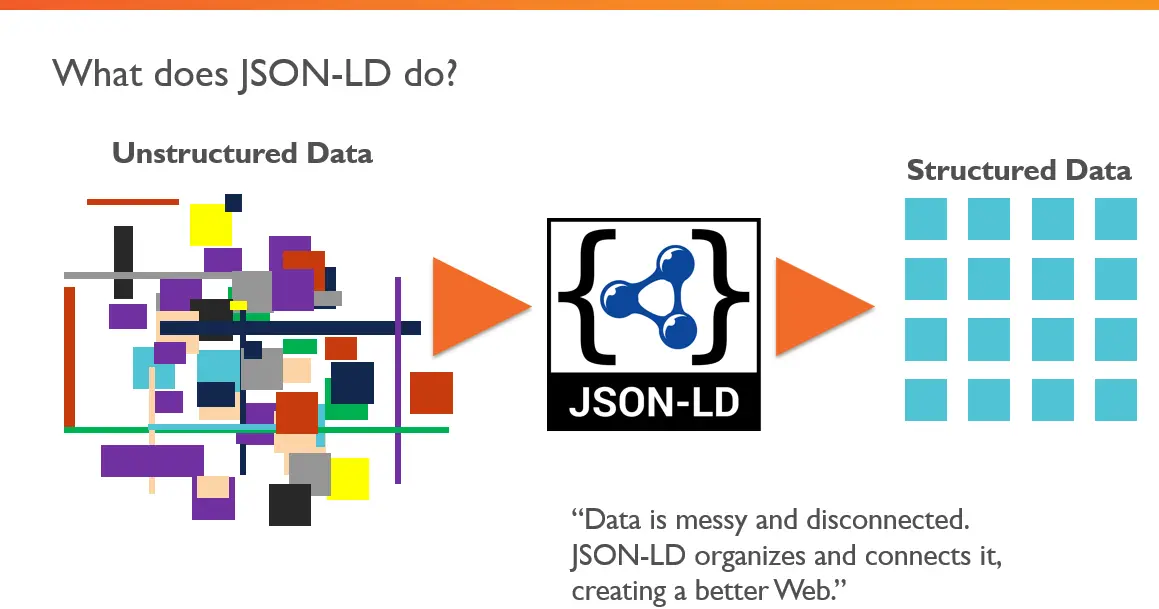
Most business owners rely on their visible website text to convey information. The problem is that AI models view plain text as “unstructured”—meaning it’s open to interpretation (and hallucinations). To establish authority, you need to speak the AI’s native language: Schema.org and JSON-LD.
The Universal Translator: What is Schema?
Think of your website as a library book.
- HTML/Text is the story inside the book (what humans read).
- Schema (Structured Data) is the digital card catalog entry (what the librarian/AI reads).
If you don’t have that catalog entry, the AI has to “guess” what your business does by reading every page. If you do have it, you are handing the AI a verified identity card that says: “I am a Business. I am located here. I sell these specific services.”
The 3 “Must-Have” Tags for AI Visibility
To stop being “invisible” or “unverified” in AI search results, you need to implement specific Schema tags. Here are the three most critical ones for any service business:
1. The “LocalBusiness” Tag
This is the foundation. It tells the AI exactly who you are, your physical coordinates, your operating hours, and your contact info.
- Why it matters: When a user asks an AI, “Is Sanbi open right now?”, the AI looks for this specific tag to verify the answer. Without it, the AI might say, “I’m not sure,” or reference outdated info from a third-party directory.
2. The “Service” Tag
This tag defines your products or offerings in a machine-readable format.
- Why it matters: If you sell “AI Optimization,” you don’t just want it in a paragraph. You want it coded as a
Serviceso that when someone prompts, “Who offers AI Optimization near me?”, the AI can match your service type directly to the query with high confidence.
3. The “FAQPage” Tag
AI Search is conversational; it thrives on Questions and Answers.
- Why it matters: By wrapping your Frequently Asked Questions in
FAQPageschema, you are essentially pre-packaging answers for the AI. This increases the likelihood that an AI will lift your exact answer and serve it to the user as the primary source.
How Sanbi.ai Implements Your “Digital Identity”
Adding Schema isn’t just about installing a plugin; it requires precise coding (usually in JSON-LD format) that matches your business reality perfectly. Conflicting data can actually hurt your visibility.
At Sanbi.ai, we don’t just optimize for keywords; we build the “Data Layer” of your business. We ensure your Structured Data is error-free, comprehensive, and perfectly aligned with what the major AI models are looking for.
For a complete strategy guide, see our Complete Guide to AEO in 2026.
Ready to translate your business for the AI era? Start your Visibility Audit and ensure you are speaking the language of the future.
Frequently Asked Questions
Yes, Schema Markup (JSON-LD) is critical for AI visibility. It translates your website content into machine-readable code, allowing LLMs to ingest facts about your services, pricing, and location without hallucinating.
Entity Optimization is the strategic process of defining your brand as a distinct noun (Entity) in the Knowledge Graph. This involves linking your brand to specific attributes (industry, founder, location) using 'SameAs' schema properties.
The most effective Schema types for AI visibility are 'Organization' (with 'knowsAbout' properties), 'FAQPage' (for direct Q&A ingestion), and 'Service' schema to clearly define your offerings.
Structured data (JSON-LD, Schema.org) provides machine-readable facts that AI models can parse with high confidence. Unstructured data (plain text, paragraphs) requires the AI to interpret meaning, which leads to hallucinations and factual errors about your business.
Yes. When you provide verified facts via JSON-LD Schema—your services, pricing, location, hours—AI models can cross-reference this against their training data. This reduces the likelihood of the AI inventing incorrect details about your business.
FAQPage schema pre-packages your answers in a Q&A format that AI models can directly ingest. This increases the probability that an AI will lift your exact answer and serve it as the primary source, rather than synthesizing from less authoritative text.