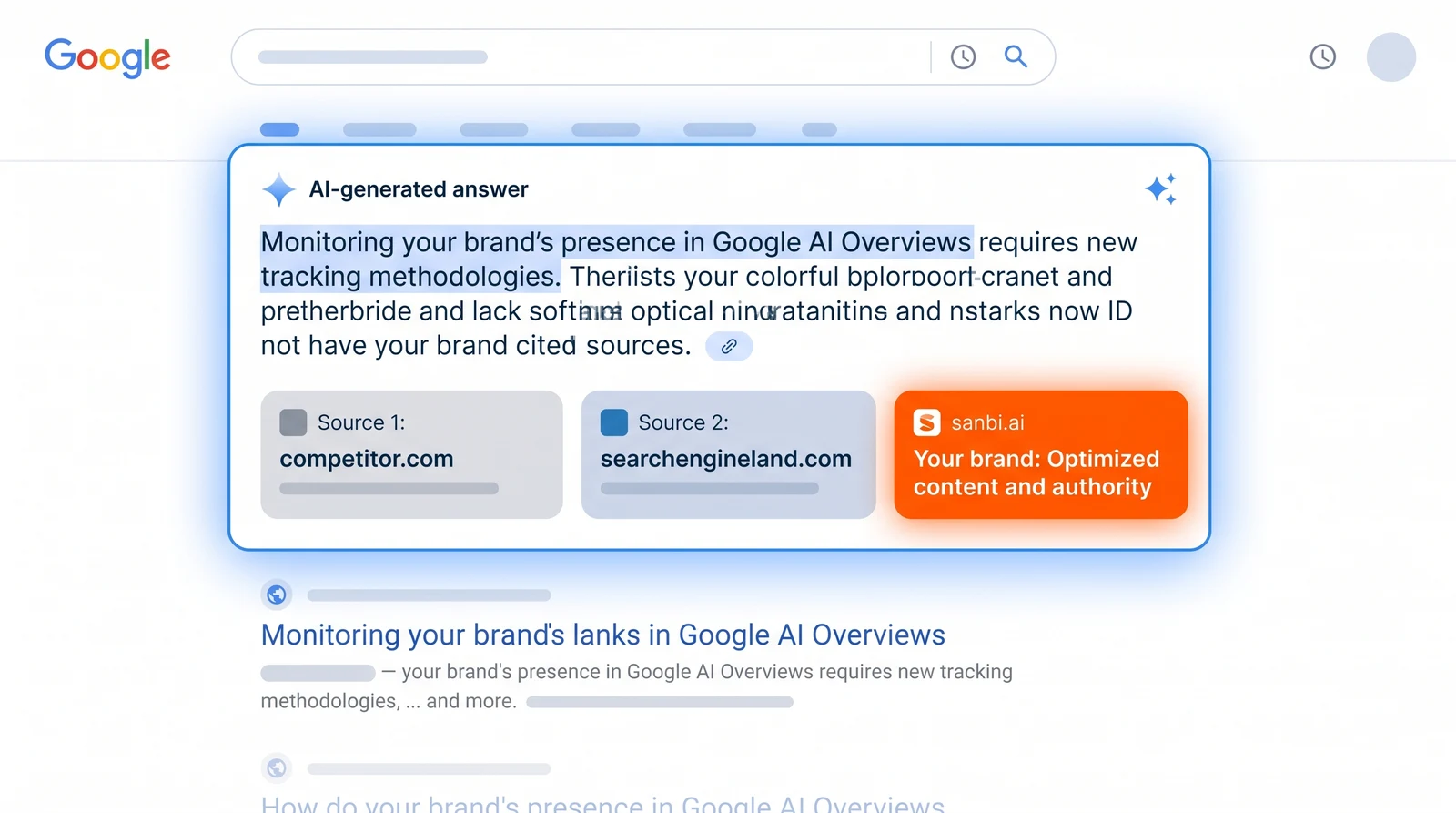
Google Preferred Sources: The 5-Minute Setup That Puts You in AI Overviews and AI Mode
Google Preferred Sources is the only AI visibility lever that works by asking your readers instead of optimising your site. A reader marks your site as preferred; from then on, your content shows up more often in their Top Stories for developing topics and is clearly labelled inside their AI Overviews and AI Mode answers.
Google reports that people are roughly twice as likely to click through to a source they have marked as preferred, and that more than 345,000 unique sources have already been selected.
Setup takes about five minutes. Almost nobody outside the news industry has done it, because almost everybody assumes it is a news-publisher feature. It is not — any website that publishes fresh content is eligible, with no Publisher Center account, no RSS feed and no News sitemap required.
The short version
| Detail | |
|---|---|
| What it does | Boosts your content in a reader’s Top Stories; labels you in their AI Overviews and AI Mode |
| Who chooses | The reader, not Google, not you |
| Eligibility | Any site publishing fresh content, indexed in Search |
| Prerequisites | None — no Publisher Center, RSS or News sitemap |
| Effort | ~5 minutes to add the button |
| Reported effect | ~2x click-through to preferred sources |
| Is it a ranking factor? | No — personalisation, per reader |
| Where it’s measured | Nowhere directly; infer from Search Console + AI citation tracking |
What Preferred Sources actually is
It is a Search personalisation setting. A reader opens source preferences in their Google Search settings, searches for a site, and adds it. From that point on, Google weights that source more heavily in what that reader sees.
Two surfaces are affected:
- Top Stories. For developing topics, preferred sources appear more often in the carousel.
- AI Overviews and AI Mode. Content from preferred sources is clearly labelled so the reader can spot it inside the generated answer. Google’s AI features documentation sets out the separate baseline requirements for appearing in those surfaces at all.
That second one is why this belongs on an AI visibility blog rather than a news-SEO one, and it is the part most coverage skips.
Why it matters for AI visibility specifically
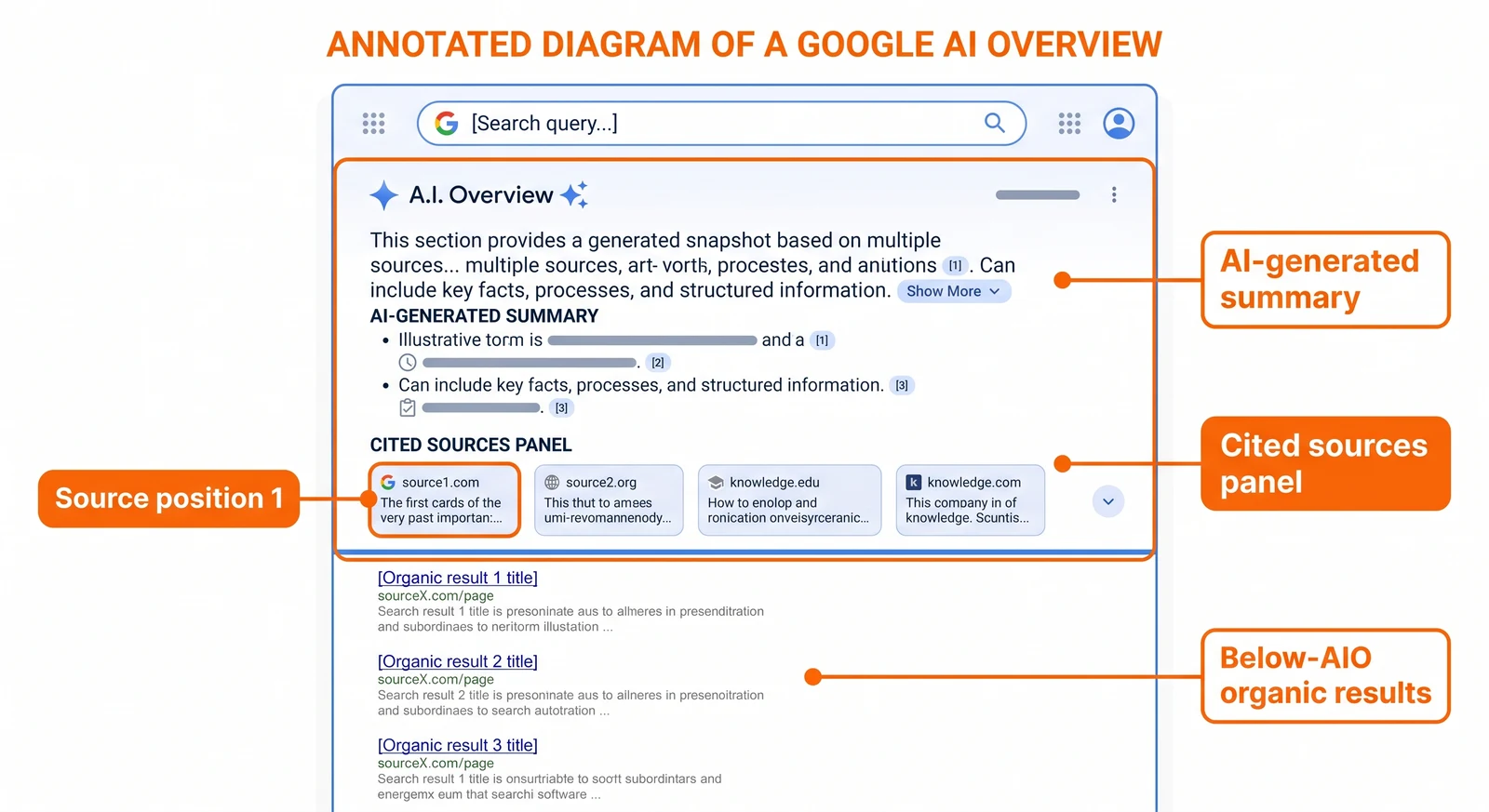
Everything else you can do to earn a citation in AI Overviews or AI Mode — which now reaches over a billion monthly users — is a supply-side intervention: make the page crawlable, answer the sub-question cleanly, be specific enough to quote, earn third-party corroboration. All of it competes against every other site doing the same thing for a handful of citation slots.
Preferred Sources works from the other end. The reader tells Google which sources they want, and Google honours that inside the AI answer. For the readers who opt in, you are no longer competing purely on retrieval merit — you are competing with a declared preference behind you.
The effect is bounded and honest, which is worth stating plainly:
- It applies only to readers who added you. There is no site-wide lift, and it is not one of the ranking or eligibility signals described in Google’s guidance for AI features.
- It does not guarantee citation. It increases the odds and the prominence, and it adds the label.
- It does not change how the answer is generated, only which sources are favoured and how they are presented for that user.
So it is not a growth hack. It is a compounding asset: every reader who opts in permanently tilts their own AI answers toward you.
Who is eligible
This is the part that stops most teams before they start, so to be explicit: Google says any website that publishes fresh content is eligible.
There is no requirement for:
- A Google News Publisher Center account
- An RSS feed
- A News sitemap
- Any special markup or AI text file
If you publish regularly and you are indexed in Google Search, your readers can add you. That covers B2B blogs, ecommerce sites, SaaS documentation, agencies and service businesses — the entire population that has largely ignored this feature because it looked like it was for newspapers.
How to add the button to your site
Google provides an embeddable button, documented for Search. Two pieces:
1. A container where the button should render:
<div google-add-preferred-source-btn data-lang="en"></div>2. Google’s publisher script:
<script async src="https://news.google.com/swg/js/v1/publisher.js"></script>The script renders a localised button into the empty div. Add a noscript fallback so the ask still works without JavaScript:
<noscript>
  <a href="https://www.google.com/preferences/source?q=yourdomain.com"
     target="_blank" rel="noopener">
    Add yourdomain.com as a preferred source on Google
  </a>
</noscript>
That google.com/preferences/source?q= deeplink is useful on its own — put it in your newsletter footer, your email signature, or a social post. It takes the reader straight to the add screen with your domain pre-filled.
We run exactly this on every post on this blog — button, data-lang, and the noscript deeplink as the CMS-safe fallback. It sits below the article, where a reader who just finished something useful is most likely to act. Scroll down and you will see it.
How to get readers to actually do it
The mechanism is trivial. The conversion is the hard part, and a generic button in a footer converts close to nothing.
What works better:
- Place it where intent peaks — the end of an article someone just read, not the homepage.
- Ask the audiences who already chose you. Newsletter subscribers and returning readers convert at a completely different rate from cold search traffic. One dedicated newsletter send outperforms months of passive button impressions.
- Say what the reader gets. “See more of our AI-search research in your Google results” beats “Follow us on Google.”
- Ask once, properly, rather than continuously. This is a one-time action per reader; a persistent nag adds friction without adding conversions.
The counterintuitive bit: small, loyal audiences are the best case for this feature, not the worst. The benefit scales with the share of your actual readers who opt in, not with total traffic. A niche B2B site whose regular readers include most of its buying committee can convert a meaningful fraction of the people who matter. A large consumer site converts a rounding error of a huge audience.
How to measure it
There is no Preferred Sources report in Search Console, so you are inferring. Three proxies, in order of usefulness:
- Search Console impressions and clicks on your freshest content. Top Stories placement for developing topics is where the effect lands first, so recency-sensitive pages move before evergreen ones.
- Click-through rate on returning-visitor segments in GA4. The reported ~2x lift applies to readers who opted in, who are overwhelmingly returning visitors.
- Your citation rate in AI Overviews and AI Mode, tracked over time. The Preferred label raises prominence in exactly those surfaces, so a rising citation trend alongside a growing opt-in push is the closest thing to a read you will get.
Expect a gradual lift proportional to opt-ins, not a step change. If you are looking for a way to see whether Google’s AI surfaces are citing you at all — before and after — that is what tracking your visibility in AI search covers.
What it is not
Three honest caveats, because this feature attracts overclaiming:
- It is not a ranking factor. It does not raise your position for anyone who has not added you, and it does not feed site-wide authority.
- It is not a citation guarantee. Retrieval still has to select your page. Preferred status is a thumb on the scale, not a bypass.
- It is not a substitute for the fundamentals. If your page is JavaScript-only, blocked to crawlers, or buries the answer under 400 words of preamble, no amount of reader preference fixes that. Start with the GEO audit checklist.
The bottom line
Preferred Sources is a five-minute implementation with a small, real, compounding payoff — and a rare one, because it works through your audience rather than against your competitors.
Do these three things this week:
- Add the button to your article template, plus the
noscriptdeeplink. - Ask your newsletter list once, with a clear statement of what they get.
- Baseline your AI citation rate now, so you can tell whether it moved.
Then get back to the work that actually decides whether you are in the answer: crawlability, answer shape, and third-party presence — all of which are covered in how to rank in Google AI Mode and the AEO guide.
Run a free AI visibility audit to see where you currently stand in AI Overviews and AI Mode — before you start asking readers to prefer you.
Frequently Asked Questions
Preferred Sources is a Google Search personalisation feature that lets a reader mark websites they want to see more of. Once someone adds your site, your content appears more often in Top Stories for developing topics and is clearly labelled as a Preferred Source inside AI Overviews and AI Mode. Google announced it in 2026 and reported that people are roughly twice as likely to click through to a source they have marked as preferred, and that more than 345,000 unique sources had already been selected.
You do not apply — readers choose you. Your job is to be eligible and to ask. Eligibility is broad: Google says any website that publishes fresh content qualifies, with no Google News Publisher Center setup, RSS feed or News sitemap required. To get selected, add Google's embeddable Preferred Source button to your pages, or link readers to google.com/preferences/source?q=yourdomain.com, and prompt the audiences most likely to opt in — newsletter subscribers, social followers and returning readers.
Yes, and that is the most underrated part of it. Google has confirmed that content from a reader's Preferred Sources appears in AI Overviews and AI Mode with a visible Preferred label, which both increases the chance your page is among the sources shown and makes it stand out when it is. It does not guarantee citation and it does not change how the underlying answer is generated. Think of it as a per-reader thumb on the scale for the sources they already trust.
Google provides an embeddable button. Drop an empty div with the google-add-preferred-source-btn attribute where you want the button to render, then load Google's publisher script from news.google.com/swg/js/v1/publisher.js. The script renders a localised button into the div. Add a plain link to google.com/preferences/source?q=yourdomain.com inside a noscript block as a fallback for readers with JavaScript disabled. Full details are on Google's [preferred sources documentation page](https://developers.google.com/search/docs/appearance/preferred-sources) for Search.
No. It is a personalisation setting, not a ranking signal. Being marked as preferred by one reader changes what that reader sees; it does not raise your position for anyone else, does not affect your site's overall authority, and is not something Google applies at a site-wide level. The benefit is real but per-user and cumulative: every reader who adds you is one more person whose Top Stories and AI answers skew toward your content.
Effectively any site that publishes fresh content. Google removed the news-publisher hurdles that people assume apply: there is no requirement for a Google News Publisher Center account, an RSS feed, a News sitemap, or any special markup. If you publish regularly and are indexed in Google Search, readers can add you. That makes it available to B2B blogs, ecommerce sites and service businesses, not just news publishers — which is precisely why so few non-publishers have bothered to set it up.
Google has not published a hard cap, and readers can add and remove sources freely from Search personalisation settings. In practice the relevant constraint is attention rather than any limit: readers add a small handful of sources they genuinely want more of. This is why the ask matters more than the mechanism. A generic 'follow us' prompt converts poorly; a specific one aimed at readers who already return to your content converts far better.
There is no Preferred Sources report in Search Console, so measure it indirectly. Watch impressions and clicks for your freshest content in Search Console, since Top Stories placement for developing topics is where the effect shows first. Track click-through rate on returning-visitor segments in GA4. And track your citation rate in AI Overviews and AI Mode with an AI visibility tool, because the Preferred label increases prominence in exactly those surfaces. Expect a gradual lift that tracks how many readers you convert, not a step change.
No, though they are related in spirit. Discover's follow function influences the Discover feed on mobile. Preferred Sources influences Google Search itself: Top Stories for developing topics, plus the labelled treatment inside AI Overviews and AI Mode. A reader can do both, and for a publisher both are worth asking for, but Preferred Sources is the one that touches Google's AI answer surfaces directly.
Proportionally, yes — and it may matter more. The feature works per reader, so the benefit scales with how many of your actual readers opt in rather than with your total traffic. A niche B2B site whose 2,000 regular readers include most of its buying committee can convert a meaningful share of the people who matter, while a large consumer site converts a tiny fraction of a huge audience. Small, loyal audiences are the best case for this feature, not the worst.