The GEO Audit Checklist and Roadmap: 30 Checks to Win AI Citations in 2026
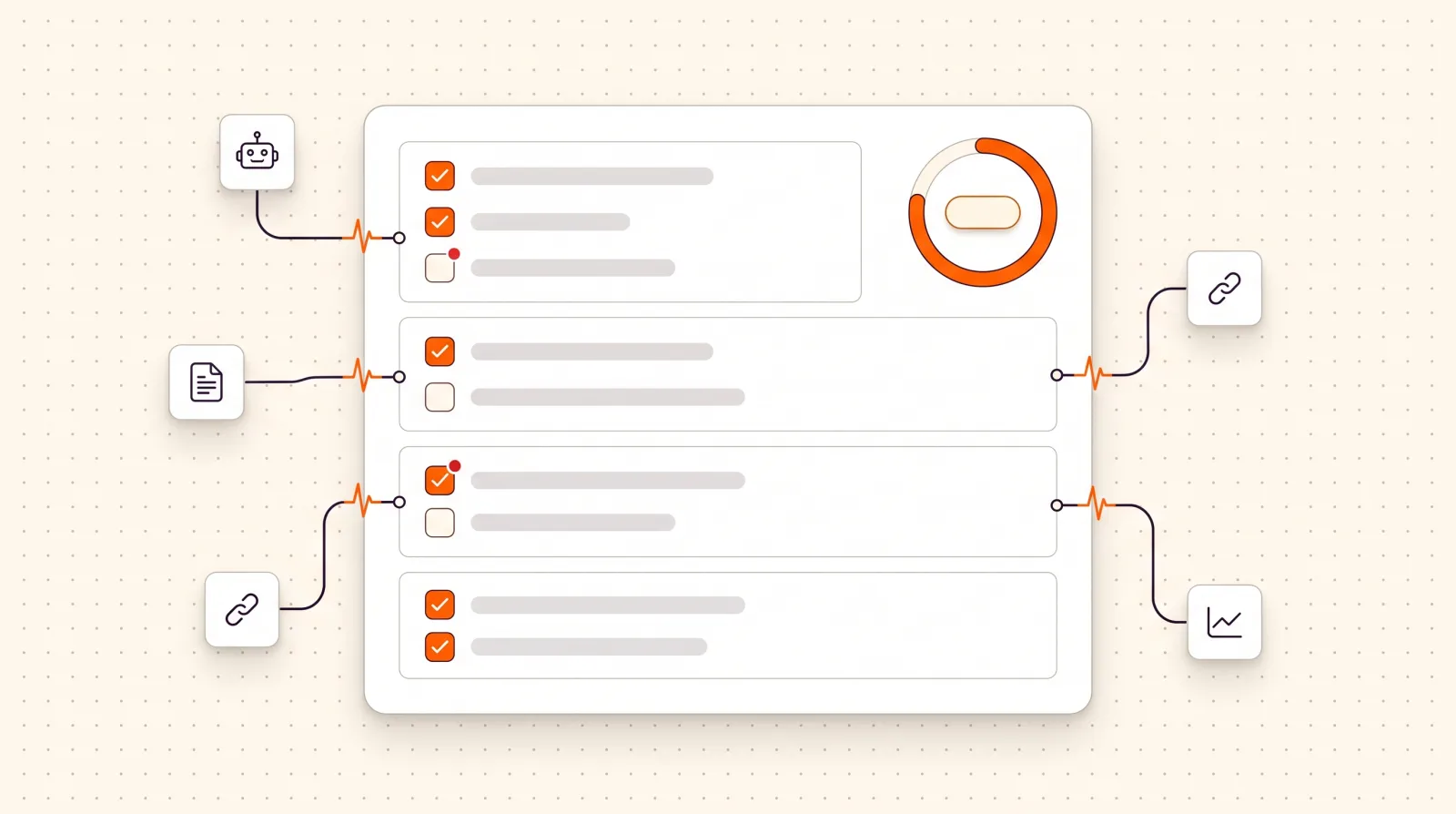
Every GEO article tells you why generative engine optimization matters. Almost none tell you what to actually do on Monday. This is the second kind: a 30-point GEO audit checklist across four areas, the 90-day roadmap that sequences the fixes, and the KPIs that prove the work moved revenue — the implementation layer for our GEO playbook.
Work through it in order. The sections are sequenced so that each one gates the next: technical problems cap content, content problems cap authority, and nothing counts until it’s measured.
Part 1: The GEO audit checklist — 30 checks
A. Technical readiness (checks 1–8)
Can AI engines reach, read, and parse your site? A failure here silently zeroes everything downstream.
- AI crawlers allowed in robots.txt — GPTBot, OAI-SearchBot, ClaudeBot, Google-Extended, PerplexityBot, Bingbot explicitly permitted (and your API/private routes still disallowed per-group).
- llms.txt present and current — a machine-readable site summary at /llms.txt, regenerated when content ships. Full guide here.
- Content renders without JavaScript — AI crawlers execute little to no JS. Fetch key pages with a text client; if the answer content isn’t in the raw HTML, engines read an empty page.
- Server responds fast and reliably — AI crawlers time out aggressively; slow origins get sampled less.
- Clean semantic HTML — one H1, hierarchical H2/H3s, real lists and tables rather than styled divs. Engines parse structure, not CSS.
- No bot-blocking side effects — CDN/WAF rules and rate limiters verified against AI crawler user-agents. A misconfigured challenge page removes you from consideration without an error.
- Sitemap current + instant indexing — sitemap submitted, IndexNow or equivalent pinging on publish.
- AI crawler activity visible in logs — you can see GPTBot/ClaudeBot/PerplexityBot hits per page. If you can’t measure crawl attention, you can’t manage it.
Running checks 3–7 with free tools
You don’t need a platform for the technical half. A free SEO site audit tool covers most of it, as long as you know which one answers which check:
| Check | Free tool that answers it |
|---|---|
| 3. Renders without JavaScript | Adobe’s free AI Visibility Checker Chrome extension (agent view vs. human view), or fetch the URL with a text client and read the raw HTML — see our checker extensions, plugins and APIs guide |
| 4. Fast, reliable responses | Google PageSpeed Insights — lab and field data |
| 5. Clean semantic HTML | Screaming Frog free tier (500 URLs): H1 counts, heading depth, status codes |
| 6. No bot-blocking side effects | Fetch key pages with an AI crawler user-agent; check CDN/WAF logs for challenges |
| 7. Sitemap current | Google Search Console and Bing Webmaster Tools coverage reports |
General one-page auditors (Seoptimer-style scorecards) are fine for a first pass but stop at classic SEO. None of them looks at checks 1, 2 or 8, and none of them touches Parts C and D.
How to give Google PageSpeed results to ChatGPT. PageSpeed reports are long and the fixes aren’t prioritised, which is exactly what a model is good at. Run the report, expand every item under Diagnostics, select all and copy the text — or call the PageSpeed Insights API and paste the JSON — then prompt: Here are the PageSpeed Insights results for [URL]. Group the failing audits by root cause, estimate effort for each, and name the three fixes that would move LCP most. Save the prompt and re-run it after each fix so you get a before-and-after. ChatGPT can’t see your code, so verify its suggestions against your stack before shipping them.
B. Content and structure (checks 9–17)
Engines quote pages that hand them a complete answer. Audit your money pages against these:
- Answer-first structure — the direct answer in the first paragraph under each question-shaped heading, support below. Not “in today’s rapidly evolving landscape.”
- Headings phrased as real buyer questions — matching how prompts are actually worded, feeding the query fan-out engines run.
- FAQ schema on every eligible page — with genuinely substantive answers, not keyword filler.
- Specific, liftable claims — numbers, comparisons, steps a model can quote and attribute. Vague content is unquotable content.
- Tables for anything comparative — engines extract structured comparisons preferentially.
- Visible dates and real maintenance — engines demonstrably prefer fresh, dated content; stale pages decay out of retrieval.
- Cluster coverage, not keyword coverage — the head question plus its sub-questions, comparisons and follow-ons, so you survive fan-out synthesis.
- One canonical answer per fact — pricing, limits and policies stated once, consistently; contradicting pages are how wrong AI claims start.
- Entity clarity — organization schema, consistent naming, a coherent about page. Engines must know what you are before citing you as anything.
C. Authority and citations (checks 18–23)
Most answers are built mostly from third-party sources. Your domain is one voice; the grounding set is the jury.
- You know your category’s citation set — the specific domains each engine cites for your money prompts, from actually tracking citations, not guessing.
- Present on the top review platforms engines cite for your category, with current reviews.
- Present in the comparison content — the “best X” listicles that feed recommendation answers include you, accurately.
- Community footprint on cited threads — honest, identified participation where engines actually read.
- Video coverage of money prompts — question-titled, clean-transcript clips; the dominant lever for Gemini surfaces and Perplexity.
- A linkable data asset — original research earns citations from the publications engines trust; it’s the fastest authority compounder.
D. Measurement (checks 24–30)
- A tracked prompt set — 25+ real buyer prompts across funnel stages, built properly.
- Per-engine baseline — visibility, share of voice, sentiment and citations for ChatGPT, Gemini, Perplexity and Claude separately; overlap between engines is small.
- Citation tracking — both your citation rate and the third-party citation set (check 18 feeds from this).
- Sentiment monitoring — themes, not just polarity, so a souring theme is caught and fixed early.
- AI referral segmentation in analytics — chatgpt.com, perplexity.ai, gemini.google.com and copilot referrers split out with conversion tracking.
- A fixed re-measurement cadence — weekly sampling, because single answers are noise and trends are signal.
- An owner — a named person who reviews the dashboard weekly and ships one fix per week. Every unowned checklist is a wish list.
Part 2: The 90-day GEO roadmap
The checklist tells you what; the roadmap tells you when. Four phases, honestly sequenced:
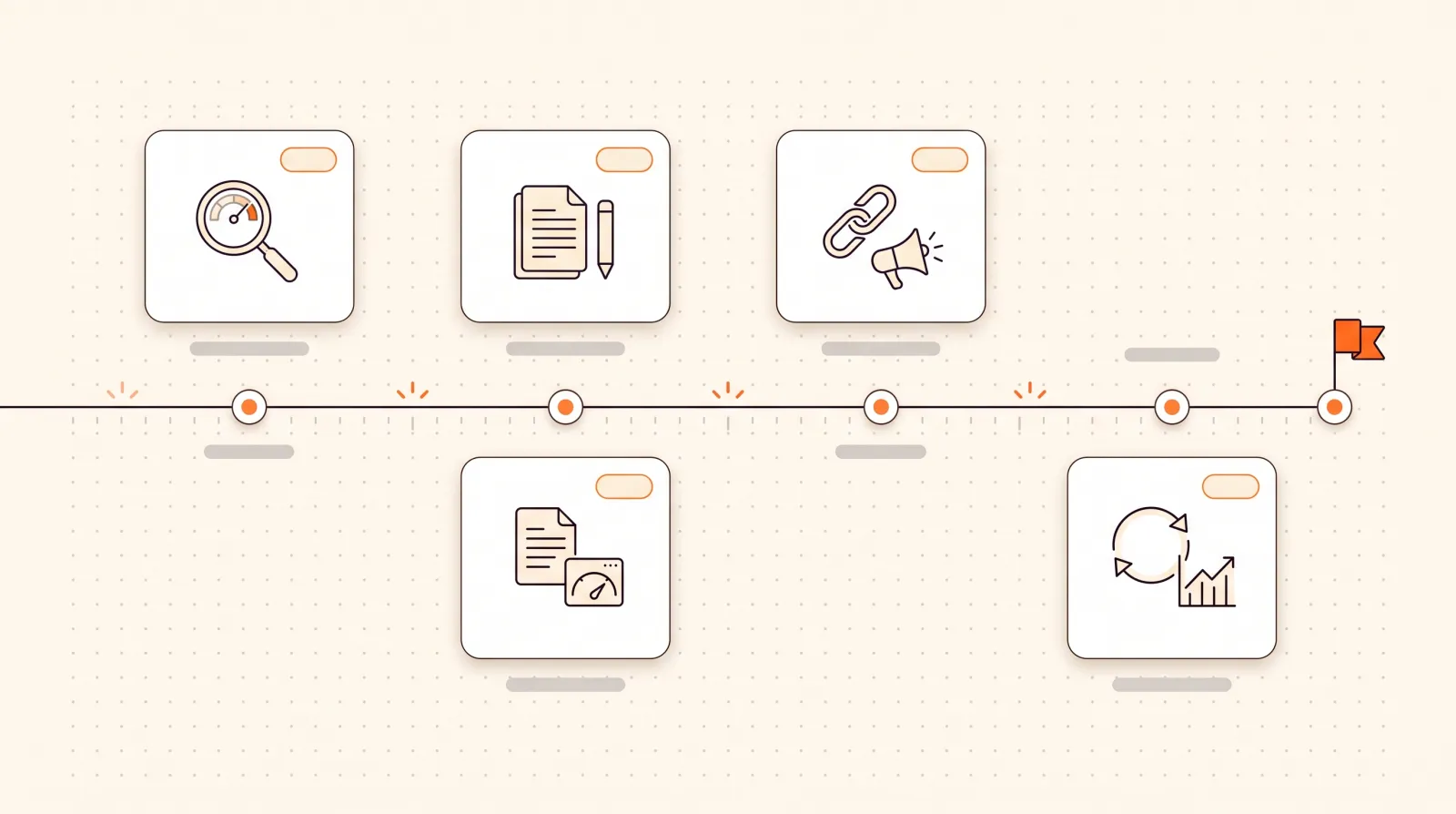
Phase 1 — Baseline and technical (weeks 1–3). Run checks 1–8 and fix every failure; run your first prompt sampling to baseline checks 24–25. Technical fixes are the cheapest wins on the board and everything else compounds on them. Exit criteria: crawlers verified reading the site; baseline numbers recorded per engine.
Phase 2 — Content sprint (weeks 3–8). Take your 5–8 highest-value prompt clusters — the ones where tracking shows you absent and competitors present — and ship or restructure one answer-first page per cluster against checks 9–17. Depth beats breadth: eight excellent cluster pages outperform thirty thin ones, and thin content burns the freshness window engines give new pages exactly once. While the sprint runs, add the Google Preferred Source button to your article template — it is a five-minute job that compounds with every reader who opts in.
Phase 3 — Authority (weeks 4–12, parallel). Work checks 18–23 continuously: review cultivation, comparison-page outreach, community presence, the first video batch. This is the slowest lever and the strongest one, so it starts early and never stops.
Phase 4 — The loop (weeks 8–13 and forever). Re-measure weekly, compare to baseline, and iterate: prompts you gained (do more of that), prompts still lost (trace the citations, close the gap), sources that shifted (respond within the week). GEO isn’t a project with an end date; it’s an operating rhythm — thirty minutes a week once the system is built.
Enterprise variant: same order, longer phases, plus per-region prompt sets (answers differ by market and language), per-product tracking, and a shared dashboard so content and comms work one list. Don’t skip phases — enterprises that jump straight to content ship into technical blockers they haven’t found yet.
Part 3: GEO KPIs — proving it worked
Report these five, per engine, monthly against baseline:
| KPI | What it measures | Direction of truth |
|---|---|---|
| Visibility rate | Share of tracked prompts you appear in | The headline number |
| Citation rate | How often your pages are the cited sources | Strongest single GEO signal |
| Share of voice | You vs. competitors across all mentions | The competitive scoreboard |
| Sentiment | How engines characterize you | The quality of your presence |
| AI referral traffic + conversion | Sessions from AI surfaces and what they do | Where ROI becomes undeniable |
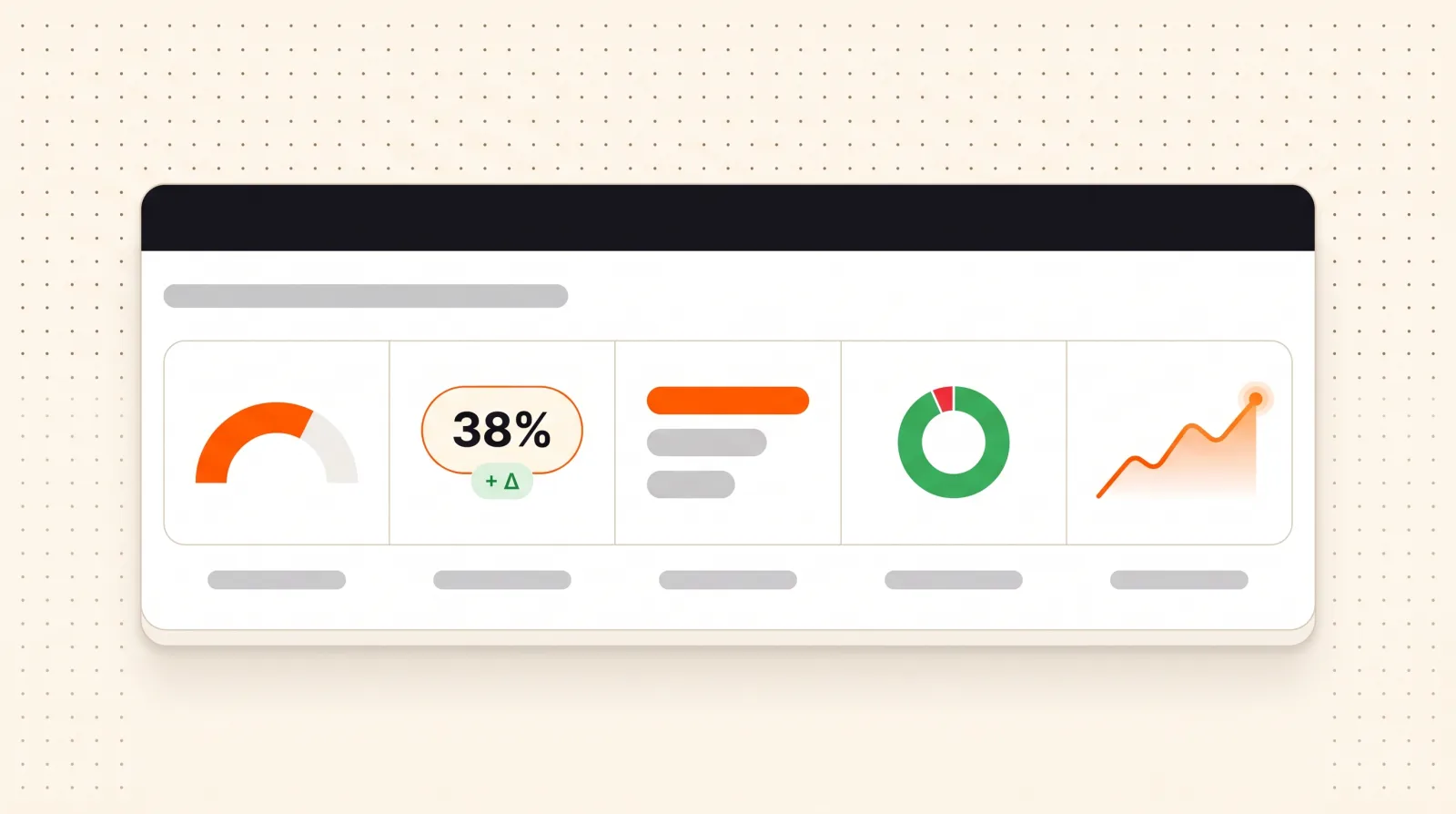
On ROI: AI referral volume will look small next to organic — measure its conversion rate before dismissing it, because AI-referred visitors arrive pre-persuaded by a recommendation and convert at multiples of organic averages. Add the assisted layer (branded search and direct lift trailing your visibility trend) and self-reported attribution (“an AI assistant recommended us” in your how-did-you-hear field), and the ROI conversation with leadership gets short.
The bottom line
- A GEO audit is 30 concrete checks, not a philosophy: technical access, answer-shaped content, cited-source presence, and per-engine measurement.
- Sequence matters: technical gates content, content gates authority, measurement makes all of it real — that’s the 90-day roadmap in one sentence.
- Success is five KPIs per engine, anchored by citation rate and cashed out in AI referral conversion.
- The whole system runs on thirty minutes a week — once someone owns it.
Start with the baseline the checklist requires. Run a free AI visibility audit — your visibility rate, share of voice and cited sources across ChatGPT, Gemini and Claude, so the checklist starts from data instead of guesses.
Frequently Asked Questions
A GEO audit is a structured review of how ready your site and brand are to be cited by generative engines — ChatGPT, Gemini, Perplexity, Claude and Google's AI surfaces. It covers four areas: technical readiness (can AI crawlers access and read your content), content structure (is it answer-shaped and machine-parseable), authority signals (do the sources engines trust mention you), and measurement (do you have a baseline of your current AI visibility). The output is a prioritized fix list, not a score for its own sake.
Generative engines answer questions by retrieving sources, synthesizing them, and citing a few. GEO works by maximizing your odds at each stage: being retrievable (crawlable, fast, machine-readable), being quotable (answer-first structure, specific claims, schema), and being trusted (present on the third-party sources engines already cite). It is SEO's discipline applied to a new ranking system — one that rewards clarity and authority over keyword volume.
Four sections. Technical: AI crawler access in robots.txt, llms.txt, server-side rendering, clean HTML, fast responses. Content: answer-first pages targeting real buyer prompts, FAQ and HowTo schema, dated and maintained content, coverage of question clusters rather than single keywords. Authority: presence on review sites, comparison pages and communities engines cite for your category. Measurement: a tracked prompt set, per-engine baselines, and a re-measurement cadence. This article provides all 30 checks in order.
Retrieval-driven surfaces move fastest: technical fixes and new answer-first content can appear in Perplexity, ChatGPT search and AI Overviews within days to weeks of a re-crawl. Authority work — earning presence on cited third-party sources — compounds over one to three months. A realistic 90-day roadmap: baseline and technical fixes in weeks 1–3, content sprint in weeks 3–8, authority outreach throughout, with measurable citation-rate movement by weeks 6–10.
Five core KPIs: visibility rate (share of tracked prompts where your brand appears), citation rate (how often your pages are the cited sources), share of voice against competitors, sentiment of your mentions, and AI referral traffic plus its conversion rate. Leading indicators include AI crawler hits in your server logs and coverage of your target prompt clusters. Track everything per engine — aggregate scores hide the story.
Connect the KPI chain to revenue in three steps. Segment AI referral sessions in analytics (chatgpt.com, perplexity.ai, gemini.google.com referrers) and apply your conversion rate — AI-referred visitors convert at several times organic averages. Track branded search and direct traffic lift against your visibility trend, since most AI influence arrives as a later branded visit. And add 'an AI assistant recommended us' to your how-did-you-hear field. Together those capture the direct, assisted and self-reported layers of GEO return.
An SEO audit optimizes for ranking in a list of links; a GEO audit optimizes for being retrieved and cited inside a generated answer. They overlap heavily on technical health, but GEO adds AI-specific layers: AI crawler access rules, llms.txt, JavaScript renderability for less capable bots, answer-shaped content structure, per-engine citation analysis, and prompt-based measurement instead of keyword rankings. Strong SEO is a head start; it is not the whole audit.
For the one-time audit, no — everything technical is checkable by hand, and a 15–25 prompt manual baseline costs an hour. For the ongoing loop, realistically yes: re-running prompts across four engines weekly, parsing citations and sentiment, and catching shifts is hours of manual work that automation does continuously. Run the audit free, fix what it surfaces, and adopt tooling when re-measurement becomes the bottleneck.
A GEO roadmap sequences the audit's findings into phases: baseline and technical fixes first (they gate everything else), then an answer-first content sprint on your highest-value prompt clusters, then authority building on the sources engines cite, then a standing measure-and-iterate loop. The 90-day version in this guide fits most teams; enterprises typically extend the phases and add per-region and per-product tracks rather than changing the order.
Yes — arguably more than for enterprises, because the playing field is less settled. AI answers reshuffle constantly, engines cite specific helpful content over big-brand generic pages more often than classic search ever did, and most competitors in most categories still have no GEO program at all. A small team that runs this checklist, fixes the technical basics and publishes genuinely answer-shaped content can out-cite larger competitors within a quarter.
It can run the technical half. Google PageSpeed Insights covers speed and Core Web Vitals (check 4), Screaming Frog's free tier covers heading structure, status codes and canonicals on up to 500 URLs (check 5), Google's Rich Results Test validates schema (check 11), and Adobe's free AI Visibility Checker Chrome extension shows what a page looks like to an agent without JavaScript (check 3). General one-page auditors give a quick scorecard but stop at classic SEO. No free SEO site audit tool checks AI crawler rules, llms.txt, crawler logs, third-party citation presence or your actual visibility inside ChatGPT and Gemini — that is what the rest of this checklist and a free AI visibility audit are for.
Run PageSpeed Insights, expand every item in the Diagnostics section, select all and copy the text, then paste it into ChatGPT with the page URL and a specific instruction — group the failing audits by root cause, estimate effort, name the three fixes that would move LCP most. If you want cleaner input, call the PageSpeed Insights API for the same URL and paste the JSON instead; sharing the report link alone often fails because the report renders client-side. Keep the prompt and re-run it after each fix for a before-and-after. Verify suggestions against your actual stack, because ChatGPT is reasoning from the report, not from your code.