How to Track Brand Mentions in Gemini: The App, AI Overviews and AI Mode (2026 Guide)
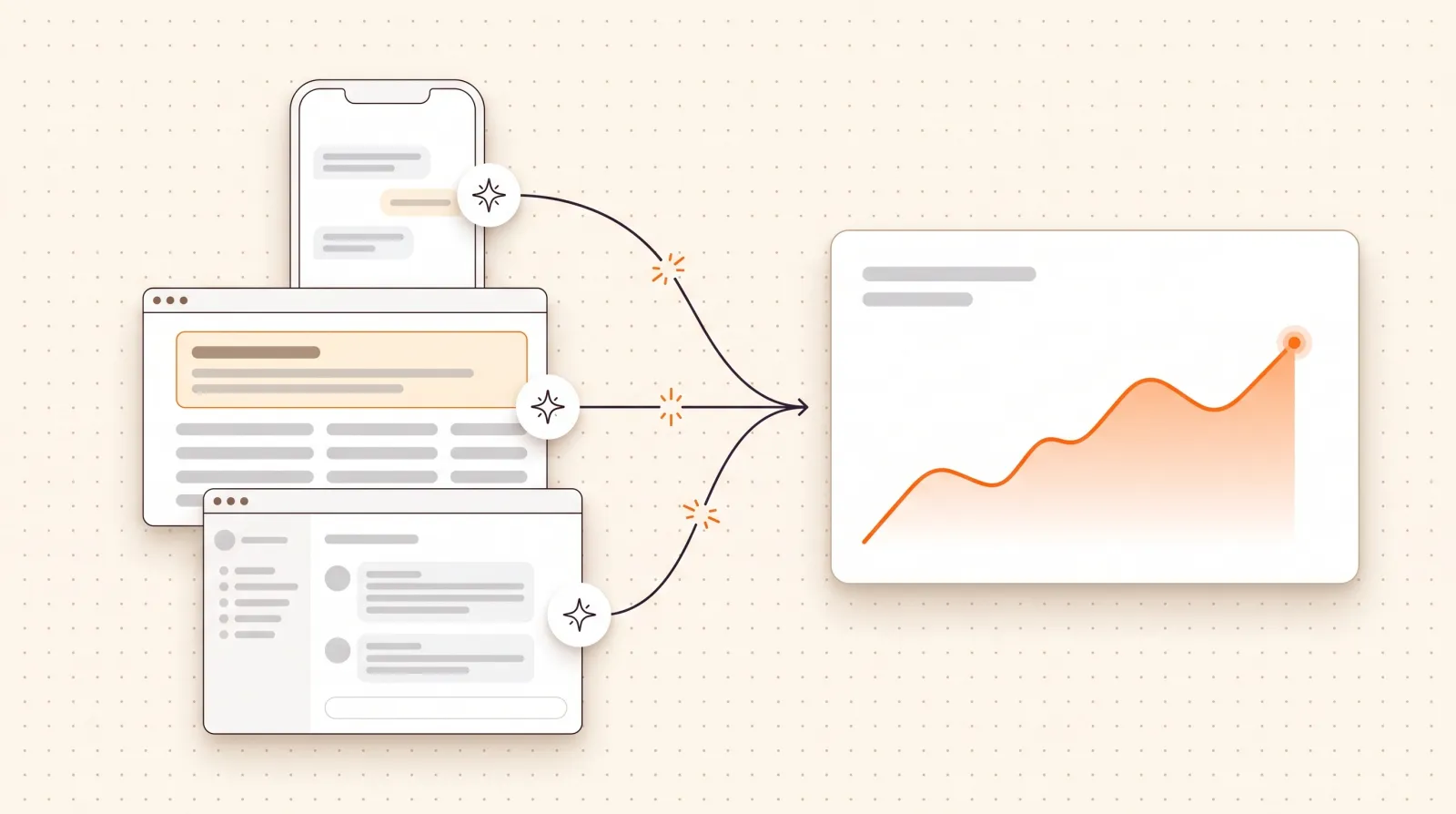
“How do I track brand mentions in Gemini?” has a complication the other engines don’t: Gemini isn’t one place. It’s three — the Gemini app, AI Overviews at the top of Google results, and AI Mode’s conversational search — one model family answering buyers on three surfaces, each capable of describing your brand differently. Track only one and you’re grading a third of the exam.
Here’s the full method: what makes Gemini different, the manual tracking workflow, the automated version, and the levers that actually move Gemini visibility once you can measure it.
Why Gemini deserves its own tracking lane
Most teams treat Gemini as “the Google ChatGPT” and track it as an afterthought. Three reasons that’s backwards:
- Scale. Between the app’s hundreds of millions of users, AI Overviews appearing on roughly half of Google searches for over two billion monthly users, and AI Mode rolling out globally, Gemini-powered answers reach more buyers than any other AI surface. Your Gemini mention rate touches more revenue than your ChatGPT one.
- It’s the engine your SEO already feeds. Gemini grounds answers in Google’s index and ranking signals more directly than any competitor. That cuts both ways: your Google strength transfers in, and your Google weaknesses do too.
- Divergence. Engine answers barely overlap — the facts and sentiment Gemini holds about you are materially different from ChatGPT’s, drawn from different sources. Fixing your ChatGPT presence does nothing here. Each engine has its own citation DNA.
One model, three surfaces — and three different answers
Before tracking anything, know what you’re sampling:
| Surface | What it is | How it answers | Tracking note |
|---|---|---|---|
| Gemini app | Standalone assistant | Conversational; grounds with search when needed | Closest to ChatGPT-style tracking |
| AI Overviews | AI summary atop classic results | Synthesizes from ranking pages, cites visibly | Appears on ~half of searches; citations = clicks |
| AI Mode | Conversational search inside Google | Query fan-out into sub-searches, then synthesis | Most volatile; full AI Mode guide here |
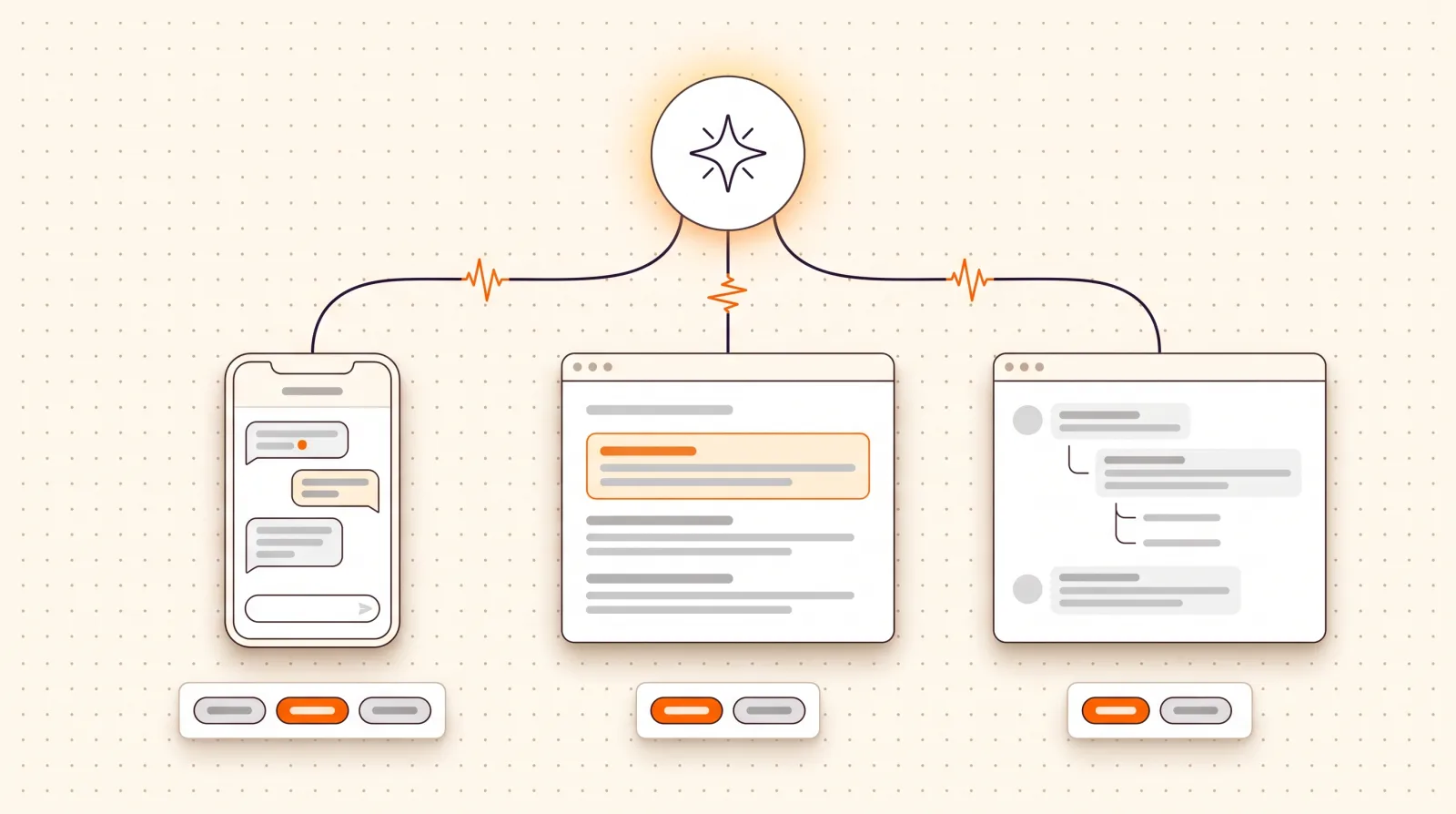
The same “best [category] tools” prompt routinely produces three different brand lists across these surfaces, because each retrieves differently — AI Overviews leans hardest on what currently ranks, the app leans more on the model, AI Mode explodes your question into fan-out sub-queries and synthesizes the lot. A brand tracking “Gemini” as one number will miss a surface going dark — the same way single-score tracking misses everything interesting.
The manual method: your free Gemini baseline
An hour, a spreadsheet, and discipline:
1. Build 15–25 buyer prompts. Category questions, not brand ones: best [category] for [use case], [competitor] alternatives, is [brand] worth it, how do I solve [problem]. Reuse the prompt set from your broader AI visibility tracking so results are comparable across engines.
2. Control the session. Fresh chats, Gemini Apps Activity off, consistent location, logged-out where possible. Personalized answers measure your history, not your market.
3. Run each prompt on each surface. App, then the same query in Google for the AI Overview, then AI Mode. Record per answer: mentioned or absent, recommended or just listed, sentiment, competitors present, and cited sources — Gemini’s surfaces show their sources more visibly than any other engine, which makes it the easiest engine to audit and the fastest to reverse-engineer.
4. Repeat weekly, same prompts. Single answers are coin flips; the trend is the truth.
The output: a mention rate per surface, a competitor share-of-voice picture, and a source list. That last one is gold — it’s the literal list of pages you need to appear on.
The automated method: what to track at scale
Manual tracking hits its ceiling fast — three surfaces × 25 prompts × weekly sampling is 300+ answer reviews a month, before you add ChatGPT, Claude and Perplexity. An AI search monitoring platform runs the sampling continuously and turns it into five trended metrics:
| Metric | What it tells you |
|---|---|
| Mention rate | Share of tracked prompts where you appear, per surface |
| Share of voice | Your mentions vs. every competitor’s — who’s winning the recommendation |
| Prominence | First-line recommendation vs. footnote listing |
| Sentiment | How Gemini characterizes you — and how to fix it when it sours |
| Citation share | How often your pages are the linked sources — on Gemini, citations are clicks |
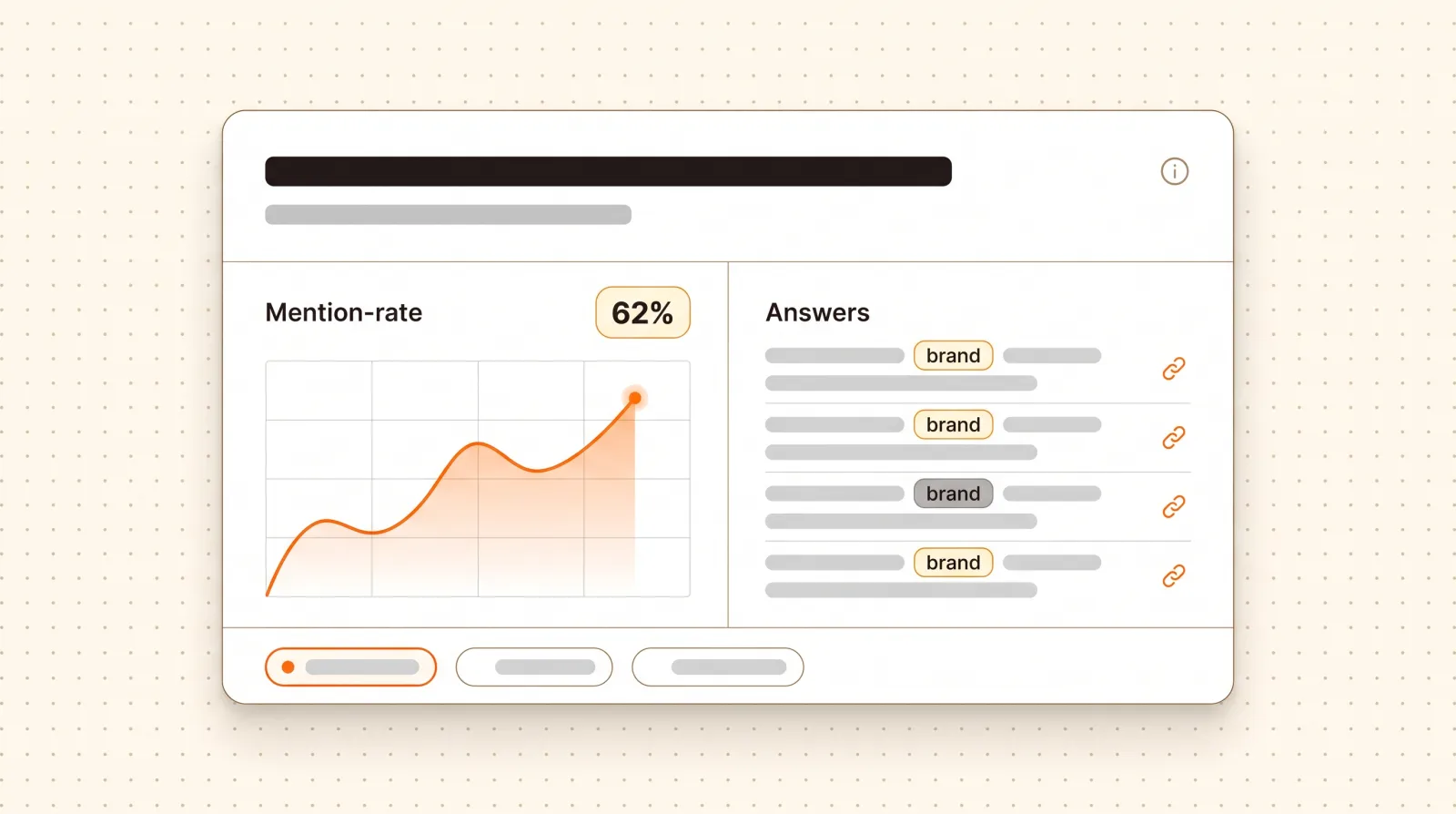
Sanbi tracks two of the three, the Gemini app and Google AI Mode, alongside ChatGPT, Claude and Perplexity, with the per-surface split that single-score tools flatten. Watch for mention-rate drops — Google ships retrieval changes without announcements, and the brands that notice in week one displace the ones that notice at quarter-end.
How to gain visibility in Gemini once you’re tracking
Gemini rewards a specific playbook — and conveniently, it’s the one with the most crossover value:
- Double down on classic Google SEO for commercial pages. Gemini is the one AI engine where your existing rankings transfer almost directly. Pages that rank for category terms get retrieved into answers; pages on page 5 don’t exist. Your SEO roadmap is your Gemini roadmap.
- Publish video. Google owns YouTube, and Gemini’s surfaces cite video heavily on how-to and comparison intent — far more than ChatGPT or Claude do. Short, single-topic clips titled with the exact question, clean transcripts. This is the highest-leverage Gemini-specific move most brands ignore.
- Clean up your entity. Structured data on key pages, a consistent organization schema, coherent Knowledge Graph presence. Gemini needs to know what you are before it can recommend you for anything.
- Earn your way into the grounding set. The sources your tracking surfaced — the pages Gemini already cites for your category — are your target list for reviews, mentions and comparisons. Being on the page that feeds the answer beats publishing ten pages that don’t.
- Keep it fresh and dated. Google’s AI surfaces visibly prefer current sources. A dated, maintained page outranks a stale one in retrieval even when the classic rankings are close.
The same playbook applied to Google’s in-Search surface — including the eligibility checks that quietly disqualify sites, and why Google’s own Business Profile panels are now one of AI Mode’s most-cited sources — is in our guide to ranking in Google AI Mode.
The bottom line
- Gemini is three surfaces, not one — app, AI Overviews, AI Mode — and each can hold a different verdict on your brand. Track them separately.
- It’s the engine your Google SEO already feeds, the one with the most visible citations, and the easiest to audit — there’s no excuse for flying blind here.
- Manual weekly sampling gives you a free baseline; at three surfaces × dozens of prompts, automation is what makes the trend readable.
- The growth levers: rank the commercial pages, ship video, clean the entity data, and earn presence on the exact sources Gemini already cites.
Find out what Gemini is telling your buyers right now. Run a free AI visibility audit — your mention rate, share of voice and cited sources across Gemini, ChatGPT and Claude, in about two minutes.
Frequently Asked Questions
Run a fixed set of buyer prompts against Gemini on a schedule and record whether your brand is mentioned, how prominently, with what sentiment, alongside which competitors, and citing which sources. Because Gemini powers three surfaces — the Gemini app, Google AI Overviews, and AI Mode — track all three separately: the same question can produce different answers on each. Manual checks work for a baseline of 15–25 prompts; an AI visibility platform automates the sampling across surfaces so you can read trends instead of snapshots.
Yes, manually. Open Gemini in a fresh session with app activity personalization off, run 15–25 questions a real buyer would ask in your category, and log mentions, sentiment, competitors and cited sources in a spreadsheet. Repeat weekly with the same prompts. It costs about an hour per engine-surface per week — which is exactly the point where most teams switch to automated tracking, since Gemini is one of three surfaces and Google's answers shift constantly.
One model family, three surfaces. The Gemini app is the standalone conversational assistant. AI Overviews are the AI summaries at the top of normal Google results, shown on roughly half of searches. AI Mode is the fully conversational search experience inside Google Search. All three draw on Gemini models and Google's index, but they retrieve and cite differently — so your brand can be strong in AI Overviews and absent in the app, or vice versa. Tracking Gemini properly means tracking all three.
Primarily from Google's index and ranking signals — which makes Gemini the AI surface where classic Google SEO strength transfers most directly — plus Google's Knowledge Graph for entities, YouTube for video content, and the model's training data. If your pages rank well in Google and your entity data is clean, Gemini usually knows you; if engines describe you inaccurately, the sources are usually findable pages that need updating.
Usually one of three reasons. Weak Google presence: Gemini leans on Google's index, so poor classic rankings mean poor Gemini retrieval. Thin entity signals: without clean structured data and a coherent Knowledge Graph footprint, the model may not recognize your brand as a distinct entity in your category. Or missing from grounding sources: Gemini pulls heavily from the pages, reviews and videos that rank for category queries — if you are absent there, you are absent in the answer. Tracking reveals which of the three is your problem.
Play to how Gemini retrieves. Strengthen classic Google SEO on your commercial pages, because Gemini rewards it more than any other AI engine. Add structured data so your entity and claims parse cleanly. Publish video — Google owns YouTube, and video citations feature heavily in Gemini answers on how-to and comparison intent. And earn presence on the pages that already rank for your category queries, since those are exactly what Gemini grounds its answers in.
Yes, more visibly than most engines. AI Overviews cite linked sources by design, AI Mode shows supporting links, and the Gemini app grounds answers with search results when it uses live retrieval. That makes Gemini one of the easier engines to audit: for every answer about your category, you can usually see exactly which pages fed it — and which pages you would need to appear on to change it.
Two big differences. Sources: ChatGPT leans on Bing's index and its training data, Gemini on Google's — so each engine can hold entirely different facts and different sentiment about you, and fixing one does not fix the other. Surfaces: ChatGPT is essentially one answer surface, while Gemini is three, each retrieving differently. The overlap between engines' answers is small, which is why per-engine tracking is non-negotiable.
Weekly for a stable read, daily if you are mid-campaign or mid-crisis. Google's AI surfaces reshuffle more frequently than classic rankings — model updates, retrieval changes and index refreshes each move answers. One-off checks mislead because answers vary between sessions; the trend across repeated samples is the signal. Fixed prompt set, fixed cadence, fresh sessions — same discipline every time.
Five: mention rate (share of tracked prompts where you appear), share of voice against competitors, average prominence within answers, sentiment of the characterizations, and citation share — how often your pages are the linked sources. Track each per surface. Citation share deserves special attention on Gemini because its surfaces link out visibly: being the cited source is both visibility and a click opportunity that pure mentions do not provide.