How to Fix Negative Brand Sentiment in AI: The Repair Playbook for ChatGPT, Gemini and Perplexity
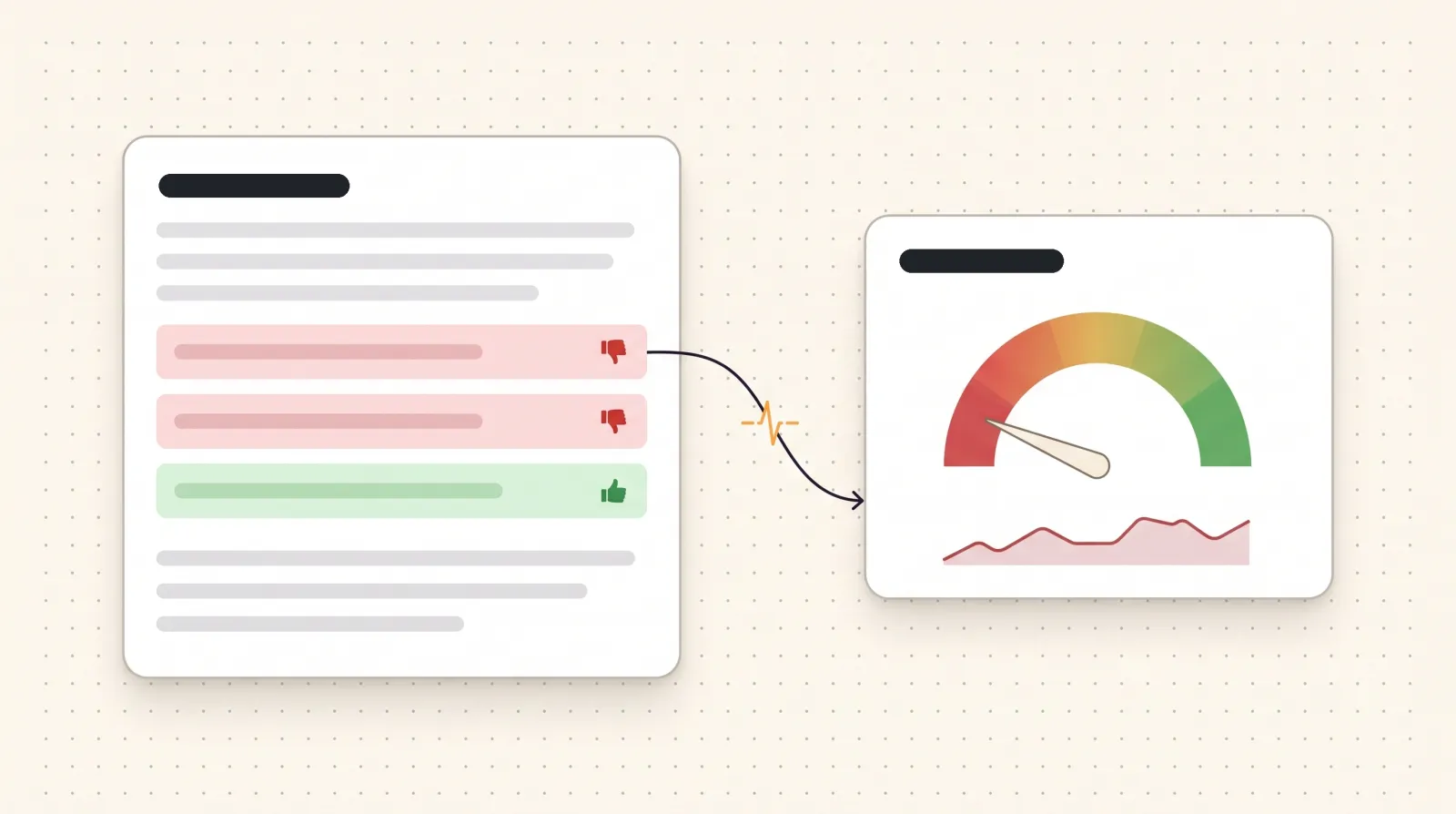
Ask ChatGPT about your brand and it won’t just list facts — it will deliver a verdict: “popular but pricey”, “solid features, dated interface”, “users report slow support”. That verdict came from somewhere, it reaches thousands of buyers verbatim, and unlike a bad review it never scrolls off the page. Negative brand sentiment in AI is sticky, invisible, and — the good news — fixable, because engines don’t invent opinions. They compress what they read. Change what they read, and you change the verdict.
This is the repair playbook we run: measure the damage, trace it to sources, displace it with fresher signals, and verify the answers actually moved.
Why negative sentiment in AI hurts more than a bad review
A negative review sits on a review site, one voice among hundreds, with your rating average right next to it. A negative AI characterization is different in three ways that make it strictly more dangerous:
- It’s delivered as consensus. The engine doesn’t say “one user in 2023 complained about onboarding” — it says “users report clunky onboarding,” in the neutral voice of an impartial judge. Buyers hear a settled verdict, not an anecdote.
- It’s persistent. Models weight repeated, stable themes. A complaint echoed across a dozen old posts can anchor your description for years — long after you fixed the thing. In our analysis of inaccurate AI claims, the dominant failure mode wasn’t fabrication; it was stale truth. Sentiment works the same way.
- It’s invisible to you. The conversation happens in a chat window you’ll never see, at the exact moment a buyer is shortlisting. No analytics tool logs it. Most teams discover their AI sentiment problem from a prospect who says “I heard you’re hard to integrate” — quoting a machine.
And sentiment compounds with visibility: engines recommend brands they characterize positively. A persistent negative theme doesn’t just color your mentions — it quietly reduces how often you’re mentioned at all.
Step 1: Measure your LLM brand sentiment baseline
You cannot fix a vibe. You can fix a theme with a source, so the measurement has to produce both.
Run your brand-sentiment prompt set across ChatGPT, Gemini, Claude and Perplexity — fresh sessions, personalization off, the same discipline as any AI visibility tracking. The prompts that surface sentiment fastest:
is [brand] worth it[brand] reviews — what do users saypros and cons of [brand][brand] vs [competitor] — which should I choosewhat are the complaints about [brand]is [brand] good for [core use case]
For every answer, record three things: the polarity of each characterization (positive / neutral / negative), the theme it belongs to (pricing, support, ease of use, reliability, integrations…), and the source, when cited. Single answers are noisy; run the set weekly and read the aggregate. What emerges is a sentiment profile: perhaps 70% neutral, 20% positive on features, and a stubborn 10% negative — almost always concentrated in one or two themes.
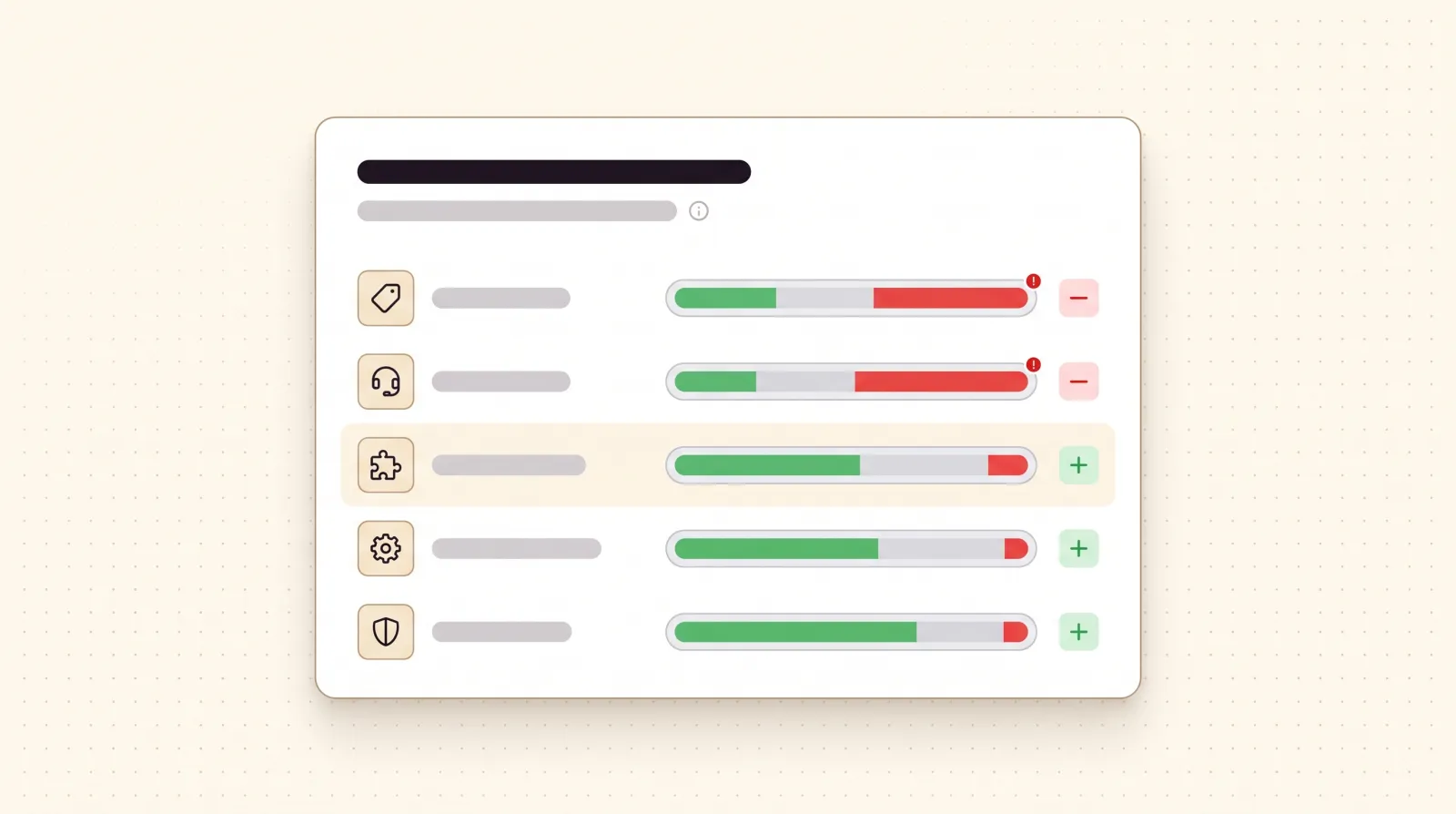
That concentration is the entire strategy. You don’t fight “negative sentiment” — you fight “expensive” on ChatGPT and “weak support” on Perplexity, one theme at a time. (At any real prompt volume you’ll want this automated: Sanbi classifies polarity and themes per engine on a schedule and — the part that makes it actionable — attaches the cited sources to each theme. Our sentiment analysis guide covers the methodology in depth.)
Step 2: Trace each negative theme to its sources
Every recurring negative theme lives on findable pages. Three ways to find them:
- Citations first. Perplexity and Google’s AI surfaces cite openly; ChatGPT with search usually will. When a negative characterization appears, the cited page is your target.
- Search the phrasing. Engines often echo source language closely. Search the distinctive phrase (“clunky onboarding” + your brand) and the origin usually surfaces in the first page of results — an old review, a Reddit thread, a comparison post written three versions ago.
- Check the usual suspects. For most B2B brands, negative themes trace to a shortlist: the big review platforms, Reddit, one or two industry comparison sites, and — more often than teams expect — your own site, where an outdated limitations page or ancient pricing table quietly confirms the complaint.
You’ll typically end with three to six URLs per theme. That’s not a reputation crisis; that’s a to-do list.
Step 3: Displace — you can’t delete, so outweigh
Here is the mental model that makes AI reputation management different from the old kind: there is no suppression, only displacement. You cannot remove what a model has read. You can make the negative signal old, thin, and outnumbered by fresher, stronger, more specific signals on the exact surfaces engines retrieve from.
Work the layers in order of control:
Owned media (same-day fixes). If the engine’s complaint is stale — you fixed onboarding, restructured pricing, shipped the integration — say so loudly and datably: a public changelog, a “what’s new” page, updated docs with visible dates, an honest “[brand] pricing explained” page. Engines demonstrably prefer fresh, dated, structured content; give the model a current fact to retrieve instead of a 2023 complaint. This is the same owned-media discipline as correcting factual AI errors — sentiment and accuracy share a supply chain.
Earned media (the heavy lifting). Fresh third-party signals outweigh stale ones. Cultivate recent reviews on the exact platforms your trace surfaced — a steady drip of current reviews beats a burst, because recency is the currency. Where a negative comparison post is outdated, a polite correction request with specifics works more often than expected. And pitch the story of the fix: “how [brand] rebuilt onboarding” on a site engines already cite is a theme-killer.
Community (handle with care). Reddit and forums feed engines heavily. Reply to the actual threads engines cite — identified company account, acknowledge the old issue, state what changed, link the changelog. That adds a fresher signal on the exact page the model reads. Never astroturf: fake accounts and purchased upvotes are detectable, bannable, and if exposed become a new negative theme that engines will also read.
Competitor angle. Their negative themes are your comparison-content material — honestly framed. “Switching from [competitor]: what changes” content that addresses their recurring complaints positions you as the answer to a sentiment problem you don’t have.
Step 4: Verify — re-measure until the verdict changes
Displacement without verification is hope. Re-run the same prompt set on the same schedule and watch three numbers per theme: frequency (how often the negative theme still appears), freshness (whether engines now cite the new signals), and framing (whether “users report X” has softened to “earlier versions had X, since addressed” — often the first sign of movement, and a perfectly good intermediate win).
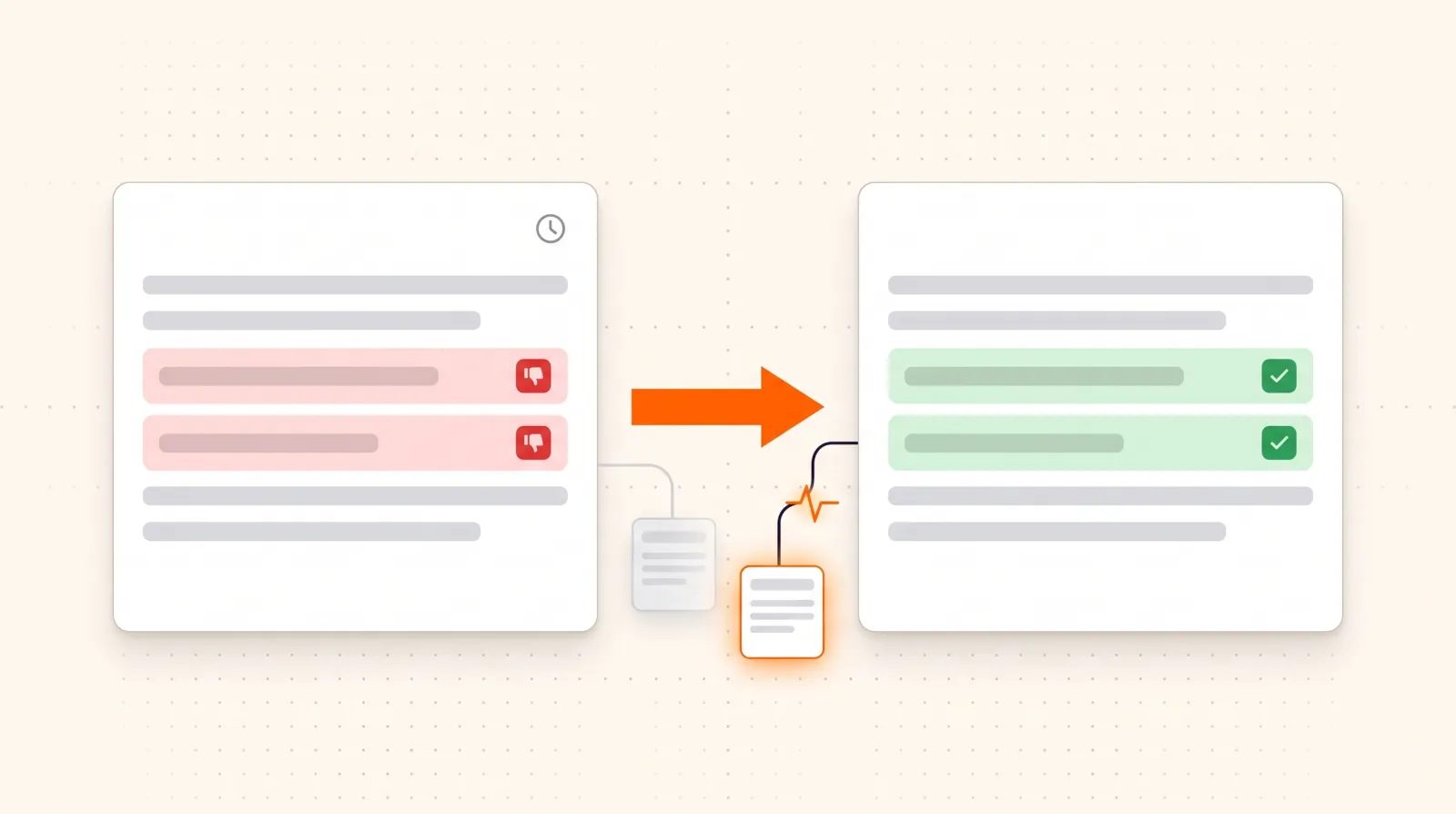
Expect retrieval-driven engines (Perplexity, ChatGPT search, AI Overviews) to move in days-to-weeks after sources update, and training-data-driven characterizations to lag until model refreshes. If a theme won’t budge after six weeks, you haven’t found all its sources — back to step 2.
Then keep the monitor running. Sentiment is a moving target: every model update re-weighs the evidence, every new review adds to it, and the cheapest fix is always the theme you catch while it’s one thread instead of a consensus.
The bottom line
- AI engines deliver verdicts, not facts — synthesized from reviews, forums and comparisons, repeated verbatim to buyers you’ll never see.
- Negative sentiment is almost always a few themes traceable to a few URLs. Measure by theme, trace to source.
- The fix is displacement, not deletion: fresh owned content with dates, recent earned signals on the platforms engines cite, honest community replies on the exact threads being read.
- Verify on a schedule — framing softens first, then frequency drops. Six weeks of no movement means untraced sources.
You can’t repair a verdict you’ve never heard. Run a free AI visibility audit — see how ChatGPT, Gemini and Claude actually characterize your brand, which themes recur, and which sources are feeding them.
Frequently Asked Questions
Four steps, in order. Measure: run your brand prompts across ChatGPT, Gemini, Claude and Perplexity and classify every characterization as positive, neutral or negative, grouped by theme. Trace: find the sources behind each negative theme — usually a handful of old reviews, forum threads or comparison posts. Displace: publish and earn fresher, stronger signals that directly counter each theme, because you cannot delete what a model has read — you can only outweigh it. Verify: re-run the same prompts on a schedule until the characterization changes, which typically takes weeks, not days.
Because something it read said them first. AI engines synthesize characterizations from reviews, Reddit threads, comparison articles and news coverage — and they weight persistent, repeated themes heavily. A pricing complaint that appeared across a dozen 2023 reviews can dominate your 2026 description even if you restructured pricing twice since. The negativity is almost never invented; it is retrieved, compressed, and repeated — which is exactly why it can be fixed at the source.
LLM brand sentiment is the tone and framing large language models use when they mention your brand: recommended warmly, described neutrally, or characterized with caveats like 'powerful but expensive' or 'limited integrations'. It is measured by sampling many AI answers about your brand and classifying each mention's polarity and recurring themes. It matters because these characterizations reach buyers verbatim at the moment of decision, with no rebuttal opportunity.
Generally no. There is no takedown process for unflattering-but-accurate characterizations in ChatGPT or Gemini, and feedback buttons rarely alter generated answers. The exceptions are narrow: defamatory fabrications and certain personal-data claims have formal reporting channels. For everything else, the reliable path is upstream — change what the engines retrieve by updating your own pages and displacing stale third-party signals with fresher ones.
Retrieval-driven surfaces move first: Perplexity, ChatGPT with search, and Google's AI surfaces can reflect new or updated sources within days to weeks of a re-crawl. Characterizations baked into training data move slower and may persist until model refreshes. In practice, brands running a deliberate displacement program see measurable theme shifts in one to three months — and the timeline is precisely why continuous sentiment monitoring beats a one-time cleanup.
AI visibility platforms with a sentiment layer — Sanbi among them — run your prompt set across engines on a schedule, classify each mention's polarity, extract recurring positive and negative themes, and trend it all over time alongside mentions and citations. That last part matters: a sentiment score without the underlying sources is a mood ring. You need theme-plus-source data to act, because the fix is always a specific page, not a vibe.
Yes, and more quietly than a bad review page. When a buyer asks an assistant to compare options and your brand arrives pre-loaded with 'users report clunky onboarding', you lose ground before the first sales call — and you never see it happen, because the conversation shows up in no analytics tool. Negative sentiment compounds with exclusion: engines recommend brands they 'trust', so persistent negative themes depress both how you are described and how often you appear at all.
Social listening tracks what people say about you on public feeds. AI sentiment monitoring tracks what machines conclude about you — the synthesized judgment an assistant delivers to buyers. The two diverge sharply: a five-year-old complaint thread that no human reads anymore can still anchor an LLM's characterization of your product. Social listening watches the conversation; AI sentiment monitoring watches the verdict.
Selectively, and honestly. Engines cite Reddit heavily in many categories, so a thread ranking for your brand can feed answers for years. A transparent, helpful reply from an identified company account — acknowledging the old issue and noting what changed — adds a fresher signal to the exact page engines read. What you must not do is astroturf: fake accounts and bought upvotes are detectable, against platform rules, and a reputational story far worse than the one you started with.
Feed the machines current, specific, positive raw material continuously: keep product and pricing pages fresh and dated, maintain a public changelog so 'they fixed that' is retrievable, cultivate recent reviews on the platforms engines cite for your category, and monitor sentiment monthly so a single souring theme gets addressed while it is one thread, not a consensus. Sentiment is a lagging indicator of your content ecosystem — tend the ecosystem and the sentiment follows.