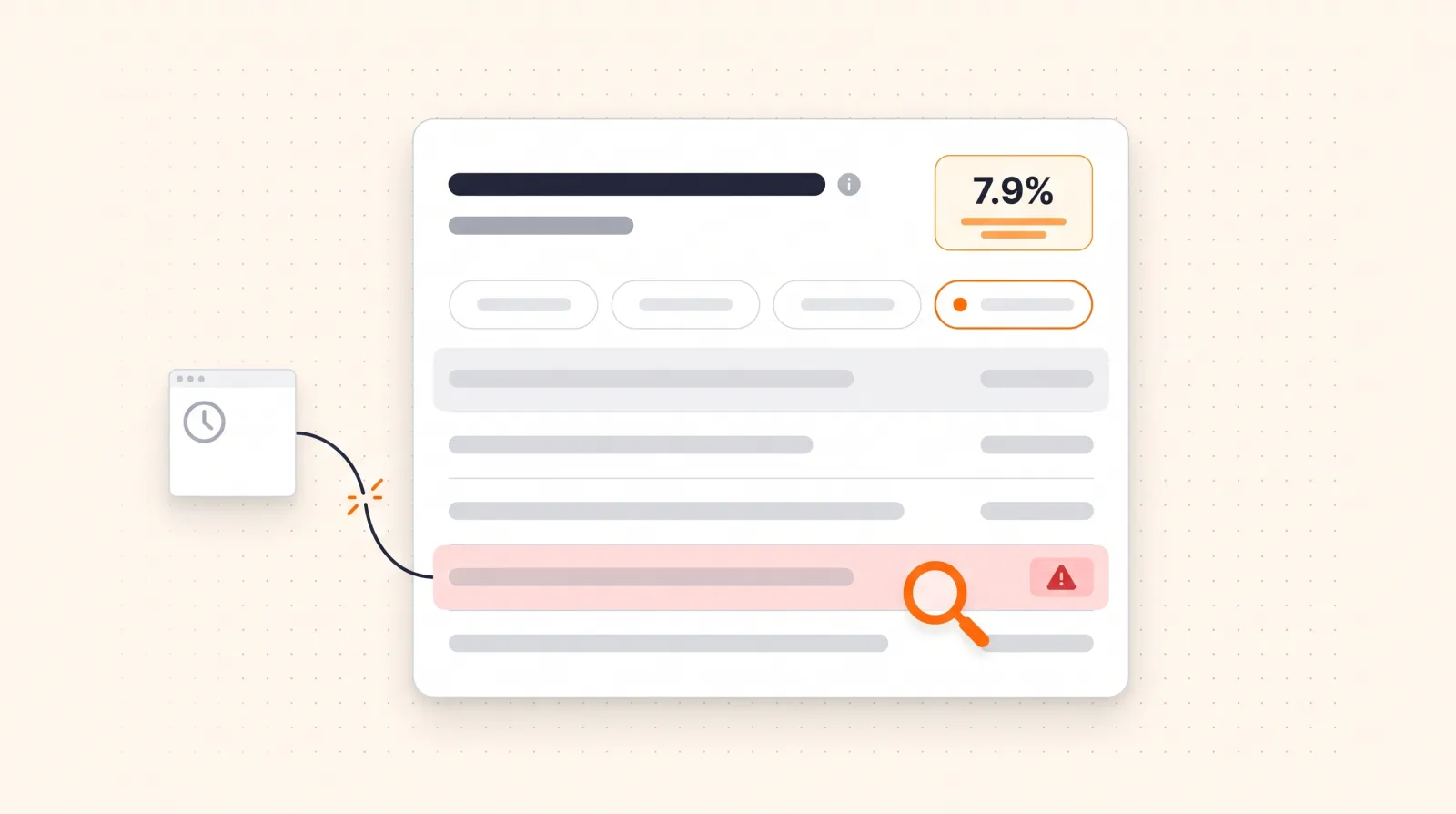
Why AI Gets Your Brand Wrong: Inside 158,000 Inaccurate Claims
Here’s an uncomfortable statistic: across the major AI answer engines, roughly 1 in every 15–23 factual claims about brands is wrong. Not vaguely off — wrong. And you’re probably exposed right now: 54% of brands have at least one inaccurate AI claim citing their own website, and 51% have one from earned media.
The strangest part, revealed by Profound’s FactCheck study of 158,000+ brand claims: AI engines rarely make things up about brands. The inaccuracies overwhelmingly come from real pages the engines faithfully retrieve — your outdated pricing page, a stale review, a comparison post written three product versions ago. The model isn’t lying. It’s accurately quoting sources that are wrong.
That distinction is good news, because it means AI misinformation about your brand is a findable, fixable problem — with a playbook. This guide covers what the data says about where inaccurate AI claims come from, and the correction loop that fixes them.
How often do AI engines get your brand wrong?
The numbers from the largest published AI-accuracy dataset:
| Metric | Finding |
|---|---|
| Inaccuracy rate per answer engine | 4.3% – 6.8% of brand claims |
| Brands with ≥1 wrong claim citing their own site | 54% |
| Brands with ≥1 wrong earned-media claim | 51% |
| Overlap of inaccurate claims between models | only ~11% |
| One monitored consumer brand’s flagged responses | 7.9% of all AI answers |
Two things make these “small” percentages dangerous.
Scale. A 5% error rate across the millions of brand-relevant conversations happening daily in ChatGPT, Gemini, Claude and Perplexity is thousands of buyers per week receiving a wrong fact about somebody — delivered in the confident, neutral tone that makes AI answers persuasive. Zero-click behavior means most of those buyers never visit your site to be corrected.
Concentration. Errors don’t distribute evenly across trivia. They cluster on the claims buyers act on — and one category dominates everything else.
And the exposure is compounding, because the conversations themselves are. Profound’s analysis of 7.5 million ChatGPT conversations found commercial conversations more than doubled in a year — more buyers asking engines what to buy, whom to trust, and what things cost. Their separate behavioral study of 56 users across 221 shopping tasks reached the conclusion that should reorder your priorities: the AI shortlist is the new shelf. Buyers increasingly act on the answer directly. When the answer contains a wrong price or a dead limitation, that’s not a cosmetic error — that’s your product silently removed from the shelf.
What “wrong” looks like in practice
Worth being concrete, because these are the claim types worth logging in any audit:
| Claim type | Typical error | Why it hurts |
|---|---|---|
| Pricing & billing | Old plans, wrong tiers, missing free trial | Distorts the #1 buyer filter |
| Product specs | Outdated limits, “no integration with X” (shipped last year) | Fails feature checklists you actually pass |
| Comparisons | Your current product vs a competitor’s newer generation | Structurally unwinnable framing |
| Availability | Discontinued SKUs recommended, regions you serve marked unserved | Sends buyers elsewhere at the last step |
| Company facts | Old leadership, stale funding, wrong HQ | Erodes credibility in diligence-style queries |
| Policies | Refund/support/security terms from an old help page | Creates trust and legal friction |
Pricing is the thing AI gets wrong most
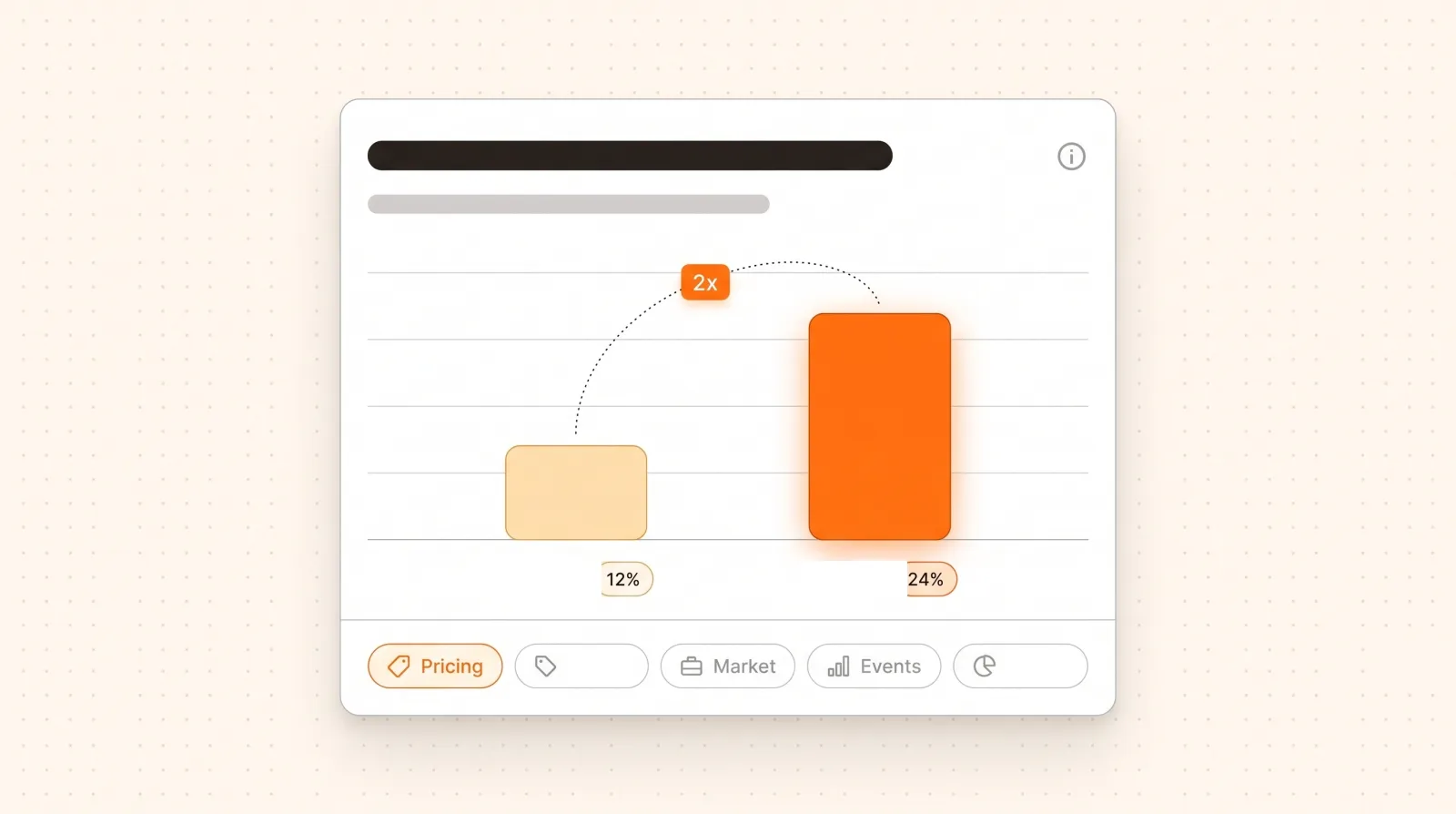
In the FactCheck data, pricing and billing claims represented 12% of what was evaluated but 24% of what was inaccurate — double their share, making pricing the single most error-prone topic. About 35% of all earned-media inaccuracies involved pricing, and for 66% of brands with ten or more pricing claims, pricing was their worst accuracy theme.
It makes structural sense. Prices change constantly; the content describing them doesn’t. Every plan restructure strands dozens of third-party “pricing & alternatives” articles — and your own old pages — as future misinformation. Ask an engine “how much does [brand] cost” and it synthesizes from whatever vintage of truth it retrieved.
After pricing, the recurring error types are the ones a real brand caught by monitoring its answers — WHOOP, in a documented correction program — kept finding: outdated product specifications, discontinued limitations described as current, and “apples to oranges” comparisons pitting your current product against a competitor’s older generation (or vice versa).
If you check nothing else this week, run your pricing prompts. It’s the highest-stakes claim category with the highest error rate — and the first thing a shortlisting buyer asks.
Where inaccurate AI claims actually come from
The study sorted every wrong claim by the source the engine leaned on, in four buckets — and the distribution is the strategy:
| Source bucket | What it is | Accuracy picture |
|---|---|---|
| Owned media | Your own website | 54% of brands have ≥1 error citing it — stale pages, contradicting docs |
| Earned media | Third-party publications, reviews | With competitor content, the biggest driver of inaccuracies |
| Competitor content | Competitors’ sites and comparisons | Systematically outdated or slanted framing of you |
| Social/UGC | Reddit, forums, social | Smaller share than most teams assume |
Three findings turn this from trivia into a to-do list:
- The top 100 earned-media domains drive ~40% of all inaccuracies (the top 10 alone drive 13%). The error surface is not “the entire internet” — it’s a short, identifiable list of heavily-cited pages.
- A typical brand’s errors come from about 4 websites. Your misinformation problem is probably four URLs. You just don’t know which four — which is exactly what claim-level monitoring tells you.
- Error sources are brand-specific. The domains poisoning your answers are different from your competitor’s. There is no universal blocklist; there is only your citation graph — the same graph you’re already mapping if you track which sources AI engines cite for your brand.
And the self-inflicted half deserves emphasis: more than half of brands are the cited source of their own misinformation. An abandoned feature page, a legacy pricing table on a regional subdomain, docs that contradict the homepage — engines read all of it, without your sense of which page is “the real one.”
Which engines get brands wrong — and why you can’t monitor just one
Every major engine errs at meaningful rates, but not identically:
- Claude produced ~1.3x more inaccurate brand claims than ChatGPT in the same dataset — ironic, given surveys that rank Claude highest on user trust. Perceived trustworthiness and measured accuracy are different variables.
- Only ~12.5% of claims overlap between ChatGPT and Claude, and just ~11% of inaccurate claims are shared between models. Each engine retrieves from a different slice of the web — its own citation DNA — so each engine has different wrong facts about you.
That second point is the operational one. Fixing your ChatGPT answers can leave Gemini repeating the same error from a different source, and checking one engine tells you almost nothing about the others. Accuracy, like visibility, has to be monitored per engine, per prompt, over time — answers drift with every model update and re-crawl, which is why a clean quarterly audit means so little by the next quarter.
The correction playbook: five steps that actually change answers
There’s no complaints desk for ChatGPT. Feedback buttons don’t reliably change generated answers. The dependable route is upstream — fix what the engines read. Here is the loop, in the order that pays fastest:
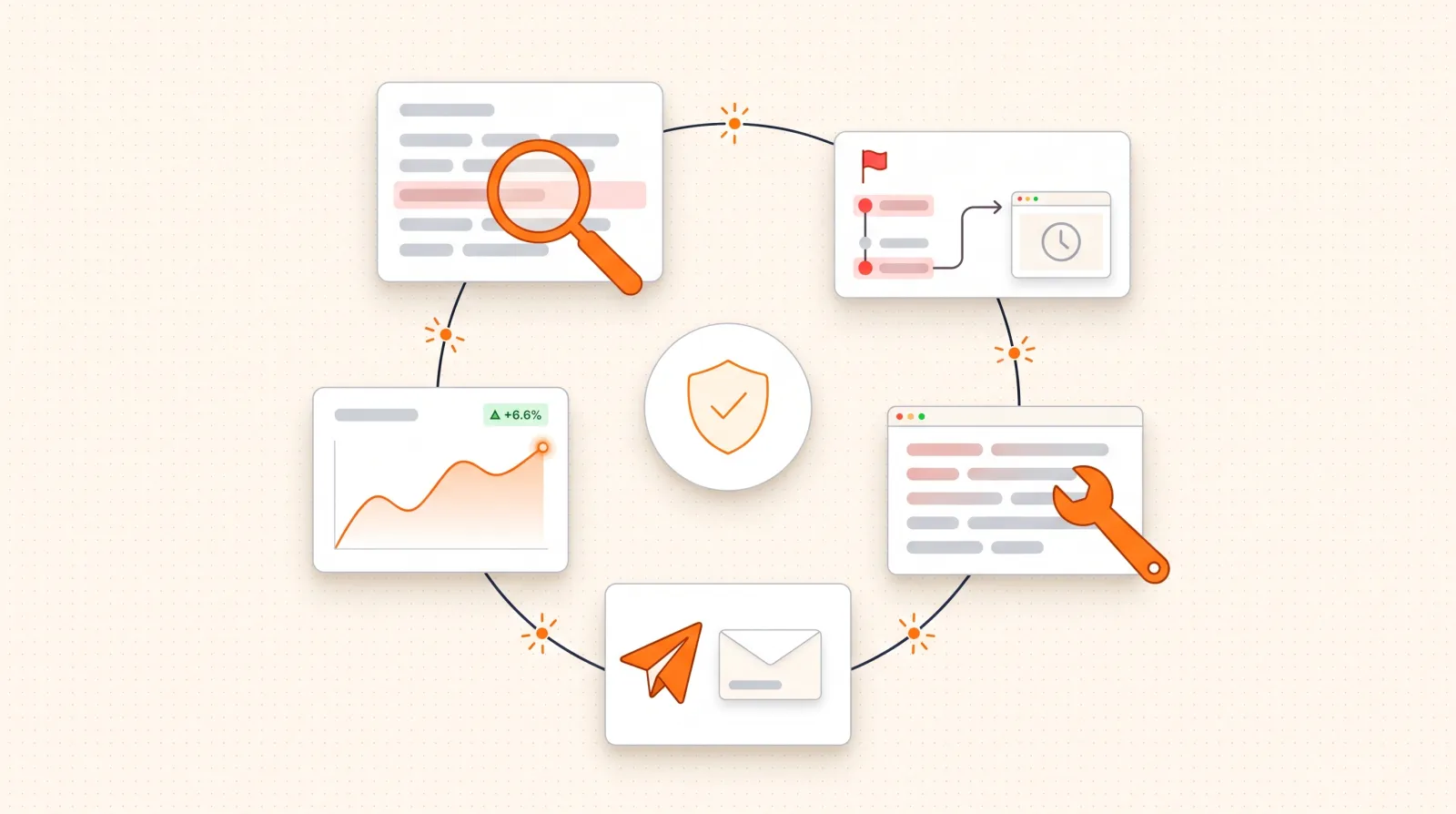
1. Detect: audit what AI actually says about you. Run your commercial prompts — pricing, comparisons, “is [brand] worth it”, spec questions — across ChatGPT, Gemini, Claude and Perplexity, and log every factual claim, not just whether you were mentioned. This is visibility tracking with a fact-checking layer on top: claim, engine, date, verdict. At any real prompt volume you’ll want it automated — Sanbi runs your prompt set on a schedule and flags answers whose claims diverge from your current positioning, alongside the sentiment monitoring that catches tonal damage the same way.
2. Trace: find the source of each wrong claim. Perplexity and Google’s AI surfaces cite openly; ChatGPT with search usually will. For uncited claims, search the wrong fact verbatim — it almost always lives on a findable page. Remember the shape of the problem: ~4 domains, heavy concentration in the top-100 cited sites. You’re building a shortlist, not boiling the ocean.
3. Fix owned media first. It’s the source you control by lunchtime, and for half of brands it’s an active error source. Current pricing page with dated “last updated” signals; one canonical answer per fact; kill or redirect stranded legacy pages; align docs, regional sites and marketplace listings to one source of truth. Structured data and a maintained llms.txt make the correct version easier to retrieve than the stale one.
4. Outreach earned media. For third-party errors, a short, specific correction request — “your March review lists our old pricing; here’s the current page” — works far more often than teams expect, because publishers have their own accuracy incentives. Prioritize by citation frequency: a wrong fact on a page engines cite weekly outranks ten errors on pages they never read. This is PR work with an SEO’s targeting data — the clean split (content fixes owned, comms fixes earned) is why accuracy belongs to both teams in one weekly loop.
5. Verify: re-measure until the answer changes. Retrieval-based engines re-crawl continuously, so source fixes typically surface in answers within days to weeks. Re-run the affected prompts on schedule and confirm; if an engine keeps repeating the old fact, it’s retrieving a source you haven’t found yet — back to step 2. WHOOP ran exactly this loop across 9 engines — detect via automated fact-flagging (7.9% of responses), trace, refresh content, verify — and paired a 6.6% visibility lift in six months with a measurably cleaner answer set. Corrections and visibility compound: engines prefer sources that are current and consistent.
The 30-minute self-audit you can run today
Before any tooling, one manual pass tells you whether you have a problem. Open fresh, logged-out sessions and run these ten prompts in at least two engines, substituting your brand and category:
how much does [brand] cost[brand] pricing plans 2026does [brand] have a free trial[brand] vs [main competitor] — which is better[brand] limitationsdoes [brand] integrate with [key integration]is [brand] good for [your core use case][brand] alternativesis [brand] SOC 2 compliant / secure(or your industry’s trust question)who is the CEO of [brand](diligence-style sanity check)
For every answer, mark each factual claim true / outdated / wrong, and note the cited source where shown. Two patterns from the data will likely show up in your results: the errors will skew heavily toward prompts 1–3 (pricing), and the same two or three source domains will keep reappearing. Those domains are your shortlist for the playbook below. If everything checks clean across engines — congratulations, and re-run it after your next pricing change, because that’s when clean answers quietly rot.
One session-hygiene note: use clean sessions with personalization off, or you’re auditing your own chat history rather than what buyers see — the same discipline as any AI visibility measurement.
Accuracy is a moving target — treat it like uptime
The study’s own conclusion: there is no one-time fix. New model versions ship, crawls refresh, publishers push new content, your prices change again. Each event can introduce or resurrect a wrong claim — the AI-answer layer is a system that drifts, and drift is a monitoring problem, not a project.
The brands handling this well treat AI accuracy like uptime: continuously watched, alerted on deviation, owned jointly by content and comms, reviewed weekly in minutes because the detection is automated. That’s the reason we built claim-level views into Sanbi’s tracking — when an answer about you shifts, you shouldn’t learn it from a confused prospect on a sales call.
The bottom line
- AI engines get 4.3–6.8% of brand claims wrong, over half of brands are cited sources of their own errors, and only ~11% of errors repeat across engines — so monitor every engine, not one.
- It’s mostly not hallucination. Wrong answers trace to real, stale pages — which makes them fixable.
- Pricing is the epicenter: 12% of claims, 24% of errors. Audit your pricing prompts first.
- The error surface is small: ~4 domains per brand, with the top-100 cited sites driving ~40% of everything. Detect → trace → fix owned → outreach earned → verify.
You can’t correct answers you’ve never seen. Run a free AI visibility audit — see what ChatGPT, Gemini and Claude are actually claiming about your brand, which sources those claims come from, and exactly which pages to fix first.
Frequently Asked Questions
Usually because something it read is out of date — not because it invented facts. Analysis of 158,000+ fact-checked brand claims found most inaccurate AI claims trace to real published sources: old pricing pages, stale third-party reviews, outdated comparison articles. The model retrieves and repeats what those pages say. That is fixable: identify which pages the engine is reading, update or outreach them, and the answers follow within weeks.
Across major answer engines, roughly 4.3–6.8% of individual claims about brands are inaccurate, and the exposure is nearly universal: about 54% of brands have at least one wrong claim citing their own website, and 51% have at least one from earned media. One monitored consumer brand found 7.9% of AI responses about it contained an accuracy issue. Low percentages still mean thousands of wrong answers at AI scale — and the errors concentrate on the worst possible topic: pricing.
Pricing and billing, by a wide margin. In the largest published study of AI brand accuracy, pricing represented about 12% of evaluated claims but 24% of all inaccurate ones — double its share. Roughly 35% of earned-media inaccuracies involved pricing, and for two-thirds of brands with meaningful pricing coverage it was their single worst accuracy theme. After pricing: outdated product specs, discontinued features described as current, and unfair comparisons against old competitor versions.
Mostly no, and the distinction decides your fix. A true hallucination is fabricated — rare for brand facts. The dominant failure mode is faithful retrieval of wrong sources: the engine accurately quotes a page that is itself outdated or mistaken. That means the fix is not 'wait for better models'; it is finding and correcting the specific pages the engines read — your own site first, then the handful of third-party domains that generate most of your errors.
They all err at meaningful rates — roughly 4.3% to 6.8% of claims depending on the engine — and the errors barely overlap: only about 11% of inaccurate claims are shared between models, because each engine reads different sources. Notably, Claude produced about 1.3x more inaccurate brand claims than ChatGPT in the same study, despite surveys ranking Claude highest on user trust. The practical takeaway is to monitor each engine separately rather than assume accuracy transfers.
Five steps. First, audit: run your key prompts across engines and log every factual claim. Second, trace: identify the cited or likely source of each wrong claim. Third, fix owned media — your pricing page, docs, and comparison pages, which cause over half of brands at least one error. Fourth, outreach earned media: the top 100 external domains drive around 40% of all inaccuracies, and a typical brand's errors come from roughly four websites, so a short outreach list goes far. Fifth, verify: re-run the prompts after the source updates and confirm the answer changed.
Not reliably — there is no editorial complaints desk for ChatGPT or Gemini, and feedback buttons rarely change generated answers. The dependable route is upstream: correct the sources the engines retrieve from. Because answer engines re-crawl continuously, an updated pricing page or corrected review typically flows into answers within days to weeks. For persistent fabrications with legal implications (defamatory claims), platforms do have formal reporting channels — but for ordinary factual errors, fixing sources beats filing tickets.
Run a fixed set of buyer prompts against ChatGPT, Gemini, Claude and Perplexity on a schedule, and record the factual claims each answer makes — pricing, features, comparisons — alongside mentions and sentiment. Manual spot-checks catch single errors; scheduled AI accuracy monitoring catches drift, which matters because answers change with every model update and re-crawl. Platforms like Sanbi automate the sampling and flag when an answer's claims diverge from your source of truth.
Yes — mechanically. AI answers increasingly are the shortlist: buyers ask an engine for a comparison and act on what it says. When the answer overstates your price, describes a limitation you fixed two years ago, or compares your current product to a competitor's newer one, you lose deals with no rebuttal opportunity, because the buyer never reaches your site. Pricing errors are the most damaging category for precisely this reason: they distort the exact variable buyers filter on.
When the wrong claim traces to a live source, corrections typically surface within days to a few weeks of the source updating, since retrieval-based engines re-crawl continuously. Claims baked into training data (rather than retrieved) are slower and may persist until a model refresh — which is why keeping high-authority, current pages that engines retrieve is the strongest defense: retrieval overrides memory in most commercial answers. One brand running this loop systematically lifted overall AI visibility 6.6% in six months while cutting flagged inaccuracies.
Both, in one loop. The error sources split cleanly: roughly half of brands have inaccuracies from their own site (an SEO/content fix) and half from earned media (a PR/outreach fix). The monitoring layer that finds the errors is shared infrastructure. Teams that treat AI accuracy as a weekly joint review — content fixes what it owns, comms outreaches what it doesn't — consistently outperform teams that discover errors from angry sales calls.