The Most-Cited Domains in LLMs, by Industry and by Engine (2026 Data)
There is no single list of the most-cited domains in LLMs. There is a different list for every engine, and a different list again for every industry — and the global “top 10” everyone republishes is the least useful of them.
This piece assembles what the data actually shows, from three kinds of evidence: the large public studies (Ahrefs’ 78.6 million searches, Semrush’s 150,000-citation analyses, Profound’s longitudinal citation index), the platform-specific measurements that have come out through 2026, and our own 120,000-citation study of a single B2B category across four engines. Every number is sourced; where the evidence is a single dataset, it says so.
The short version
| If you sell… | The domains that get cited instead of you | Where the fight is |
|---|---|---|
| B2B software | G2, Capterra, TrustRadius, Reddit, LinkedIn, vendor docs | Review platforms and comparisons |
| Consumer products | Amazon, YouTube, Reddit, Wirecutter-style publishers | Video and community reviews |
| Finance / fintech | Investopedia, NerdWallet, Bankrate, Reuters, regulators, Wikipedia | Reference authority and press |
| Local services | google.com (Business Profiles), Yelp, TripAdvisor, YouTube | Google’s own panels |
| Healthcare | Mayo Clinic, NIH/NHS, Healthline, WebMD | Institutional authority |
| Industrial / technical | Manufacturer sites, distributors, patents, analyst firms | Primary sources |
The pattern underneath every row: engines cite whoever they trust to be right about your category, and it is very rarely your own website first.
The global picture: which AI platforms cite what
The most rigorous public baseline is Ahrefs’ analysis of 78.6 million searches across Google AI Overviews, ChatGPT and Perplexity (June 2025). Its top domains by mention share:
| Engine | #1 | #2 | #3 | Character of the list |
|---|---|---|---|---|
| ChatGPT | Wikipedia 16.3% | Reuters 4.0% | AP / news outlets | Reference + wire-service news |
| Perplexity | YouTube 16.1% | Wikipedia 12.5% | Apple News, Google | Video + reference |
| AI Overviews | YouTube 9.5% | Wikipedia 8.4% | Reddit 7.4% (Quora 3.6%) | Video + reference + community |
Three things stand out. Wikipedia is the only domain in the top two on every engine. ChatGPT is a news-and-reference engine — its top ten is dominated by wire services and publishers, with almost no video. Perplexity and AI Overviews are video engines — YouTube leads both, and a later citation-share report put YouTube at 23.3% of AI Overview citations in 2026, while a separate YouTube citation study found AI engines cite it 200x more than any other video platform — with ChatGPT contributing under 5% of those citations.
That last split matters for budget: a YouTube investment moves Google’s surfaces and Perplexity, and barely touches ChatGPT.
The global list is unstable — Reddit, August 2026
Any “most-cited domains” list has a date on it, and the clearest proof is Reddit.
Through mid-2026 Reddit was routinely described as the most-cited community platform in AI answers. Then, between 8 and 17 August 2026, its share of ChatGPT citations fell from 3.8% to 0.5% — an 86% drop in under two weeks, concentrated on ChatGPT (Reddit’s AI Overview citations dipped only ~11% over the same period). The tracking firm that measured it, Promptwatch, called the data provisional and could not fully explain the second, sharper drop on 14 August.
The lesson is not “Reddit is dead.” It is that a citation strategy built on one platform’s position in one engine is a single point of failure, and that citation share has to be tracked, not looked up once. We covered the mechanics and what to watch in how to track your visibility in AI search.
By industry
B2B software: the review platforms own the answer
For “best tool for X” prompts, the citation set is led by review platforms, and the concentration is remarkable. G2’s own analysis of how it appears in LLM search found G2 supplying roughly a third of review citations on ChatGPT and AI Overviews, and close to three quarters on Perplexity. An SE Ranking study found review platforms topping AI Overview citations even as their own organic traffic collapsed — they are being read more and visited less. And G2’s February 2026 acquisition of Capterra, Software Advice and GetApp from Gartner consolidated most of the category’s citation share under one company.
Below the review layer: Reddit threads (volatile, see above), vendor documentation (cited for how-to, rarely for which), LinkedIn articles, and comparison content from larger vendors.
What this means: a B2B vendor’s blog gets cited for definitional and how-to questions. For the money question — which one should I buy — third-party consensus wins almost every time. The work is off-site, and the G2/Capterra review profile is now part of your AI content strategy whether you like it or not.
Professional and B2B topics: LinkedIn
For professional questions specifically, LinkedIn punches far above its global rank. 2026 analyses found LinkedIn content cited in around 14.3% of ChatGPT Search responses and 13.5% of Google AI Mode responses, against roughly 5.3% on Perplexity — because LinkedIn hosts a huge volume of expert-authored, indexed, long-form content on business topics. Executive and expert articles on LinkedIn are a citation asset, not just distribution.
Finance, banking and fintech: reference authority
Finance answers skew to regulated, reference-grade sources: Investopedia, NerdWallet, Bankrate and Forbes Advisor for consumer questions; Reuters and the Wall Street Journal for market context; regulators and government sites for rules; Wikipedia for definitions. Reddit appears for product-experience questions (which card, which bank). Fintech vendors appear mostly through review platforms, comparison articles and press — rarely via their own domain. For SMB finance, the SBA and accounting-software vendors’ guides dominate.
Local and service businesses: Google cites Google
The most under-reported finding of 2026. Profound’s analysis of more than 32 million AI Mode instances found google.com had become AI Mode’s second most-cited domain, up 8.4x in two months — driven by Google Business Profiles and product knowledge panels, and strongest in hospitality, home services, restaurants, real estate and healthcare. In those categories a large share of citation slots are Google’s own panels populated with your data. Yelp, TripAdvisor and YouTube fill most of the rest. Details in how to rank in Google AI Mode.
Consumer products and ecommerce: Amazon, video, community
Shopping answers lean on Amazon listings, YouTube reviews and Reddit threads, with publisher buying-guides (Wirecutter-style) for considered purchases. The owned-site lever here is structured product data — price, availability, identifiers — which is what engines quote when they do cite the brand. See GEO and AEO for ecommerce.
Industrial and technical B2B: our own data
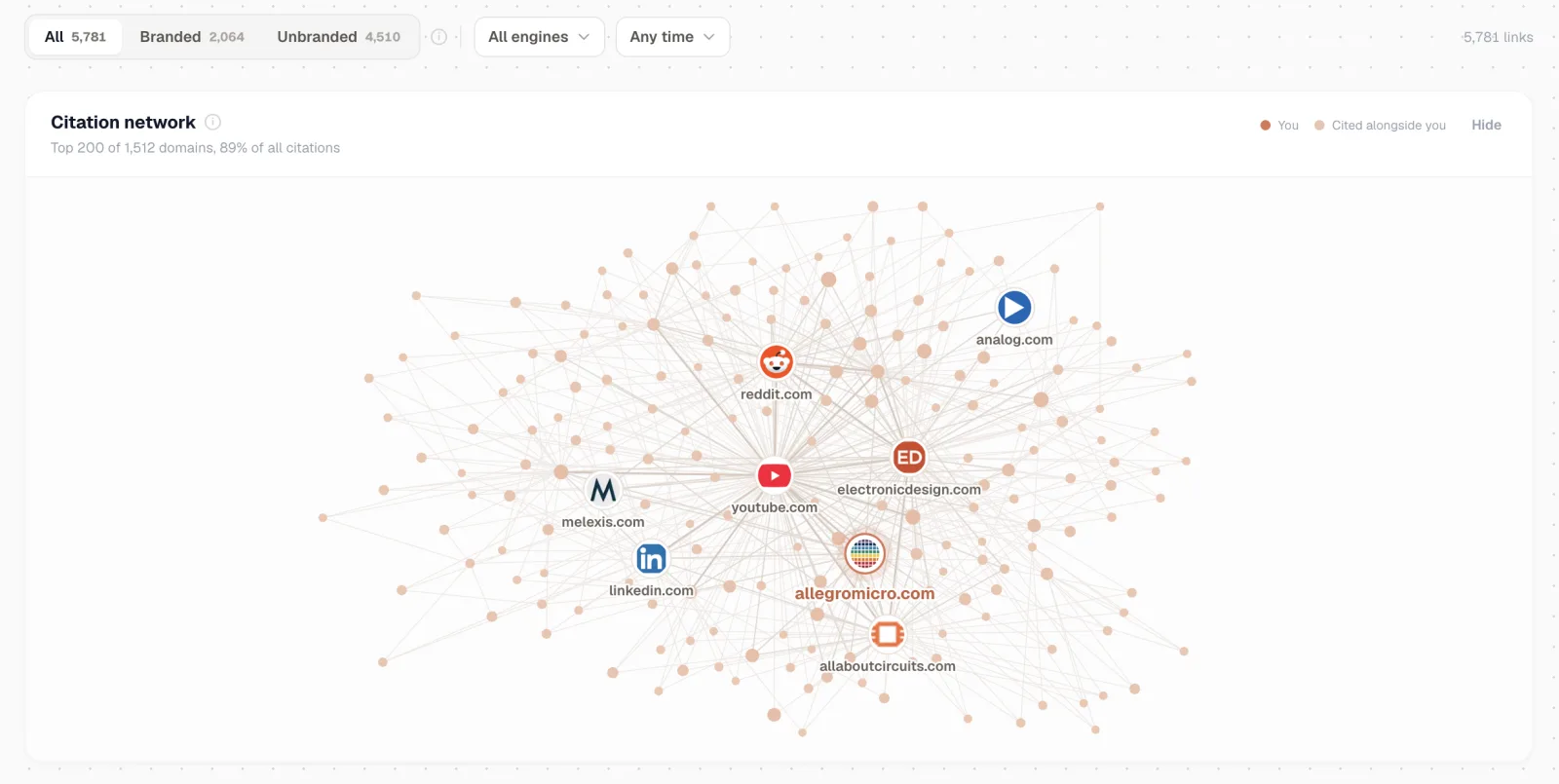
This is the category we can speak to with first-party numbers. Our 30-day, 119,939-citation study of a single industrial-electronics category found each engine reaching for a different kind of source:
| Engine | Citations analysed | Brand’s own domain | What else led |
|---|---|---|---|
| ChatGPT | 14,721 | 7.9% (4th) | Three manufacturer sites at 9–12% each (~33% combined); no video, social or aggregators |
| Gemini | 49,836 | 11.7% (1st) | Vertical trade publications, manufacturers, video, distributors — each 1.5–3.2% |
| Perplexity | 39,664 | 26.0% (1st) | Manufacturer 5.5%, YouTube 4.9%, distributor 3.1%, Reddit 2.0%, LinkedIn 1.9% |
| Claude | 15,718 | 14.7% (1st) | USPTO patent database 3.2%, analyst firms (Yole, Mordor), industry directories |
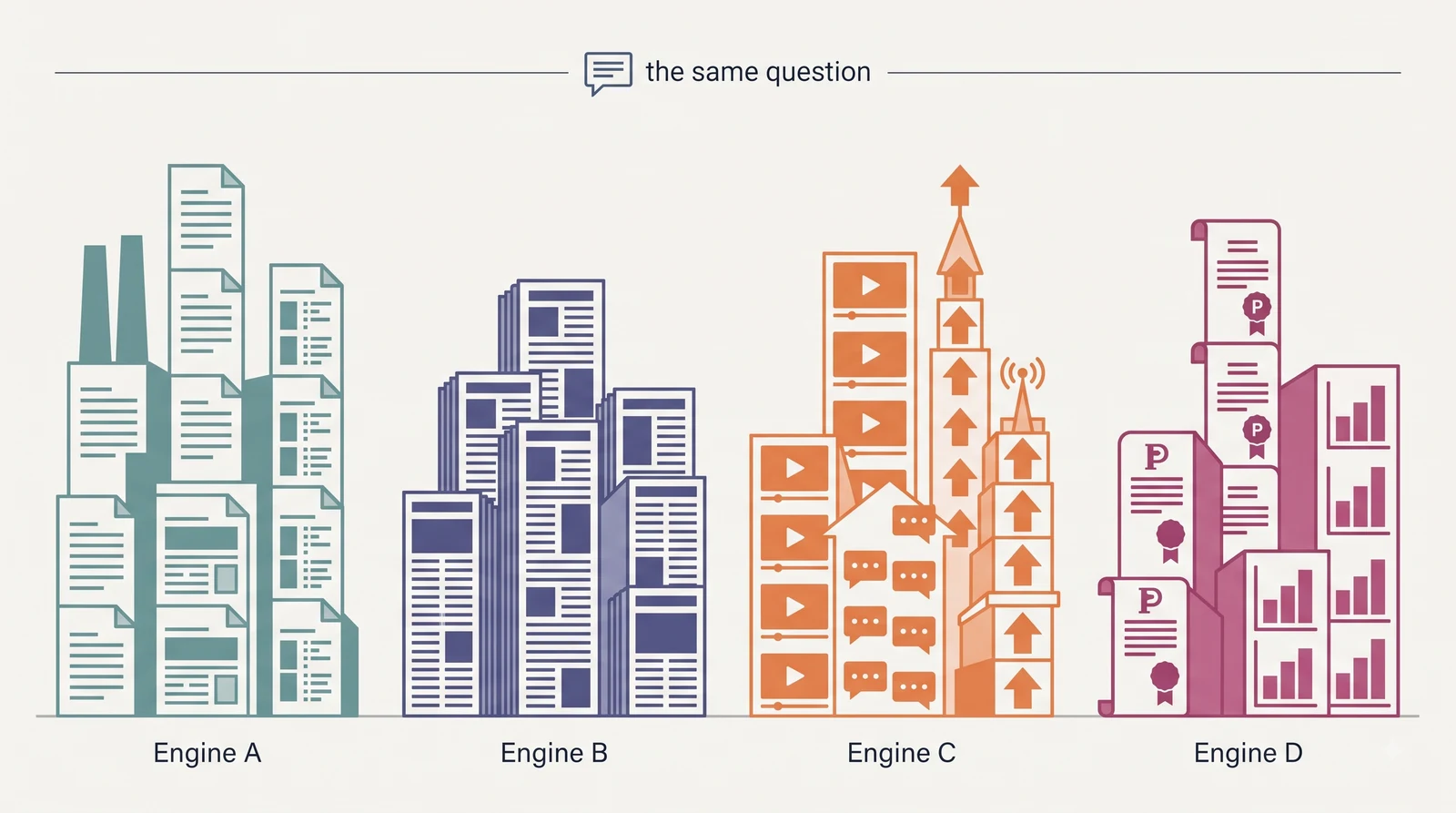
Same category, same prompts, four almost non-overlapping source pools. Claude reaching for a patent database and two analyst firms is the signature: when in doubt, cite a primary source. ChatGPT concentrating a third of its citations in three canonical manufacturers is the opposite signature: cite the category’s acknowledged authorities.
What percentage of citations does a brand’s own site get?
This is the question behind most “most-cited domains” searches, and the honest answer is: it depends on the engine, and the average is misleading. In our dataset the owned share ran from 7.9% (ChatGPT) to 26% (Perplexity). For definitional and how-to questions it is higher; for comparison and recommendation questions it falls sharply, because that is where review platforms and communities take the slots.
Measure it for your category. A global figure — whatever it is — tells you nothing about where your citations are going.
How to use this
The global lists are interesting. The category list for your prompts is actionable, and building it takes a week:
- Fix 20–50 buyer prompts and run them on every engine you care about, repeatedly.
- Log every cited domain, not just whether you appeared.
- Rank the domains by frequency. The top ten is your category’s citation set — the places engines go to decide.
- Split it three ways: your own pages, third-party sources you could be on, and sources you cannot influence (Wikipedia, Google’s panels).
- Work the middle bucket first. The review profile, the comparison roundup, the expert LinkedIn article, the YouTube walkthrough — these are the slots that are actually available.
Most brands discover they are absent from the same three or four sources their competitors are on. That is not an authority problem or a content problem; it is a presence problem, and it is the cheapest one to fix. Our branded vs unbranded study shows what that gap looks like from the inside — and why competitors get cited more walks through the diagnosis.
Run a free AI visibility audit to get the citation list for your own category — which domains each engine cites for your buyer prompts, and which of them you are missing from.
Frequently Asked Questions
Across ChatGPT, Gemini, Perplexity and Claude the most-cited domains are consistently a small set of high-authority, high-volume sources: Wikipedia, Reddit, YouTube, LinkedIn, major news publishers, and category review platforms such as G2, Capterra, Yelp and TripAdvisor, with Amazon prominent in shopping answers. The ranking shifts by engine — Ahrefs' 78.6-million-search analysis put Wikipedia first on ChatGPT at 16.3 percent and YouTube first on Perplexity at 16.1 percent — and by industry, which is why a category-level view is more useful than a global list.
Finance answers skew toward regulated and reference sources: Investopedia, NerdWallet, Bankrate, Forbes Advisor, the Wall Street Journal and Reuters, government and regulator sites, and Wikipedia for definitions, with Reddit appearing for product-experience questions such as which bank or card to choose. Fintech vendors appear mostly through review platforms, comparison articles and press coverage rather than their own sites. For SMB finance topics, the SBA, Investopedia and accounting-software vendors' guides dominate.
For B2B software questions the citation set is led by review platforms — G2, Capterra, TrustRadius and Gartner Peer Insights — followed by Reddit threads, vendor documentation, LinkedIn articles, and comparison content from publishers and larger vendors. G2 alone appears in roughly a third of ChatGPT and AI Overview review citations and about three quarters on Perplexity. Vendor blogs are cited for how-to and definitional questions but rarely for which-tool-is-best questions, where third-party consensus wins. The implication is that a B2B brand's AI visibility is built mostly off-site.
It varies sharply by engine and question type, and global averages hide the spread. In our own 120,000-citation study of a single B2B category, the brand's own domain took 7.9 percent of ChatGPT citations, 11.7 percent on Gemini, 14.7 percent on Claude and 26 percent on Perplexity — with the remainder going to manufacturers, publishers, communities, review platforms and, on Claude, patent and analyst sources. For comparison and recommendation prompts the owned share drops further, because review platforms and communities take most slots. Measure it for your own category rather than relying on an average.
Healthcare is the most institutionally conservative category in AI answers. The citation set is dominated by Mayo Clinic, Cleveland Clinic, the NIH and PubMed, the NHS in UK results, Healthline, WebMD and MedlinePlus, with peer-reviewed journals appearing for specific clinical questions and Wikipedia for definitions. Community sources are cited far less here than in other verticals, and engines apply visibly stricter source selection because of the health-content risk. For a healthcare brand this means owned content rarely wins the answer outright; being referenced by, or aligned with, institutional sources is the realistic path.
Shopping answers lean on Amazon listings, YouTube reviews and Reddit threads, plus publisher buying guides such as Wirecutter for considered purchases, and increasingly Google's own product knowledge panels inside AI Mode. Retailer domains do get cited, but usually for specific product facts rather than for recommendations. The practical lever on your own site is structured product data — Product schema with price, availability and identifiers, server-rendered rather than loaded by JavaScript — because that is the content engines quote when they cite a retailer at all.
Fix a set of 20 to 50 real buyer prompts, run them repeatedly across the engines you care about, and log every cited domain rather than only whether your brand appeared. Rank those domains by frequency and you have your category's citation set. Then split the list three ways: your own pages, third-party sources you could realistically appear on such as review platforms and roundups, and sources you cannot influence such as Wikipedia or Google's own panels. The middle bucket is where the available work is, and it is usually where competitors are present and you are not.
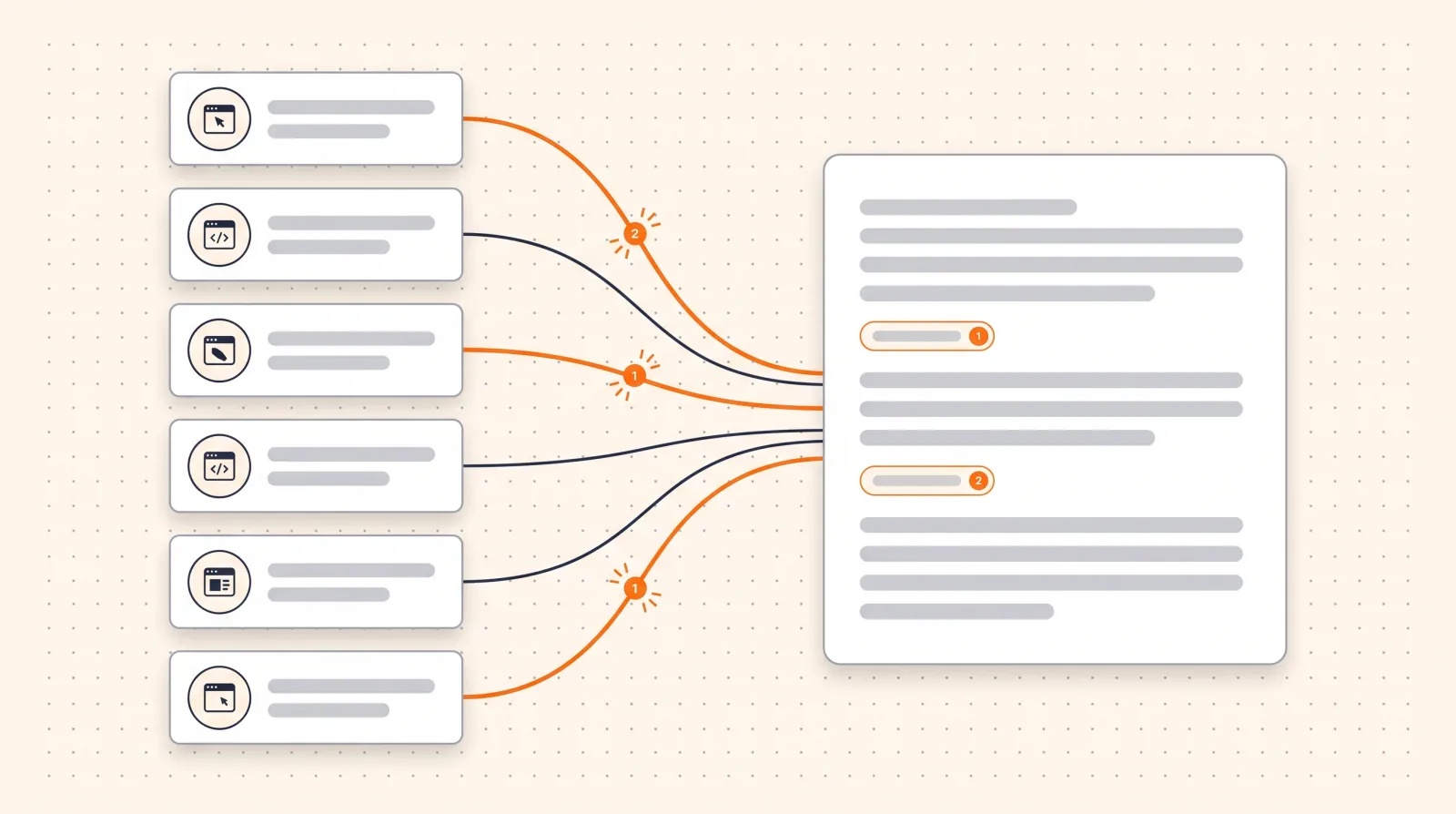
An AI-generated answer is assembled at query time, not retrieved from a ranked list. The engine decomposes the question, retrieves candidate passages from its index, and composes a response from the ones it can most readily verify and quote — then shows a subset as citations. That is why the visible source list is shorter than the set of pages actually consulted, and why artificial intelligence systems can lean on a page without ever crediting it. For brands it means two separate things are worth measuring: whether you are being read, which shows up in crawler logs, and whether you are being credited, which is what citation tracking reports.
Reddit has been the most-cited community platform across engines, followed by YouTube, which Google's AI surfaces and Perplexity favour heavily, and LinkedIn, which shows up for professional and B2B questions. But the ranking is unstable: in August 2026 Reddit's share of ChatGPT citations fell from 3.8 percent to 0.5 percent in under two weeks, while YouTube's share of AI Overview citations was measured at over 23 percent. Quora, Stack Exchange and niche forums appear for specific verticals; X, Instagram and TikTok are cited comparatively rarely because their content is harder to retrieve and quote.
Not overall, but for professional and B2B prompts it is near the top. Analyses in 2026 found LinkedIn content cited in around 14 percent of ChatGPT Search responses and 13.5 percent of Google AI Mode responses, against roughly 5 percent on Perplexity, because LinkedIn hosts a large volume of expert-authored, indexed long-form content on business topics. Across all query types it sits behind Wikipedia and the major publishers. The takeaway for B2B brands is that executive and expert articles published on LinkedIn are a citation asset, not just a distribution channel.