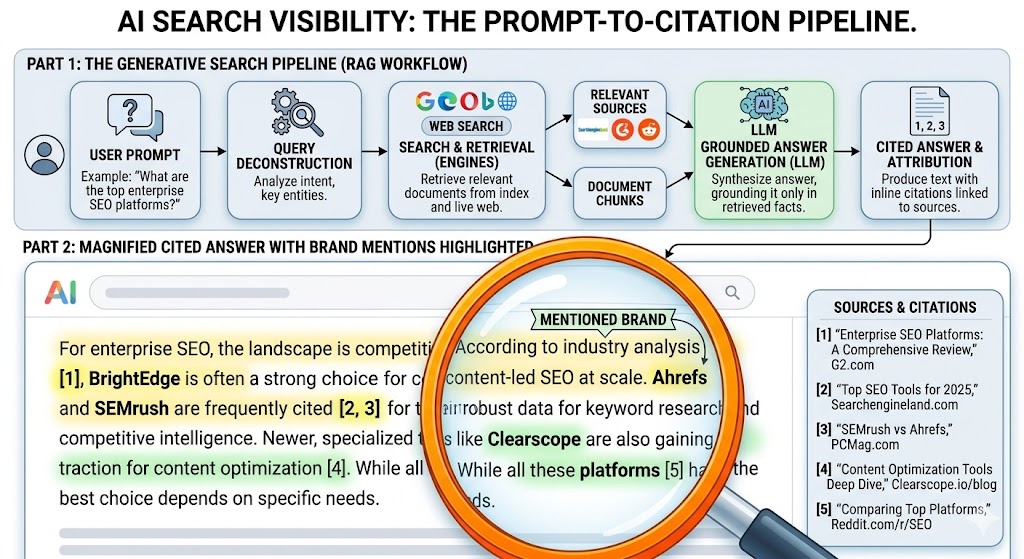
Prompt Volume Is the New Search Volume: The AI SEO Metric Everyone's Asking About on Reddit
Marketers spent twenty years building strategy on one number: monthly search volume. That number is losing its monopoly. Your buyers now ask ChatGPT, Gemini, and Perplexity full questions — and none of those conversations show up in a keyword planner.
The replacement metric is prompt volume, and the discipline built around it — prompt monitoring — is the fastest-emerging category in AI SEO. The gap is staggering: 43% of marketing teams call AI optimization a core 2026 strategy, but only 14% actually track their LLM visibility. That 29-point gap is the opportunity.
Here’s what prompt volume is, what it’s genuinely good for (and where vendors oversell it), and how to build an LLM prompt monitoring program this quarter.
What Is Prompt Volume?
Prompt volume is the estimated number of times a specific prompt is asked inside AI platforms — ChatGPT, Gemini, Claude, Perplexity, AI Overviews — per month. It’s the AI-era analogue of keyword search volume.
The comparison in one table:
| Keyword Search Volume | Prompt Volume | |
|---|---|---|
| Measures | Queries typed into Google/Bing | Questions asked to AI assistants |
| Typical query | ”best crm” (2–3 words) | “what’s the best CRM for a 10-person sales team on Gmail?” (15+ words) |
| Data source | Platform-reported (Google Keyword Planner) | Modeled estimates (panels, API sampling) |
| Result format | 10 blue links — many winners | One synthesized answer — few winners |
| Demand shape | Concentrated on head terms | Fragmented across thousands of phrasings |
That last row changes strategy more than anything: with AI sessions already at 56% of global search volume and growing, demand isn’t disappearing — it’s fragmenting into conversational long-tail prompts that keyword tools were never built to see.
The Honest Caveat: Prompt Volume Is Modeled, Not Measured
Before you rebuild your content calendar around prompt volume numbers, understand what they are: estimates. AI platforms publish no query data. Every vendor’s prompt volume — including the enterprise ones — is modeled from clickstream panels and extrapolation. A figure like “4,800 prompts/month” could plausibly be 2,400 or 9,600.
What that means in practice:
- Good use: ranking topics against each other, spotting rising themes, deciding what to cover first
- Bad use: forecasting traffic, reporting “prompt demand” to your board as a hard number, choosing between two topics separated by 20%
The measured counterpart is prompt monitoring — and that’s where the real signal lives.
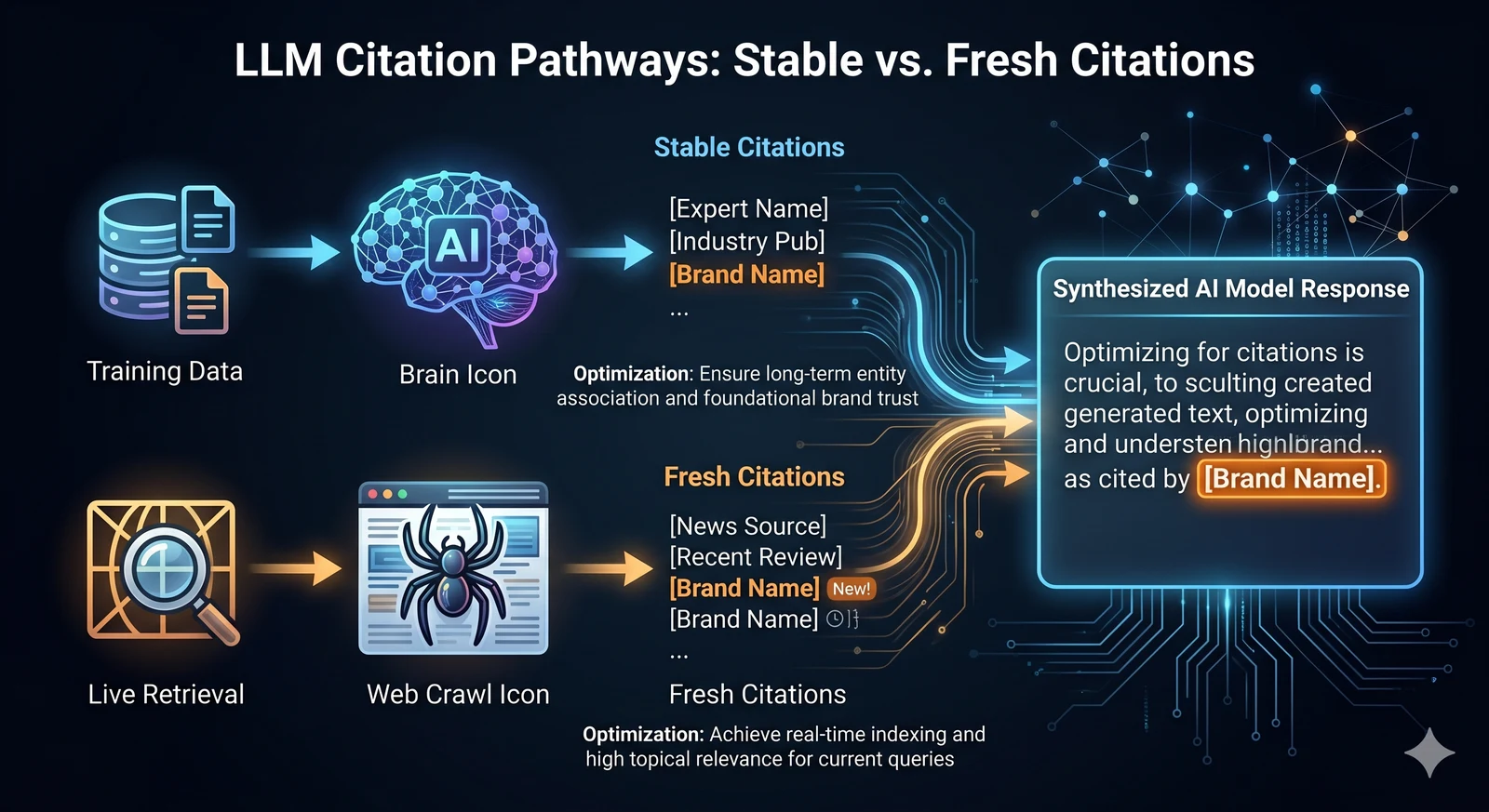
Prompt Monitoring: The Metric You Can Actually Measure
LLM prompt monitoring flips the question. Instead of asking “how many people ask this prompt?” (modeled), it asks “what does the AI answer when they do?” (measured).
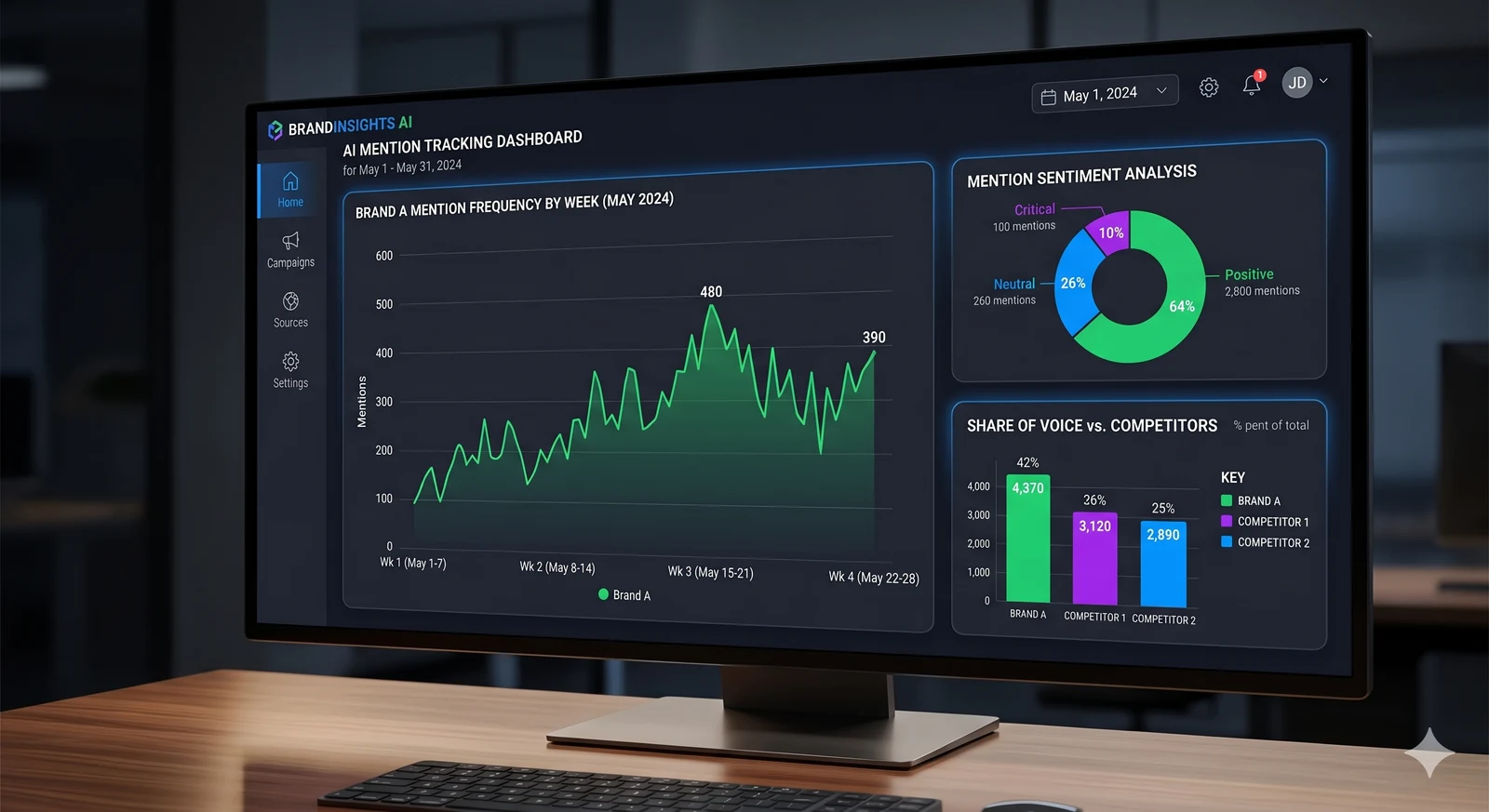
A prompt monitoring program runs a fixed set of buyer prompts across ChatGPT, Gemini, Perplexity, and Claude on a schedule — daily or weekly — and records:
- Citation frequency — % of runs where your brand appears
- Share of voice — your mention rate vs. named competitors
- Sentiment & accuracy — how the model describes you
- Source citations — which domains the model leaned on (this is where Reddit shows up constantly)
Because models are probabilistic, single checks are meaningless — the same prompt returns different brands on different runs. Monitoring samples repeatedly and reports trend lines, which is exactly what separates it from asking ChatGPT about yourself once a month. Full methodology in our guide to measuring AI visibility.
How to Build Your Prompt Set (This Is Where Reddit Comes In)
The quality of prompt monitoring is decided by the quality of the prompt set. Generic category prompts produce generic insights. The best prompt sources, ranked:
- Reddit threads — the questions in r/marketing, r/SaaS, r/Entrepreneur are near-verbatim what buyers ask ChatGPT. Search
site:reddit.com "your category" recommendationsand harvest the actual phrasings. - Sales calls and demos — every “how do you compare to X?” is a prompt someone else asks an AI.
- Support tickets and onboarding questions — post-purchase prompts models answer daily.
- People Also Ask / forum threads — pre-AI question demand that migrated to assistants.
- Prompt research tools — modeled expansion to fill gaps (Profound’s Conversation Explorer, Otterly’s prompt data).
Reddit matters twice over: it’s your best prompt source, and AI models cite Reddit heavily when answering recommendation prompts — meaning Reddit sentiment about your brand literally becomes the AI’s answer. Track both sides; here’s our playbook for tracking brand mentions across AI search.
The Best Prompt Monitoring Tools in 2026
| Tool | Approach | Best for |
|---|---|---|
| Sanbi.ai | Scheduled prompt tracking across ChatGPT, Gemini, Perplexity, Claude, Google AI Mode + citation scoring + Recommended Tasks board | Teams that want monitoring and the content actions to fix gaps — from $37.25/mo |
| Profound | Prompt volume estimates via Conversation Explorer, enterprise dashboards | Enterprise budgets that want modeled demand data |
| Otterly.ai | Prompt-level visibility snapshots, AI search volume data | Lightweight prompt research |
| PromptMonitor | Prompt tracking across LLMs | Simple mention alerts |
| Peec AI | Multi-model visibility benchmarking | EU-focused teams |
The evaluation question that matters: does the tool close the loop? Monitoring that ends in a dashboard produces awareness; monitoring that ends in a prioritized content plan produces citations. That gap is why we built the Recommended Tasks workflow — the full comparison is in our 15 best AI visibility tools roundup.
The 30-Day Prompt Monitoring Playbook
Week 1 — Build the prompt set. 20–30 prompts: 10 category recommendations (“best X for Y”), 5 comparisons (“A vs B”), 5 problem prompts (“how do I fix…”), 5 brand prompts (“is X worth it?”). Mine Reddit first.
Week 2 — Baseline. Run the set across all major models, multiple samples per prompt. Record citation frequency, share of voice, and every cited source. Expect ugly numbers — most brands start near zero on non-branded prompts.
Week 3 — Gap analysis. Sort prompts into: you win, competitor wins, nobody wins. “Nobody wins” prompts are your fastest content opportunities; “competitor wins” prompts tell you whose sources to study.
Week 4 — Ship and iterate. One answer-first page per priority gap — direct answers, comparison tables, FAQ schema, citable stats — per our GEO playbook. Keep the weekly tracking cadence; first citation movement typically shows in 4–8 weeks.
The Bottom Line
Search volume told you what people typed. Prompt volume tells you what they ask — and prompt monitoring tells you what the machines answer back. With 43% of teams claiming AI optimization as strategy but only 14% actually tracking it, the brands that operationalize prompt monitoring now inherit the answers while everyone else is still reading modeled estimates.
Start your baseline this week with Sanbi.ai — run your buyers’ real prompts across ChatGPT, Gemini, Perplexity, Claude and Google AI Mode, see exactly where you’re cited and where you’re invisible, and get the prioritized plan to close the gaps.
Frequently Asked Questions
Prompt volume is the estimated number of times a given prompt — a question or request — is asked inside AI platforms like ChatGPT, Gemini, Claude, Perplexity, and Google AI Overviews over a period, usually a month. It is the AI-search equivalent of keyword search volume: where search volume measures demand typed into Google, prompt volume measures demand spoken to AI assistants. One critical difference: prompt volume is a modeled estimate rather than platform-reported data, so it should be used to rank topics and spot trends, not as a literal count.
Prompt monitoring is the practice of running a defined set of buyer prompts through AI models — ChatGPT, Gemini, Perplexity, Claude — on a recurring schedule and recording what the models answer: which brands get mentioned, which sources get cited, and how sentiment shifts over time. LLM prompt monitoring turns AI answers from a black box into a trackable channel, the same way rank tracking did for Google twenty years ago. Platforms like Sanbi.ai automate the full cycle: prompt scheduling, multi-model tracking, citation scoring, and competitive share-of-voice benchmarking.
Search volume counts short keyword queries typed into a search engine ('best crm'). Prompt volume estimates long, conversational requests asked to an AI assistant ('what's the best CRM for a 10-person sales team that uses Gmail?'). Three practical differences: prompts are longer and more specific, so demand fragments across thousands of phrasings; prompt volume is modeled from panels and APIs rather than reported by platforms, so figures carry wide error bars; and a single prompt produces one synthesized answer rather than ten links — so winning the answer is worth far more than ranking on a results page.
The best prompt monitoring tools in 2026 combine prompt-level tracking across multiple AI models with competitive benchmarking and action recommendations. Sanbi.ai runs your buyer prompts across ChatGPT, Gemini, Perplexity, Claude and Google AI Mode on a daily schedule, scores every brand mention and citation, and turns gaps into a Recommended Tasks board — from $37.25/month. Profound offers prompt volume estimates via its Conversation Explorer at enterprise pricing. Otterly.ai and PromptMonitor focus on prompt-level visibility snapshots. For most teams, the deciding factor is whether the tool closes the loop from monitoring to content action — tracking alone doesn't move citations.
No prompt volume figure is a literal count — AI platforms don't publish query data, so every vendor models estimates from clickstream panels, API sampling, and extrapolation. A reported figure of 4,800 prompts per month could realistically be half or double that. The honest way to use prompt volume: treat it as a relative signal for ranking which topics deserve content first, and pair it with your own prompt monitoring data — actual model answers to actual prompts — which is measured, not modeled. Strategy built only on modeled volume is guesswork; strategy built on tracked citations is engineering.
You can't see other people's AI conversations directly — but you can reconstruct category demand in four steps: (1) mine your sales calls, support tickets, communities, and Reddit threads for the real questions buyers ask; (2) expand them with prompt research tools that model prompt volume by topic; (3) run that prompt set across ChatGPT, Gemini, Perplexity, Claude and Google AI Mode on a daily schedule with a prompt monitoring platform like Sanbi.ai; (4) track which prompts mention you, which mention competitors, and which cite neither — those are your fastest content wins.
Run both, side by side. Keyword search volume still measures real Google demand — and Google still handles the majority of global queries. Prompt volume measures where demand is migrating: AI sessions already equal 56% of worldwide traditional search volume and are growing far faster. The practical split in 2026: use keyword volume to prioritize SEO content, prompt volume to prioritize GEO/AEO content, and watch the ratio between them per topic — when a topic's AI demand overtakes its Google demand, answer-first content becomes the priority.
Reddit matters twice. First, Reddit threads are one of the richest public sources of real buyer prompts — the questions people ask in r/marketing or r/SaaS are near-verbatim what they ask ChatGPT. Mining Reddit gives you a prompt set grounded in real language. Second, AI models cite Reddit heavily when answering recommendation prompts, so the sentiment in Reddit threads about your brand directly shapes what AI tells your buyers. A complete prompt monitoring program tracks both: what models answer, and what the Reddit threads they cite actually say.