
AI Search Grew 5x in a Year: The 2026 Stats That Matter
In November 2024, AI platforms were a rounding error in most analytics dashboards. By May 2026, total monthly AI-referred sessions had grown almost 10x — and in the United States, AI search sessions are up roughly 300% year over year.
Call it 5x, call it 10x depending on the window you measure — the direction is the same and the slope is brutal. AI search is the fastest-growing acquisition channel in digital marketing, and most brands still aren’t tracking it.
This is the 2026 AI search data in one place: how big the shift is, which platforms are winning, what the traffic is worth, and exactly how to show up in AI search before your competitors lock in the citations.
The Headline AI Search Statistics for 2026
The numbers first, because they make every argument for you:
| Metric | 2026 Data Point |
|---|---|
| Growth in AI-referred sessions (Nov 2024 → May 2026) | ~9.9x |
| US AI search sessions, year-over-year growth | ~300% |
| Global AI platform sessions per month | ~45 billion (56% of traditional search volume) |
| US monthly AI sessions | 5.4 billion (34% of US search volume) |
| Consumers who now start searches with AI | 37% |
| ChatGPT weekly active users | 800 million+ (2B daily queries) |
| Generative AI traffic growth vs. organic search | 165x faster |
| AI traffic conversion rate vs. organic | 4.4x–23x higher |
Read that last row again. This isn’t just a volume story — it’s a quality story. AI-referred visitors arrive pre-sold, because the model already did the comparison shopping for them.
What Changed: Search Behavior Split in Two
For twenty years, “search” meant one thing: type a query into Google, scan ten blue links, click. That model didn’t die in 2026 — it split.
According to a January 2026 study, 37% of consumers now start their searches with AI rather than Google. The pattern that emerged is a split path:
- Research, comparison, and recommendations → ChatGPT, Gemini, Perplexity, Claude
- Navigation and verification → traditional Google search
Your buyers ask an AI assistant “what’s the best [your category] for a mid-market team?” — get a synthesized answer naming three brands — and then Google the winner to find the pricing page. If you’re not one of the three brands in the answer, the second search never includes you.
We covered why this makes traditional-only SEO a losing hand in AI search is the new SEO, and the mechanics of answer engines in our complete AEO guide for 2026.
The Most Popular AI Search Engines in 2026
Not all AI search platforms matter equally. Here’s where the traffic actually is:
ChatGPT — the category owner
ChatGPT commands roughly 92% of all trackable LLM referral traffic. With 800M+ weekly active users and 2 billion daily queries, it is functionally the second-largest search engine on Earth. And it’s getting more generous with traffic, not less: when ChatGPT made brand names clickable inside responses in May 2026, referral traffic to tracked websites jumped 157% week-over-week.
If you track visibility on only one platform, it’s this one — here’s our full ChatGPT rank tracking guide.
Google Gemini — the fastest-growing challenger
Gemini grew roughly 9x between late 2024 and early 2026, powered by integration into Android, Workspace, and Chrome. Combined with AI Overviews and AI Mode sitting on top of Google Search itself, Google’s generative surfaces reach more people than any standalone AI app — see our guide to tracking Google AI Overviews.
Perplexity — the research engine
Perplexity remains the platform of choice for citation-heavy, source-transparent answers, making it disproportionately important for B2B and considered purchases. Its citations are also the most auditable — our Perplexity rank tracking playbook breaks down how to win them.
Claude and DeepSeek — the fast followers
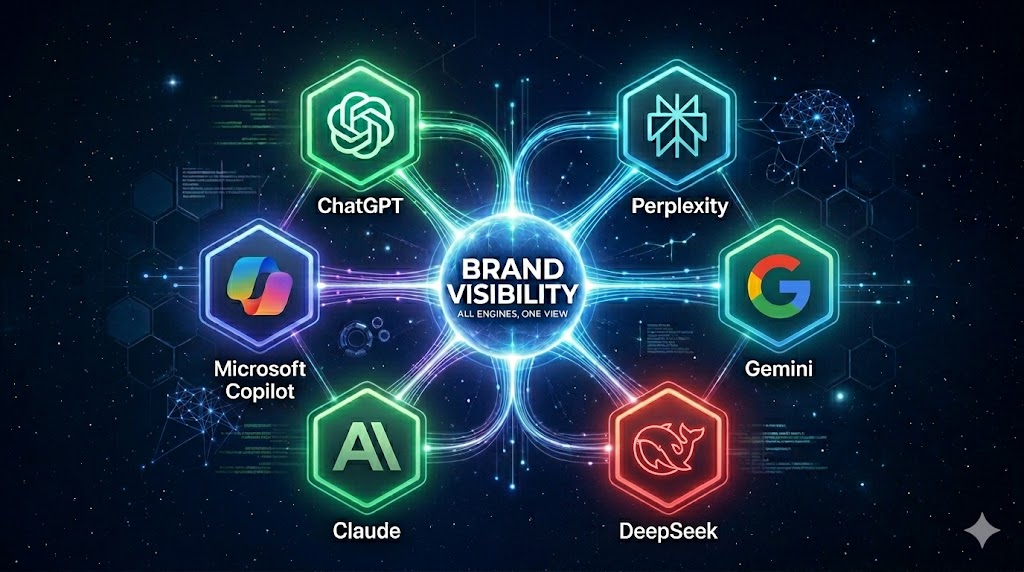
Claude referral traffic grew approximately 770% over eighteen months, and DeepSeek dominates several international markets. Multi-model tracking matters because each engine draws on different sources — a brand can be dominant in ChatGPT and invisible in Gemini. We covered this in tracking visibility across Claude, Gemini, and DeepSeek.
AI Traffic Converts Like Nothing Else You’ve Measured
The most underreported stat in the 2026 AI search data: AI-referred traffic converts at 4.4x to 23x the rate of organic search traffic.
Why the enormous multiple?
- The model pre-qualifies the visitor. By the time someone clicks through, the AI has already explained the category, compared the options, and recommended you.
- The click is a decision, not a discovery. Traditional organic clicks happen at the top of the funnel; AI referral clicks happen near the bottom.
- Trust transfers. A recommendation from an assistant the user talks to daily carries weight a search snippet never did.
The strategic consequence: a small AI-referred traffic stream can outproduce a large organic one. If your reporting only ranks channels by session volume, AI search will look like a footnote while quietly driving a disproportionate share of pipeline. That’s the case for putting AI visibility metrics in your core dashboard, not in a quarterly slide.
Tracking AI Traffic: The Two Numbers You Need
Most teams ask “how do I track AI traffic?” and stop at referrals. That’s half the picture — the smaller half.
1. AI referral traffic (the clicks)
Segment these referrers in your analytics platform:
chatgpt.comperplexity.aigemini.google.comclaude.aicopilot.microsoft.com
This gives you sessions, conversion rate, and revenue from AI platforms. It’s necessary — and wildly incomplete, because most AI answers never produce a click. The user asks, the model answers, the decision gets made, and your analytics never hears about it.
2. AI citation frequency (the mentions)
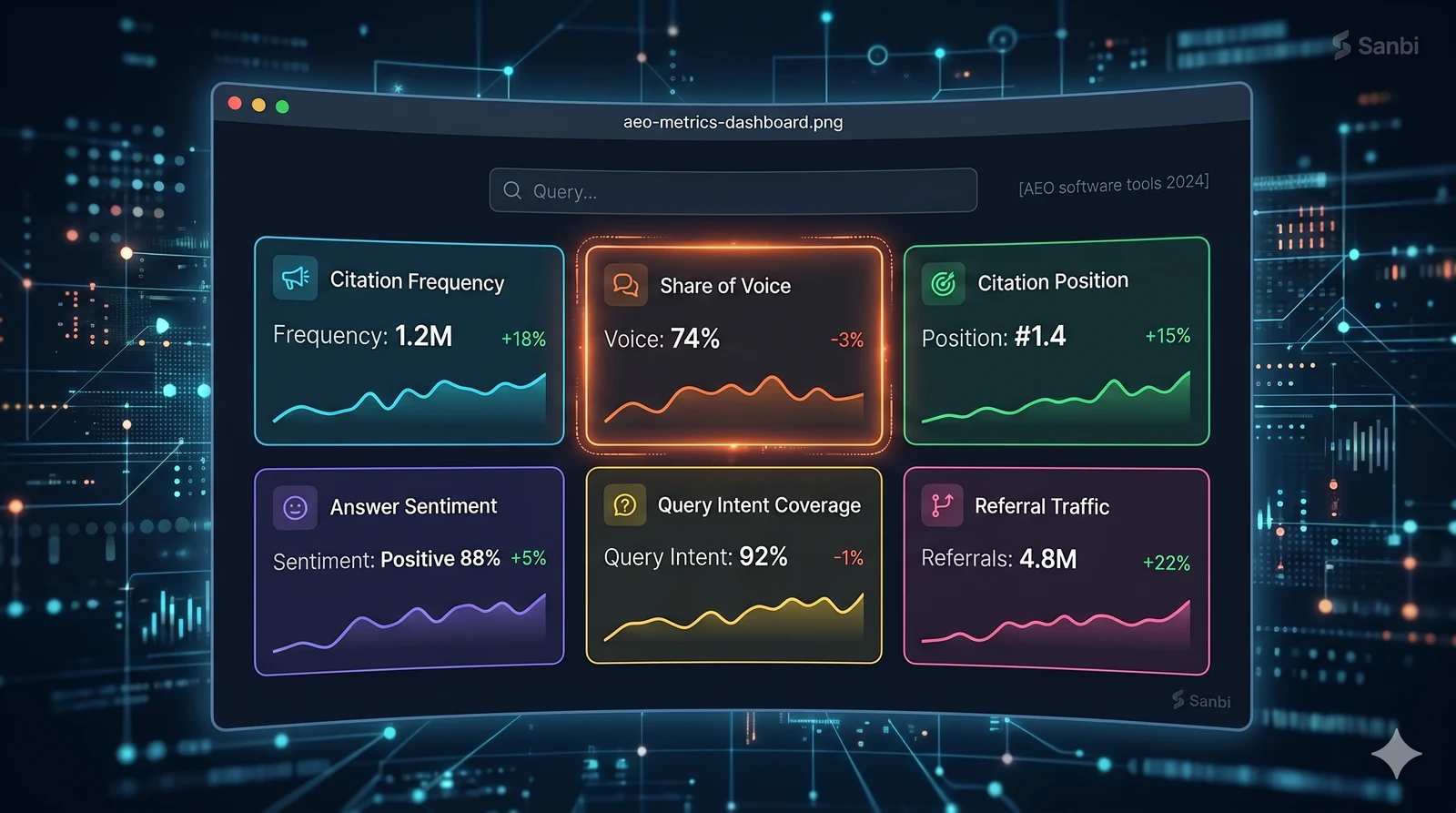
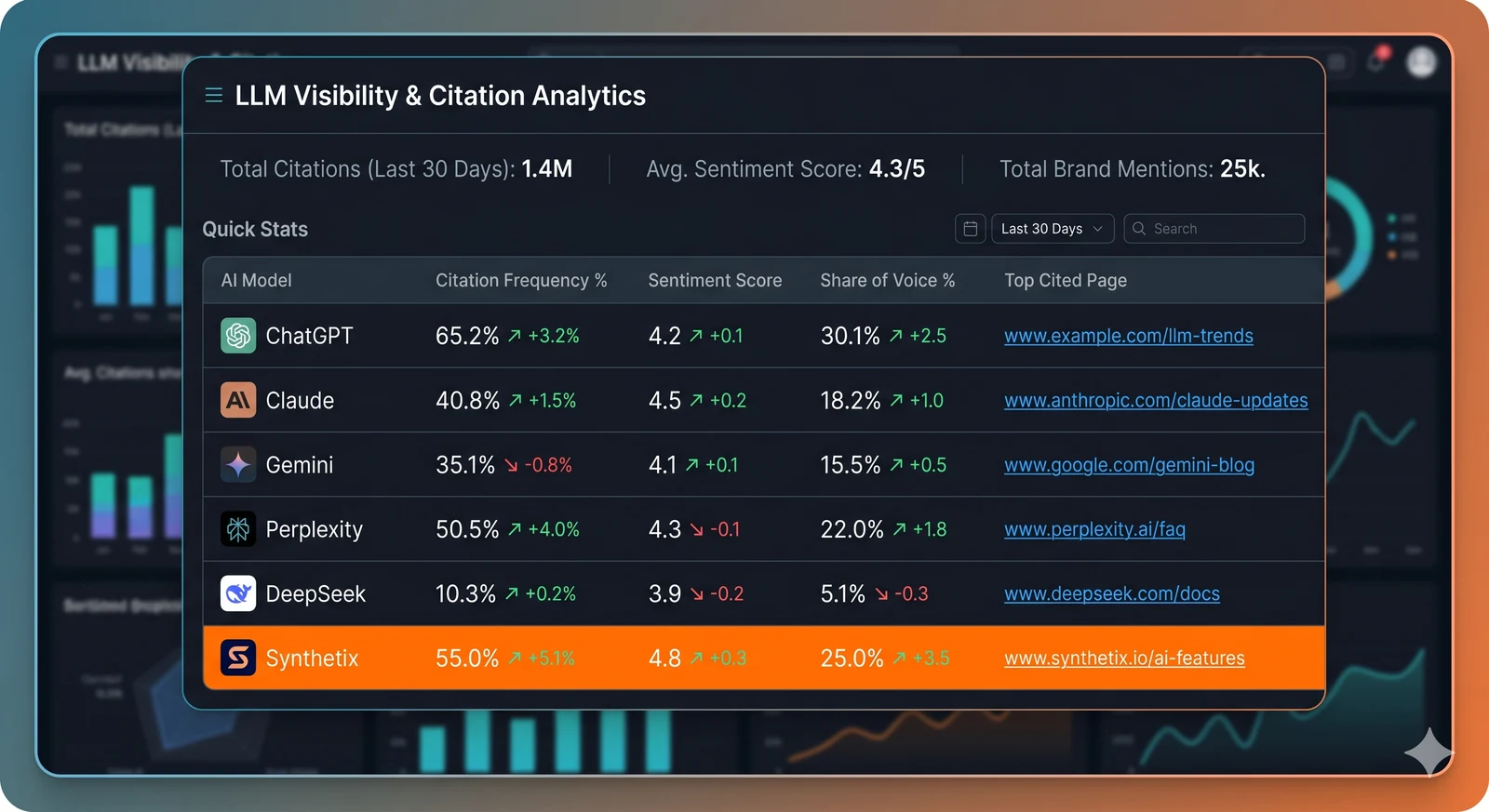
The number that actually predicts the clicks: how often AI models mention or cite your brand when buyers ask category questions. Measuring it means running your buyers’ real prompts across ChatGPT, Gemini, Perplexity, and Claude on a schedule, sampling multiple responses, and recording:
- Citation frequency — % of relevant prompts where you appear
- AI share of voice — your citation rate vs. named competitors
- Sentiment and accuracy — how the models describe you
- Source coverage — which domains the models cite in your category
This is exactly what Sanbi.ai automates: scheduled multi-model tracking, competitive share-of-voice benchmarking, a Site Health audit covering SEO + AEO + ARO, and a Recommended Tasks board that turns gaps into a prioritized content plan. For a comparison of the tooling landscape, see our best AI visibility tools guide.
How to Show Up in AI Search: The 5-Step Playbook
The growth data only matters if you can capture it. Here’s the condensed playbook:
Step 1 — Baseline your visibility. Define the 20 prompts your buyers actually ask. Run them across the major models. Record every mention of you and your competitors. This is your citation frequency baseline.
Step 2 — Publish answer-first content. AI models cite pages that resolve questions cleanly: direct definitions in the first paragraph, comparison tables, FAQs, citable statistics. One optimized page per uncovered prompt.
Step 3 — Make your brand machine-readable. Organization, Product, and FAQ schema turn your claims into verifiable entity data. Models cite what they can verify — the foundation we detailed in why your business is invisible to AI search.
Step 4 — Earn presence on the sources AI trusts. Every model leans on a set of high-authority third-party domains — review platforms, directories, Reddit, industry publications. Being absent there caps your citation rate no matter how good your own site is.
Step 5 — Track weekly and iterate. AI answers are probabilistic and retrain constantly. Weekly tracking catches when a model drops you — or starts recommending a competitor — while the gap is still cheap to close. Most brands see first citation improvements within 4–8 weeks of targeted publishing. The full methodology is in our GEO playbook for 2026.
What the 2026 Data Means: The Window Is Open, Not Guaranteed
Three takeaways from a year of 5x growth:
- The channel shift is no longer speculative. 45 billion monthly sessions and 34% of US search volume is not an experiment — it’s a redistribution of demand.
- The economics favor early movers. AI models compound their preferences: brands cited today get read, verified, and cited again. Citation share behaves like market share with momentum.
- Measurement is the moat. Every brand will eventually produce AI-optimized content. The ones that win will be those that saw their gaps first, because they were tracking while competitors were guessing.
AI search grew 5x while most marketing dashboards weren’t watching. The brands that add AI search analytics now — citation frequency, share of voice, sentiment, referral conversion — will own the answers their category gets asked for the next decade.
Start your baseline today with Sanbi.ai — track your brand across ChatGPT, Gemini, Perplexity, and Claude, benchmark against competitors, and get a prioritized plan to close every citation gap.
Frequently Asked Questions
AI search is the fastest-growing acquisition channel in digital marketing. Total monthly AI-referred sessions grew nearly 10x between November 2024 and May 2026, with US AI search sessions up roughly 300% year over year. AI platforms now generate around 45 billion sessions per month globally — equal to 56% of worldwide traditional search volume. Generative AI traffic is growing 165x faster than organic search traffic, which is why brands are racing to add AI search analytics to their reporting stack.
ChatGPT is the dominant AI search engine in 2026, commanding roughly 92% of trackable LLM referral traffic with over 800 million weekly active users processing 2 billion daily queries. Google Gemini is the fastest-growing challenger, up roughly 9x since late 2024, helped by deep integration into Google products. Perplexity remains the leader for citation-rich, research-style answers, while Claude grew approximately 770% over the same period. Google AI Overviews and AI Mode sit on top of traditional search, reaching billions of users. A complete AI visibility strategy tracks all of them.
Tracking AI traffic starts with segmenting referral sources in your analytics: create filters for chatgpt.com, perplexity.ai, gemini.google.com, claude.ai, and copilot.microsoft.com to see sessions arriving from AI platforms. But referral tracking only captures clicks — most AI answers never produce one. To see the full picture you also need AI search visibility tracking: running your buyers' actual prompts across ChatGPT, Gemini, Perplexity, and Claude on a schedule and recording whether your brand is mentioned or cited. Platforms like Sanbi.ai automate both sides — citation tracking plus the content recommendations to improve it.
AI search traffic converts at 4.4x to 23x the rate of organic search traffic, depending on industry and study. The reason is intent and pre-qualification: by the time a visitor clicks through from an AI answer, the model has already summarized the category, compared alternatives, and recommended your brand. The visitor arrives pre-sold. This is why a small stream of AI-referred sessions can drive as much pipeline as a much larger stream of traditional organic visits — and why AI visibility metrics belong in every marketing dashboard in 2026.
To show up in AI search: (1) establish your baseline by running the prompts your buyers actually ask across ChatGPT, Gemini, and Perplexity; (2) publish answer-first content that directly resolves those prompts — clear definitions, comparison tables, FAQs, and citable statistics; (3) implement structured data (Organization, Product, FAQ schema) so models can verify your brand as an entity; (4) earn mentions on the third-party sources AI models cite most — review sites, directories, Reddit, and industry publications; (5) track citation frequency weekly and iterate. Brands typically see first citation improvements within 4–8 weeks of targeted publishing.
The core AI visibility metrics for 2026 are: citation frequency (the percentage of relevant prompts where your brand appears), AI share of voice (your citation rate versus named competitors), sentiment and accuracy (how models describe you), source coverage (which domains AI cites when mentioning your category), and AI referral traffic plus its conversion rate. Together these form an AI search reporting stack that shows whether your visibility is compounding or eroding — before it shows up in revenue.
Not replacing — splitting. Google still handles the majority of global queries, but 37% of consumers now start their searches with AI tools instead of Google, and US AI sessions already equal 34% of domestic search volume. The practical takeaway is that search behavior has become a split path: buyers use AI assistants for research, comparison, and recommendations, then use traditional search for navigation and verification. Brands that optimize for only one path are invisible on the other.
Manual checks don't scale and don't produce trend data. AI models give probabilistic answers — the same prompt can return different brands on different runs, so a single manual check tells you almost nothing. AI search visibility tools run your prompt set repeatedly across every major model, sample multiple responses, score mentions and sentiment, benchmark you against competitors, and turn the deltas into a weekly trend line. Sanbi.ai adds a Site Health audit and Recommended Tasks board on top, so tracking data becomes a prioritized action list instead of a dashboard you stare at.